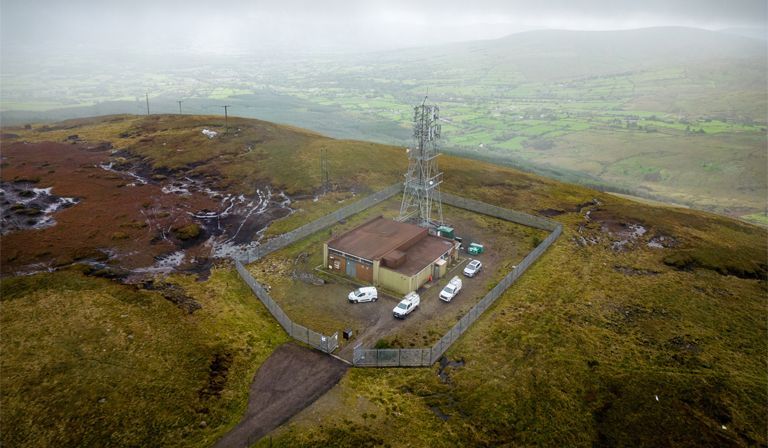
In total, there are 13 sectors in which Critical National Infrastructure (CNI) operates, but of these just three function in a commercial setting. Two are food and chemicals. The other is communications, the focus of the fourth roundtable in Prospect’s Resilience series.
Levels of disruption
The communications sector provides vital digital systems and is underpinned by fixed, mobile and satellite networks. Strengthening infrastructure has an urgency across the economy, of course, but where there is a commercial imperative, additional cost pressures come into play. Reduced to its simplest, the economies of digital infrastructure typically require—as one speaker put it—that 50p in the pound is invested in hardware and 50p invested in services. “There’s not a lot of money swirling around this industry anymore”.
Given the limits on investment, what costs are customers willing to bear in the pursuit of greater resilience? Would consumers accept, say, a bill increase of £20 a month? Most providers think they would not. Similarly, in a crisis should we expect people to be able to make a 999 call, receive emergency alerts, or surf the internet? Equally, how long should restoration take after a storm? It is in the answers to those questions that resilience strategies can be shaped.
Mutually dependent infrastructure
These questions also highlight the interdependencies that exist between one piece of CNI and another. In this context, the mutual reliance of communications and energy networks is clear. Not only are the former reliant on the latter—“We can absolutely guarantee”, observed one speaker, “if the power grid went down, no telecoms service would work for very long”—the latter are increasingly using sophisticated comms to enhance their own operations.
Attendees called for the creation of a “dynamic” relationship between communications and power networks, one that doesn’t exist today. The government’s energy resilience strategy may help.
Security by design
Resilience and security operate hand in hand and the UK Telecommunications Security Act, enacted in 2022, is helping focus minds. It demands that public telecom providers build, maintain and strengthen the security and resilience of their network, and it moves legislation away from a compliance-only approach to a framework intended to foster best practice.
This necessitates a “mindset shift” and asks those responsible for infrastructure to embed security “by design”. This approach will prove cheaper and more effective than modifying existing work. To that end, industry and policy makers were urged to make security integral to their “DNA” rather than treating it as an “afterthought”.
Limits of sovereignty
In the face of increasing geopolitical tensions, some called for a more nativist approach to infrastructure build. And although the pursuit of sovereign infrastructure was broadly welcomed, many roundtable voices warned against—and pointed out the practical challenges of—excluding equipment from other countries. While some Chinese-built technology has been disqualified from UK networks, the wisdom of omitting equipment from, say, Finland’s Nokia and Sweden’s Ericsson, would be to misunderstand their centrality in UK mobile networks. A similar view might be taken about technology from the United States.
Rather than excluding global technology providers, one attendee said it would be better to “deter people from interfering with digital infrastructure” in the first place.
Seeking good practice
A number of attendees agreed that it is better to prepare for the next crisis by not assuming it will play out like the last. In that spirit, some made the case for a “focused investment plan across the UK” that will take in digital infrastructure alongside other CNI.
The past can, however, prove useful in helping draw lessons from mistakes made. Offering one example an attendee noted how, in response to a high-profile cyberattack, a decision was taken to shut down part of the affected organisation’s network. It was an understandable response but, it transpired, an unfortunate one. Why? Because, it exposed poorly conceived restoration planning which, in turn, led to excessive delays and proved commercially damaging. When it comes to the “availability, integrity or delivery of essential services”, good planning really does count.
Defending Digital Infrastructure, a roundtable jointly hosted by Prospect and BT Group, took place on 10th March 2026
Digital infrastructure underpins almost every aspect of modern life. It connects people and businesses, enables essential public services and supports the growth and competitiveness of the UK economy. As our reliance on digital technologies grows, so too does the importance of ensuring the networks that support them remain secure, reliable aand resilient.
But the challenge of resilience is becoming increasingly complex. Network operators must contend with a broad range of risks, from cyber threats and attacks on critical infrastructure to power disruption, extreme weather and geopolitical uncertainty. While these risks continue to evolve, one principle remains constant: resilience is not a destination. It is a continuous process of anticipating threats, investing for the future, and strengthening our ability to respond and recover when disruption occurs.
Meeting this challenge requires a collective effort. Digital infrastructure depends on interconnected systems, supply chains and partnerships that span industries and sectors. Building resilience therefore requires collaboration between industry, government, regulators and the wider technology ecosystem, underpinned by long-term planning and a mature conversation about the level of investment we are prepared to make as a country to protect against low-likelihood but potentially high-impact risks.
As digital networks become ever more central to the UK’s prosperity, security and public services, resilience must be recognised as a long-term national priority. It is only through a coordinated and collaborative approach that we can build a more resilient digital future for the UK.
Greg McCall
Chief security and networks officer, BT