In the 1980s, pop psychology promoted the shibboleth that “you can’t argue with what people feel.” Since then, that line has brought many a contentious conversation to an impasse. The consequences of anointing emotion as beyond interrogation are vividly illustrated in Mark Lawson’s biting novel The Allegations: when an aggrieved party feels bullied it means, ipso facto, that he or she has been bullied, and employment tribunals are mere formalities. Sacked by the BBC for the same offence, but never allowed to confront his anonymous accusers whom the Corporation trusted, Lawson should know.
But you can argue with what people feel. Emotions range from the justifiable—grief that a brother just died—to the irrational, unreasonable and disproportionate: spitting fury that you’re not allowed a chocolate cream, but only a caramel. That was me, throwing a tantrum aged 10. Pity I wasn’t born 20 years later. I might have screamed at my mother when she sent me to my room: “But you can’t argue with what people feel!”
Worse, in English “I feel” and “I think” are roughly synonymous. If we enshrine as a truism that “you can’t argue with what people think,” we can throw in the towel on intellectual debate in perpetuity. Which, the way things are going, maybe we should do.
One emotion has grown so sacrosanct that an astonishingly large segment of Europeans now thinks that provoking it should be illegal: umbrage. According to a 2015 Pew Research Centre poll, only the barest majority of Britons—54 per cent—and a scant 27 per cent of Germans any longer believe government should allow people to make statements offensive to minorities. (Why only minorities? Wouldn’t equality under the law argue for banning speech offensive to anyone?)
Thus in January, in an interview with the Canadian free-speech advocate Jordan B Peterson that went viral, Channel 4 News presenter Cathy Newman referred casually to the “right not to be offended,” as if the entitlement were a familiar point of common law. Though Peterson got the better of her in that instance—we don’t often see Newman flustered—defenders of the “right not to be offended” are starting to prevail in European public opinion.
It doesn’t take much parsing to conclude that protecting all and sundry from the terrible experience of having your feelings hurt is the end of free speech altogether. Since nowadays “you can’t argue with what people feel,” umbrage is freed from rational justification. Given that the better part of the human race is crazy, stupid, or both, there’s nary a thought in the world whose airing won’t offend somebody. Doesn’t Darwin offend creationists? Furthermore, in granting so much power to woundedness, we incentivise hypersensitivity. If we reward umbrage, we will get more of it. We do reward umbrage, and we’re buried in it by the truckload.
Time was that children were taught to turn aside tormentors with the cry, “Sticks and stones may break my bones, but words will never hurt me!” While you can indeed feel injured because Bobby called you fat, the law has traditionally maintained a sharp distinction between bodily and emotional harm. Even libel law requires a demonstration of palpable damage to reputation, which might impact your livelihood, rather than mere testimony that a passage in a book made you cry. That words-will-never-hurt me rejoinder is out of fashion. The “safe spaces” cropping up on university campuses aren’t shelters to protect students from hailstorms, or havens for young women whose boyfriends beat them up, but bubbles in which to hide from ideas—to hide from words. In a tweet this January, the journalist Matt Baume decried Ryan Anderson’s controversial book on transgenderism, When Harry Became Sally, as “violent.” He didn’t mean it was full of gory shoot-outs. Baume meant it was full of opinions that he didn’t like. Emotion cannot be disputed, especially umbrage. Words and sticks-and-stones are on a par. If words that cause umbrage are acts of violence, the state has every excuse to impound your dictionary.
Yet these days, straight white fiction writers whose characters’ ethnicity, race, disability, sexual identity, religion or class differs from their own can expect their work to be subjected to forensic examination—and not only on social media. Publishers of young adult fiction and children’s literature hire “sensitivity readers” to comb through manuscripts for perceived slights to any group with the protected status once reserved for distinguished architecture.
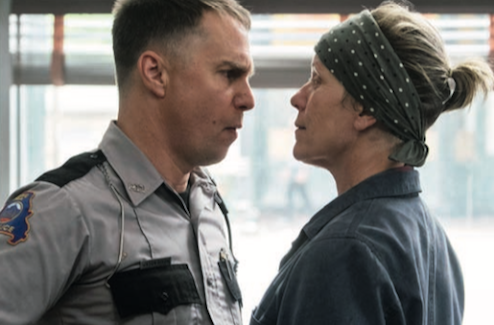
The publishing magazine Kirkus Reviews assigns “own voices” reviewers with a matching “marginalised” pedigree to assess young adult books that contain a diverse cast. Last autumn, the magazine yanked both a positive review and its coveted “star” after online activists accused Laura Moriarty’s dystopian novel American Heart, which imagines a future in which US Muslims are sent to internment camps, of using a “white saviour narrative.” (Yes, whole plot lines are becoming unacceptable. This year’s film Three Billboards Outside Ebbing, Missouri has attracted heavy flak because its racist cop rounds into a half-decent human being. Writers can refurbish murderers into good guys, but must never redeem a racist.)
Is “hate speech” in dialogue prosecutable? Not long ago, I’d have said of course not. Now I’m not so sure. Minnesota has just withdrawn two great American classics, both scathing examinations of southern racism—Mark Twain’s The Adventures of Huckleberry Finn and Harper Lee’s To Kill a Mockingbird—from its school syllabus because the novels’ bigoted dialogue might make students feel “humiliated and marginalised.” Readers highly motivated to find fault often embrace deliberately unsophisticated interpretations of literary texts, for it’s easy to make passages sound atrocious just by taking characters’ assertions and word choice out of context. Indeed, searching for hidden offences has become social media’s updated version of the Easter egg hunt. Impositions from the left also extend to language. Any fiction writer who wants to strain the reader’s patience with gender-neutral pronouns is welcome to them, but I dread the day that artificial contrivances like ze and zir become ideologically mandatory. (For a hoot, check out We the Internet television’s online skit, “ESL Students Learn New Gender Pronouns.”) Though preferring plural constructions, I resist female pronouns in the general instance. Using “she” in reference to both sexes is merely reverse discrimination, and these intrusions of authorial righteousness are distracting. Unless handling the term with the protective rubber gloves of quotation marks, I plan to go to my grave having never employed the linguistic abortion “cisgender”—which suggests sissy gender—a word not only flagrantly repulsive, but one that in its contortion casts being born a woman and imagining that therefore one is a woman as one more sexual kink.
We now have a whole new category of writer, and person for that matter, who isn’t permitted to say anything about anything. Sticking up for the rights of straight white males is less fashionable than sticking up for smokers. More broadly, enjoying any kind of “privilege”—I can’t be the only one who’s sick up to the eyeballs with that word—means you sacrifice your right to free speech. Sorry to go all American on you, but our Constitution’s First Amendment protecting freedom of expression doesn’t come with an asterisk: “*unless you’ve hitherto had it too good.” I’ve heard from multiple male colleagues that they’d like to champion free speech, but sitting at the very bottom of the victimhood totem pole they “can’t say anything.” To quote an ex-president whom I quite miss: “yes, you can.”
Not all repression, however, is coming from the left. In the US, libraries and school boards are so ban-happy that the American Library Association holds a “Banned Books Week” every September to highlight its annual “Top Ten List of Most Challenged Books.” With a single exception—Bill Cosby’s Little Bill, which was singled out for the author’s alleged sexual assaults—last year’s most proscribed books were exclusively targeted for content that affronts prudish, Christian conservatives: gay and/or transgender characters, sexually explicit scenes that might lead to “sexual experimentation,” drugs, atheism, cursing and profanity. Chuck Palahniuk’s Make Something Up: Stories You Can’t Unread was censured not only for sexual licentiousness, but for being “disgusting and all round offensive”—a badge of honour that makes me jealous.
Listen: Lionel Shriver on Prospect's weekly podcast, "Headspace"
Time was that children were taught to turn aside tormentors with the cry, “Sticks and stones may break my bones, but words will never hurt me!” While you can indeed feel injured because Bobby called you fat, the law has traditionally maintained a sharp distinction between bodily and emotional harm. Even libel law requires a demonstration of palpable damage to reputation, which might impact your livelihood, rather than mere testimony that a passage in a book made you cry. That words-will-never-hurt me rejoinder is out of fashion. The “safe spaces” cropping up on university campuses aren’t shelters to protect students from hailstorms, or havens for young women whose boyfriends beat them up, but bubbles in which to hide from ideas—to hide from words. In a tweet this January, the journalist Matt Baume decried Ryan Anderson’s controversial book on transgenderism, When Harry Became Sally, as “violent.” He didn’t mean it was full of gory shoot-outs. Baume meant it was full of opinions that he didn’t like. Emotion cannot be disputed, especially umbrage. Words and sticks-and-stones are on a par. If words that cause umbrage are acts of violence, the state has every excuse to impound your dictionary.
The end of fiction
Up against the wall in a dark alley, I’d personally say the sword is mightier than the pen. But all this power to break bones imputed to mere language might seem a boon for folks whose medium is wordsmithing. Aren’t we writers menacing? Unfortunately, we authors now contend with a torrent of dos and don’ts that bind our imaginations and make the process of writing and publishing fearful. Being a novelist in the era of “call outs” for supposedly offensive content is far less fun than it once was. I’ve written at length before about “cultural appropriation”—the idea that availing yourself of other cultures without permission is a form of theft—so let’s keep it short. Preventing writers from conjuring lives different from their own would spell the end of fiction. If we have the right to draw on only our own experience, all that’s left is memoir. But when I drafted my famous—or infamous—speech for a 2016 appearance at the Brisbane Writers’ Festival, I’d barely heard of the term. Fast-forward, and this ostensible taboo has grown firmly established, becoming a far bigger issue in literature than it was a mere 18 months ago. (Social fads can colour not only the present, but the past. It now seems as if we’ve been battling over “cultural appropriation” for years and years.) The notion often crops up in creative writing programmes, leaving upcoming writers confused about what material they’re “allowed” to use in their work and how in heaven’s name they’re supposed to seek permission to borrow a cup of sugar from “marginalised peoples.”“If words that cause umbrage are acts of violence, the state has every right to impound your dictionary”

Imaginary friends
Writing my first novel in the 1980s, I didn’t hesitate to include black characters—not only Americans, but a whole invented African tribe. I freely included occasional dialogue in Black English. Despite a continued conviction that I have as much right to create black characters as black writers have to create white ones, I’ve grown more self-conscious. Accents and dialects make me nervous. I’m more hesitant to fold a range of ethnicities, races, gender variants and classes into my work. Unless I push back against my own prudence, my fictional worlds will fail to reflect the world I live in. My literary palate will pale. Overcoming my anxiety, in late 2016 I permitted myself to create another black character in a short story. Jaconda is the alluring girlfriend of a young white layabout. Her willingness to cross the racial divide for this waster helps push the reader to puzzle: what on earth does she see in the guy? Counter to cliché, Jocanda’s background is upper middle class, so to the degree that she speaks as if she’s from the ’hood—“He don’t need to become nothing”—it’s an affectation. I constrained the Black English to light touches. Jocanda is lively, smart, savvy and appealing."Safe spaces are bubbles in which to hide from ideas"Yet despite the positive portrayal, the cutting across class stereotype, and the restrained rendition of her speech, my agent warned me about the story’s poor prospects at a magazine that had published me in the past. In the touchy climate following my speech in Brisbane that September, she said “we’ll never know” whether it would be rejected because I had the gall to craft a black character. She invited me to revise the story using a white girlfriend. I held my ground. The story was indeed declined. Why? Maybe the editor just thought it was crummy. We’ll never know. I’ve plenty of recent experience of using non-white characters in my novels, only to have them singled out and scrutinised for thought crime. It’s funny how consistently folks looking for affront tend to find it. (I envy a series like Charlie Brooker’s Black Mirror, whose futuristic settings enable characters to merely happen to be non-white.) I have an obstreperous streak a mile wide. I hate being bullied, especially at the keyboard. If even writers like me are starting to wonder if including other ethnicities and races in our fiction is worth the potential blowback, then fiction is in serious trouble.

Read more: Free speech is never really free—it's all about who's got power
Is “hate speech” in dialogue prosecutable? Not long ago, I’d have said of course not. Now I’m not so sure. Minnesota has just withdrawn two great American classics, both scathing examinations of southern racism—Mark Twain’s The Adventures of Huckleberry Finn and Harper Lee’s To Kill a Mockingbird—from its school syllabus because the novels’ bigoted dialogue might make students feel “humiliated and marginalised.” Readers highly motivated to find fault often embrace deliberately unsophisticated interpretations of literary texts, for it’s easy to make passages sound atrocious just by taking characters’ assertions and word choice out of context. Indeed, searching for hidden offences has become social media’s updated version of the Easter egg hunt. Impositions from the left also extend to language. Any fiction writer who wants to strain the reader’s patience with gender-neutral pronouns is welcome to them, but I dread the day that artificial contrivances like ze and zir become ideologically mandatory. (For a hoot, check out We the Internet television’s online skit, “ESL Students Learn New Gender Pronouns.”) Though preferring plural constructions, I resist female pronouns in the general instance. Using “she” in reference to both sexes is merely reverse discrimination, and these intrusions of authorial righteousness are distracting. Unless handling the term with the protective rubber gloves of quotation marks, I plan to go to my grave having never employed the linguistic abortion “cisgender”—which suggests sissy gender—a word not only flagrantly repulsive, but one that in its contortion casts being born a woman and imagining that therefore one is a woman as one more sexual kink.
The perils of privilege
In the wake of #MeToo, hasty, due-process-free sackings in response to sexual misconduct allegations (like Minnesota Public Radio’s dismissal of author Garrison Keillor) and the consequent popular conflation of art and artist potentially makes the publishability of authors’ work dependent on how we comport ourselves at parties. Like actors, directors, and painters, writers, too, could now be silenced—and have their previous work withdrawn from sale, if not have the fruits of entire careers effectively erased—by the exposure of some impropriety off the page. Writing about #MeToo can itself trigger the reflex to gag. When Harper’s Magazine was about to run an article by Katie Rophie outing the anonymous creator of a widely circulated blacklist of men in the media accused of sexual misconduct, there was a concerted online campaign to stop the magazine from publishing, including jamming its switchboard and instructing other writers slated for the same issue to withdraw their work. Writers are already stifled by expressing the wrong opinions outside their fiction. In 2014, Black Lawrence Press dropped a novella from an anthology because the author, Elizabeth Ellen, had published on an unrelated website a controversial essay with which the BLP editors disagreed. Do publishers now need to endorse everything you’ve ever written in order to print your work? In today’s polarised political climate, it’s perilous for writers to speak out about controversial subjects, lest they alienate a portion of their readership, and be banished from progressive literary mags and presses. Professionally speaking, my voicing public support for Brexit was shooting myself in the foot.“Raise the issue of free speech, and everyone will pile on to say how this awful freedom must be constrained”
Virtue by iron fiat
What is the purpose of literature? To shape young people into God-fearing adults who say no to drugs? To accurately mirror reality? To act as a tool for social engineering? To make the world a better place? Certainly fiction is capable of influencing social attitudes, or trying to. But the novel is magnificently elastic. Fiction is under no obligation to reflect any particular reality, pursue social justice, or push a laudable political agenda. The purpose of any narrative form is up to the author. Yet contemporary university students are commonly encouraged to view literature exclusively through the prism of unequal power dynamics—to scrounge for evidence of racism, colonialism, imperialism, sexism, the list goes on. What a loss. What a pity. What a grim, joyless spirit in which to read. How did we get so obsessed with virtue? A narrow version of virtue at that—one solely preoccupied with social hierarchy, when morality concerns far more than who’s being shafted and who’s on top. If all modern literature comes to toe the same goody-goody line, fiction is bound to grow timid, homogeneous, and dreary. I don’t want to read only about nice people, and I don’t turn to novels to be morally improved. I was drawn to writing fiction in the first place because on paper I completely control my world—where I can be mischievous, subversive and perverse. Where I follow no one else’s rules but my own. Where I can make my characters do and say abominations. I have never confused sitting down at my desk with attending Sunday school. And I frankly do not understand readers who go at novels making prissy judgments of the characters and author both, and can’t just sit down to a good story. We live in denunciatory times. Cynical times, too; we assume decency will only descend through legislation or an iron-fisted cultural fiat. Raise the issue of free speech at any gathering, and first thing everyone piles on with all the ways in which this awful freedom must be constrained. Perhaps because the cause of free speech has been—catastrophically, in my view—allowed to become the preserve of the right, too many left-leaning writers (ie most writers) in the west have been discouragingly tepid in their defence of a liberty on which their art and livelihood depend. When PEN America gave Charlie Hebdo a freedom of expression award (under heavily armed guard) after Islamists murdered 12 of the magazine’s staff for its irreverent content, over 200 huffy authors protested. For the dissidents, sticking up for Muslims’ “right not to be offended” was more important than free speech. Following my Brisbane folderol, the Guardian Review ran a two-page spread in which 11 authors addressed whether fiction writers should feel free to “appropriate” others’ experience. The equivocation was astonishing. Even writers who tentatively defended imaginative “theft” did so only after hedging the point to death. A commonplace thread ran that it was all right to write about characters different from yourself, but only after exhaustive homework, and only if you were really good at it, which they were, of course, but most people weren’t. The writers willing to defend their liberty without a snowstorm of qualification numbered exactly one. Good on you, Philip Hensher. The presses with their sensitivity readers. Kirkus with its “own voices” reviewers. The academy, now content to assess the canon in the reductive terms of “intersectionality.” The whole apparatus of delivering literature to its audience is signalling an intention to subject fiction to rigid ideological purity tests, unrelated to artistry, excellence and even entertainment, that miss the point of what our books are for. Let’s see a little more courage, people—in the work and in the world.Five free speech flash points
Horowitz's War Last year Anthony Horowitz, the author of the Alex Rider spy novels, was warned off writing a black character by his editor, who told him it might be considered “inappropriate.” Horowitz, who had previously run into trouble for saying Idris Elba was too “street” to play James Bond, argued that we were moving into dangerous territory. “Taking it to its logical extreme,” he said, “all my characters will from now on be 62-year-old white Jewish men living in London.”
Margaret Atwood the “bad feminist” In the era of #MeToo, the television adaptation of Margaret Atwood’s The Handmaid’s Tale inspired feminists all over the world. But Atwood was called out for being a “bad feminist” by other women when she signed an open letter in defence of Steven Galloway, a writer and academic at the University of British Columbia who had been dismissed after allegations of misconduct. Atwood defended herself in a January article: “understandable and temporary vigilante justice can morph into a culturally solidified lynch- mob habit.”
Je ne suis pas Charlie After 12 Charlie Hebdo staff were killed for publishing anti-Islam cartoons in January 2015, Pen America decided to honour the French satirical magazine with its Freedom of Expression Courage Award. In response, more than 200 writers—including Peter Carey and Michael Ondaatje—signed a letter objecting because Charlie Hebdo’s contents was Islamaphobic. The literary world was split down the middle but in the end the prize was given. Salman Rushdie, who lived under the threat of death for writing The Satanic Verses, responded: “What I would say to both Peter and Michael and the others is, I hope nobody ever comes after them.”
Jonathan Franzen corrected When Jonathan Franzen admitted in a 2016 interview that he wouldn’t write a novel about race because “I don’t have very many black friends,” and had “never been in love with a black woman,” Twitter exploded with outrage at the crassness of his expression. But perhaps he couldn’t win either way: if he had written a book with black characters, he would probably have been accused of “cultural appropriation.”
Ban Babar! Children’s fiction has become a battleground. The French classic Babar the Elephant was taken down from an East Sussex library in 2012 for its racist stereotypes. In February this year, a film company had to apologise for a sequence in the new Peter Rabbit film where a character with an allergy is pelted with blackberries. The hashtag #boycottpeterrabbit was used by parents who believed the sequence was offensive and dangerous to people with food allergies.