At a preview ahead of Bradford’s year as City of Culture 2025, one ambitious panellist announced that he would consider it a success if, by the year’s end, “Leeds will be referred to as ‘a town near Bradford’”.
It’s a rivalry with a long history: Leeds and Bradford were on opposite sides of the civil war and have been fighting each other for recognition ever since. Leeds, the larger of the two, is perceived as having pulled off a more effective post-industrial reinvention than Bradford.
Despite proclaiming its own year of culture in 2023, Leeds has never held the City of Culture mantle. (Its hopes to be a European City of Culture were dashed by Brexit.) But as Bradford’s own year in the cultural sun comes to an end, whether the scheme has given the city the edge in this centuries-old rivalry remains to be seen.
At the outset, the City of Culture’s promise for Bradford was bold: approximately 1,000 events throughout 2025, with an estimate that these would attract an additional 3.3m visitors bringing nearly £140m into the local economy. With £15m in central government support, the scheme also aimed to deliver 6,000 training opportunities and create 6,500 new jobs, as well as a legacy programme of cultural regeneration that would leverage an extra £700m of growth for Bradford by 2030.
We’ll have to wait and see if many of these promises have been fulfilled, but certainly the investment has already made some immediate impact: by November, more than 26,000 people visited the exhibition of work by the four Turner Prize finalists held in Bradford’s imposing Cartwright Hall in Lister Park. According to Bradford Council statistics, visitors to the gallery have increased by 44 per cent since the show opened in September; with the announcement of the winner Nnena Kalu last week, that number will likely continue to rise until the exhibition closes in February. Other tangible benefits include a long overdue improvement in direct rail connections to London and a renovated cultural venue in the 3,000-seater Bradford Live.
First launched in 2009, the UK’s City of Culture initiative is an attempt to replicate the culture-led regeneration seen in Glasgow and Liverpool after they became, respectively, European City of Culture in 1990 and European Capital of Culture in 2008. Derry-Londonderry became the first City of Culture in 2013, followed by Hull in 2017 and then Coventry in 2021. The scheme’s application guidelines state that programmes should “appeal to a wide range of audiences” and “increase participation in cultural activities as well as contributing to economic growth, regeneration, community cohesion, health and wellbeing”.
Nowadays, City of Culture has become a flagship government initiative for delivering cultural transformation across the UK through concentrated, high-profile programming. But in a letter to the Guardian published as the year began, Bradford resident Steven Schofield expressed scepticism that the scheme could disguise or transform Bradford’s persistent economic problems, which include some of the worst deprivation levels in the country and a local authority that struggles to keep its library and museum services going.
Bradford was not devoid of significant cultural institutions before 2025. It enjoys a legacy of grand buildings that date from the days when it was one of the richest cities in Britain, including the country’s most spectacular bookshop, housed within the magnificent former wool exchange. On a different scale, and perhaps representative of the Bradford of the 21st century in all its cultural complexity, is the Bradford Literature Festival (BLF) founded by Syima Aslam and Irna Qureshi. Since 2014 it has grown into an internationally recognised event that attracts large local audiences. BLF played a key role in Bradford’s City of Culture bid, but in the end it found itself suffering from competition for funding through a year that should have brought it greater opportunities with Bradford’s higher national profile.
Research suggests this is not an unusual side-effect of the scheme. Several studies looking at the impact of City of Culture suggest that the economic benefits are usually limited and often come from pre-existing plans; that the jobs created are temporary; and that greater competition for audiences can even cause declining attendance for other, more established cultural events, like the BLF. Elsewhere critics have pointed out that the competitive bidding process that local authorities must undertake to run for City of Culture typically cost millions of pounds, with potentially millions more allocated to the external consultants and specialist teams called in to deliver events.
When it comes to the scheme’s longer-term promises, Bradford’s forerunners offer a mixed picture. Coventry, whose 2021 year as City of Culture was complicated by the pandemic, saw the organisation set up to deliver its long-term legacy enter administration in 2023, despite receiving £21.3m in public funding. Its collapse meant that many of the planned legacy programmes were abruptly cut.
In a careful reflection on the negative impacts the scheme has had on BLF, Aslam points out that funders are often attracted by novelty. “Foundations want to fund a new thing,” she says. “So what happens to the years of careful and successful work that we have been building?”
The BLF, she says, has ended the year more resilient, but it has not been easy. Her criticism reflects the tensions between two radically different models of cultural activity: while the City of Culture initiative tends to aim for memorable spectacle and national profile, with the perks unevenly distributed across the city, BLF’s cultural engagement is grounded in bottom-up community participation, intellectual exchange, accessibility, literacy and cultural empowerment. Through its community outreach programmes it collaborates with local mosques, churches, charities, schools and cultural organisations. Its legacy is inherently accumulative: each festival building on the previous, enhancing Bradford’s reputation as a centre for successful multiculturalism. Its audience is one of the most ethnically diverse of any festival in Europe.
So the jury is still out on whether Bradford’s cultural year has decisively changed its fortunes. But in the meanwhile, if the best thing we can say about local organisations like the BLF is that they survived it? It seems obvious that more needs to be done.
Bradford, a tale of two cities (of culture)
As it comes to the end of its tenure as UK City of Culture for 2025, the best thing some of the city’s established cultural institutions can say is that they survived it
December 18, 2025
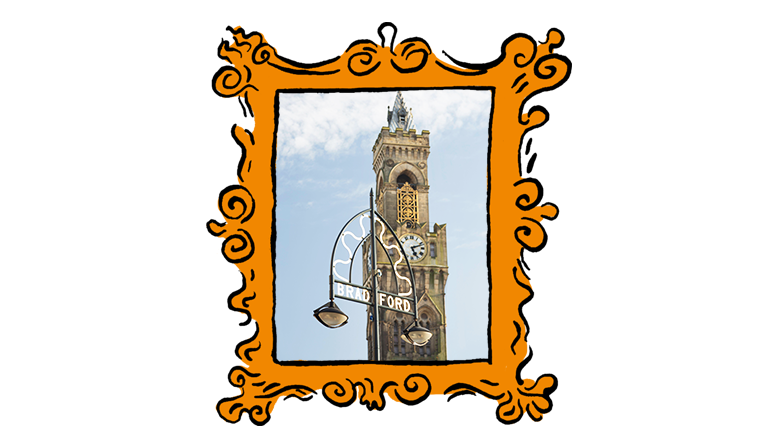
Image: Chris Mellor / Alamy