Genocide is sometime described as the “crime of crimes” and it is perhaps the most difficult to prove. A genocidal government is unlikely to ever declare itself to have genocidal intent. There is also unlikely to be a document helpfully described as an “instrument of genocide” or something similar. Genocide will often be described as something else or hidden under the cloak of euphemism.
Under the international genocide convention of 1948, genocide is defined as having the “intent to destroy, in whole or in part, a national, ethnical, racial or religious group” coupled with any of the following acts: killing members of that group, causing serious bodily or mental harm to members of that group, deliberately inflicting on that group conditions of life calculated to bring about its physical destruction in whole or in part, imposing measures intended to prevent births within the group, and/or forcibly transferring children of the group to another group.
For genocide to be committed at international law, it is not enough to show any of those acts took place, the intent has to be shown. Similarly, having genocidal intent is not enough, there has to be one of these acts as well. Realising the difficulty in proving these things, the convention also prohibits conspiracy to commit genocide, incitement to commit genocide, attempts to commit genocide, and complicity in genocide. But these auxiliary offences are also difficult to demonstrate, as again the requisite intent is hard to show.
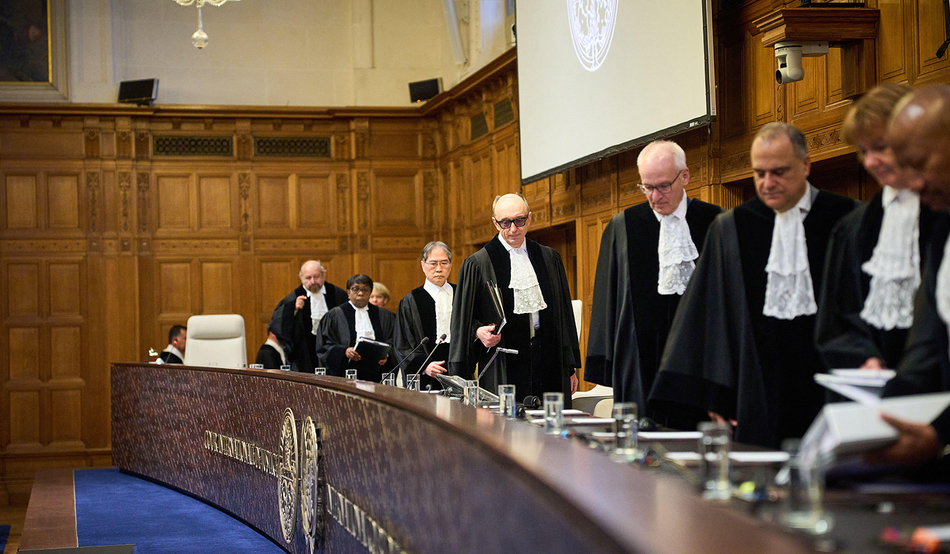
The recurring problems in determining anything genocidal mean that the recent decision of the International Court of Justice that Myanmar committed genocide with the “clearances” against part of its Rohingya population is a sensation. Some have pointed to the 9-6 decision of the judges not being unanimous, but the remarkable thing is that the court was able to get to this verdict at all. It is almost impossible to convict for the “crime of crimes”.
How did the court go about reaching this conclusion? In absence of express evidence of genocidal intent, the court had to look at look what happened with the 2017 “clearances” in all the circumstances. The court first established the acts (the “actus reus”) and then the relevant intent.
The court found there were at least 10,000 deaths: “The evidence before the Court demonstrates the pervasive and lethal nature of the violence inflicted upon the Rohingya population, and establishes that thousands of Rohingya civilians were killed by the Myanmar security forces during the clearance operations.”
All these findings made it implausible for there to be explanations short of genocide.
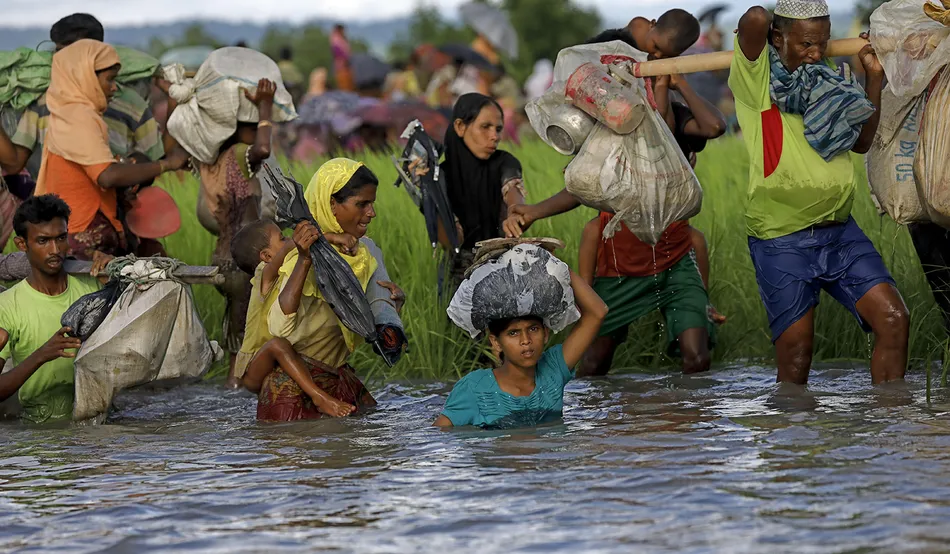
Significantly, the court also found other acts of violence and attacks on those fleeing from the “operations”. The court determined that “Myanmar security forces systematically shot at Rohingya as they were fleeing the clearance operations in villages, and that a significant number of Rohingya were subjected to killing, rape and other attacks or threats of attack during the flight to Bangladesh”.
And just as significantly, the court found that there was “a deliberate, organized process of destroying Rohingya villages and farmland, replacing them with other permanent structures, including security force bases, and promoting resettlement by non-Rohingya ethnic groups on land on which Rohingya had formerly lived”.
All these findings made it implausible for there to be explanations short of genocide. Counter-terrorism exercises do not explain the killing of those fleeing or the systemic replacement of all Rohingya infrastructure. Even a policy of expulsion—“ethnic cleansing”—would not explain (away) these things.
But the determination of such facts was not enough. The court also had to be certain there was intent. And this is where the judgment becomes fascinating and likely to be of wider import.
The court based its assessment of the existence of genocidal intent in the present case on the following: the general context, including the perpetration of other culpable acts systematically directed against the Rohingya, the selective targeting of the Rohingya, the perpetration of acts that violate the foundations of the Rohingya group, and the systematic nature and the scale of Myanmar’s actions. It looked, for example, at legislative and other forms of discrimination against the Rohingya and the many examples of hate-speech on social media and elsewhere.
The court also looked at whether there were any other explanations for Myanmar’s conduct other than genocidal intent. It decided that “many of the characteristics of the clearance operations [were] inconsistent with an intent to carry out counter-insurgency operations”.
And as for it being a policy only of expulsion “there is no evidence in the record of any effort or plan by the Myanmar Government to transfer or evacuate the Rohingya population, and Myanmar’s actions also do not indicate such an intention”. Moreover, “Myanmar security forces attacked groups of fleeing Rohingya, including by firing on them and sinking or overturning boats they were in”. The judges concluded “an intent to forcibly displace the population does not explain the totality of the evidence”.
Myanmar even sought to rely on the excuse that it was punishing the Rohingya population, and this thereby meant it could not have been genocide. The court was having none of this. It said “the scale and nature of Myanmar’s actions and the methods it employed went well beyond what would be required to punish the population and are instead characteristic of an intent to destroy a substantial part of the group. Features of such intent include the large numbers of persons killed, injured or displaced and the widespread brutal attacks on women and children. In light of the reasons set out above, the Court finds that punishment of the Rohingya population does not constitute an alternative reasonable inference on the evidence before it.”
One by one, the court examined all the other grim explanations and excuses for what happened with the Myanmar “clearances”, and no other explanation fitted other than Myanmar having genocidal intent. The court even considered and dismissed Myanmar’s protestation that it could not be genocide because it could have killed even more of the Rohingya population but did not do so.
The court’s final view was that it “cannot conclude, from all the evidence taken together, that an intent to carry out counter-insurgency operations, an intent to forcibly displace or an intent to punish the Rohingya population are reasonable inferences to be drawn. In the Court’s view, the only reasonable inference that can explain Myanmar’s actions is an intention to destroy a substantial part of the protected group, namely the Rohingya population in northern Rakhine State.”
It is one thing to have a high threshold, but that threshold should never reach the ceiling.
And so the court by a majority found there was genocide. Myanmar both intended to destroy and did destroy a substantial part of the Rohingya population of Myanmar. The court also found other breaches of the genocide convention, but the primary finding was the sensation.
A minority of judges did not agree. They concurred something very bad had happened and that “Myanmar’s security forces committed serious human rights violations against the Rohingya during the clearance operations”. But they denied that it amounted to genocide.
This was because the minority was not convinced that the high burden of proof required for showing genocidal intent had been met. But reading their dissenting opinions, one can doubt whether any circumstantial evidence would ever meet their stringent requirements. And as it is unlikely that any genocidal government would advertise or document a deliberate policy of genocide, it would seem that it is an offence which can never be shown to have happened.
It is one thing to have a high threshold, but that threshold should never reach the ceiling. The majority were able to show on a number of well-evidenced grounds that there was no other explanation for what happened that would displace genocidal intent, and that genocidal intent explained what happened. But the minority said that evidence was not good enough in a way which indicated that no evidence would ever be good enough.
Others have explored the implications of this approach for other governments that have committed violent acts against peoples under their control. Those cases, if they ever reach an international court, either the ICJ or otherwise, would of course turn on their own facts. There are many ways of being genocidal.
But what this case shows is that any government hiding behind excuses and euphemisms will not thereby find it easy to defend itself against a charge of genocide. The court’s contextual approach in this case may mean other courts are more confident to look at all the relevant factors to establish genocidal intent and to reject other explanations for disproportionate, systemic lethality against subject peoples. And given many recent and ongoing atrocities in the world, that is a good thing in all the circumstances.