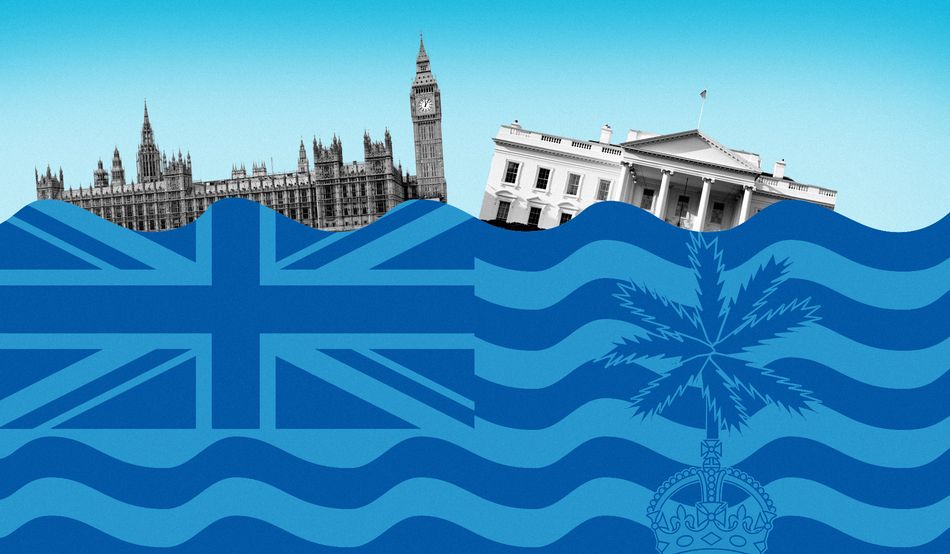
In many ways little has changed in the matter of the sovereignty of the British Indian Ocean Territory, otherwise known as the Chagos Archipelago. The claim of sovereignty by the United Kingdom is still disputed by Mauritius and is still denied by every international entity that examines the question.
So far the UK has avoided any binding determination on the question of sovereignty under international law, and no doubt it will continue to keep seeking to evade any such adverse judgment. But the uncertainty under international law will continue. The United Nations General Assembly, the International Court of Justice and the United Nations law of the seas tribunal have all found against the United Kingdom.
That the UK and Mauritius signed a treaty to end this uncertainty has not changed. This wide-ranging and balanced agreement transferred sovereignty over the islands to Mauritius in return for a 99-year renewable lease on the island of Diego Garcia for continued, unrestricted use as a joint United Kingdom-United States military base.
What also has not changed, at least within the US intelligence community and the State Department, if not the president, is that they would be content with a transfer of sovereignty to Mauritius, as long as there is a long-term lease for the unrestricted use of Diego Garcia for military purposes. Indeed, it would be in the US’s interest for the legal uncertainty to be removed.
Until recently even President Donald Trump was at ease with the deal that would return the islands to Mauritius in return for a long-term lease on Diego Garcia. In February 2025 Trump said, “I have a feeling it’s going to work out very well”. In May 2025 the State Department gave the deal its full support.
So what has happened? Why has the United Kingdom now pulled the required domestic legislation for implementing the treaty with Mauritius? The legal position has not changed, nor have the long-term benefits of the proposed agreement for the UK, the US and Mauritius.
All that has changed is that President Trump has withdrawn his support for the plan. It appears this shift is in part because of lobbying by British opposition politicians of this foreign leader against the policy of the United Kingdom. It also appears to be because the UK refused to allow the Diego Garcia base to be used for the US attacks on Iran.
It is a change in view which is against the views of his own State Department, but that of course does not matter to President Trump. He now sees the deal as a mistake, and he wants to frustrate it. The formal consequence of this reversal is that the United States will not participate in the necessary exchange of diplomatic letters for the deal to be implemented.
The UK government thereby had no real choice but to pull the parliamentary bill, even though it had been through both houses of parliament, as it would have had not enough time to pass in the current parliamentary session, which is about to end. A new bill will thereby have to be presented in the next session. A great deal of parliamentary time has been wasted.
And the position under international law will not change and it is unlikely to change, other than that the United Kingdom risks a binding determination instead of the non-binding determinations so far. The legal uncertainty over the military base will continue, instead of it being placed on a sustainable long-term basis. Mauritius is certainly not going away and has stated that it will continue to press for the return of sovereignty.
Left out of all this, of course, are the interests of those who were abruptly and ruthlessly ejected from Diego Garcia when the current base was conceived. They have always been the forgotten people in this, with the US and UK focused on the military and strategic importance of that particular island.
The British Indian Ocean Territory is one of 14 remaining overseas territories of the United Kingdom, which with the three Crown dependencies and Northern Ireland, are what remains of British overseas imperial control. But regardless of size (all but two consist of relatively small islands) and population (four have permanent populations of less than 40), these overseas territories continue to have immense symbolic importance for certain politicians.
Each remaining overseas territory will thereby be jealously protected by those politicians who don’t want to see any further diminishment of the rump of the British Empire, regardless of international law and, in the case of the Chagos Archipelago, placing UK strategic interests on a more certain basis.
When the deal on the future of the Chagos islands was agreed, this blog averred that the circumstances of that agreement indicated the United Kingdom’s legal and diplomatic weakness on the matter: that despite nominal sovereignty the UK had no real choice or autonomy.
In the last few months, even though the United Kingdom sought to press ahead with the deal despite President Trump’s public comments, and also sought to exert diplomatic pressure on President Trump to revert to his former position, the UK has, against its will, had to abort enabling legislation. And so in respect of the sovereignty of the Chagos Archipelago, that the United Kingdom remains weak legally and diplomatically has not changed either.