When Canadian prime minister Mark Carney spoke at Davos in January about the end of the rules-based international order, he provoked a global debate about how the world was being reshaped under the combined assault of Donald Trump and Vladimir Putin, and how a new and better global order might arise.
Inevitably, in the UK and other western states, that debate has largely focused on how countries can defend themselves without the US security guarantee. Defence spending is now rising, and many have slashed their overseas aid budgets to pay for it. But that has provoked a backlash, and has raised wider questions about the relationship between the global north and global south.
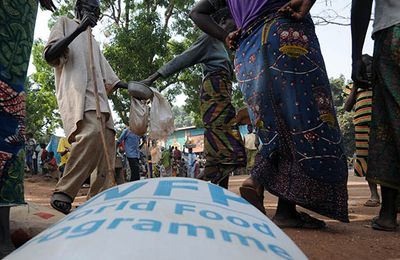
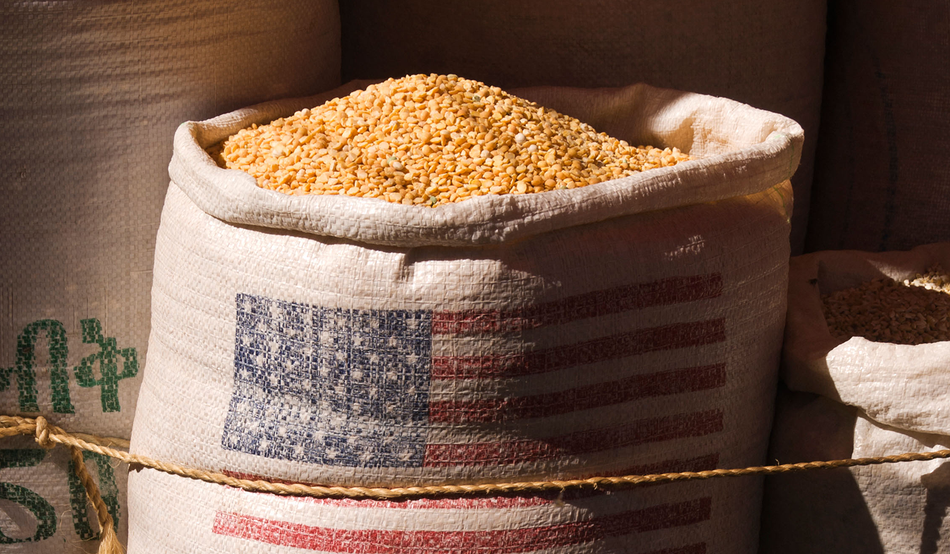
Overseas aid forms a significant part of that relationship. But Trump’s abolition of the American aid agency USAID and swingeing cuts in European budgets have seen the amount of Official Development Assistance (ODA) provided by OECD countries fall by nearly a quarter in two years, to $174.3bn in 2025. The largest single recipient is now Ukraine, which is not classified as a developing country. Meanwhile, foreign direct investment to the Global South is two and a half times larger than ODA, at $435bn. Remittances sent back to their families by migrants in other countries are worth an estimated $690bn, four times the volume of aid. And all of these are dwarfed by trade flows (worth more than $16 trillion).
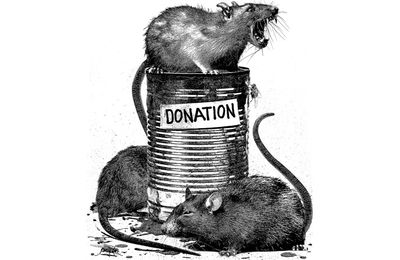
There has been widespread anger at the increase in poverty, hunger, disease and death in low-income countries which will result from the recent aid cuts. But the whole purpose and organisation of development assistance is now also in question. Academics and activists in the developing world have long argued that aid generates both dependence and corruption, and keeps countries in a state of neo-colonial subservience. Too much aid money goes back to its donors, they say, to pay foreign consultants and in the trade deals tied to it. The aid industry has proliferated and fragmented, with the poorest countries almost overrun by competing aid agencies, UN organisations and overseas charities.
But if the aid industry has proliferated, so too have the initiatives currently devoted to rethinking it. The UK Foreign, Commonwealth and Development Office (FCDO) last week hosted an international conference to explore better “partnerships” between developed and developing countries. The OECD ran an almost identical conference the week before. The Gates Foundation, the World Economic Forum and the thinktank ODI Global have all launched similar endeavours.
Though few of these initiatives have yet reached conclusions, it is already possible to discern four ways in which new relationships between developed and developing countries might emerge.
First, the 57-year-old structure of official development assistance—which is defined and calculated by the OECD—would be phased out. This does not mean that richer countries should not provide financial support to poorer ones. It means establishing a clearer set of purposes (for example distinguishing humanitarian aid from long-term development funding) and acknowledging that it is no longer just the traditionally developed countries which provide aid. The Gulf States, South Korea, Turkey, Indonesia, Brazil and other “emerging economies” do so too. The UN, to which all countries belong, would be a more appropriate home than the OECD, the club of rich countries, for a properly global framework.
Second, the relationship between donors and recipients would be one of genuine partnership. Mindsets of paternalism and deference still underpin much aid, with donors (including the World Bank and IMF) imposing their own strategies and priorities on recipient countries. Sovereign governments need to be in charge of their development plans, and donors should coordinate their assistance.
Third, the economic relationship between north and south would change. Low-income countries grow through investment and trade, not aid. That means helping them rise up the value chain, so that, for example, African countries no longer simply export their critical minerals and agricultural produce to China and the west, but rather can refine the minerals and manufacture the foods at home. In this way they would employ more people and retain a greater proportion of natural wealth in their domestic economies. Richer countries could also offer debt relief, since rising dollar interest rates have left many poorer countries spending more on debt interest payments than on health or education.
Fourth, global public goods, like tackling climate change, ocean protection and international disease control, would have a new financing framework. In March a coalition of 25 countries committed to advance the concept of “global public investment” (GPI). This would see all countries contributing to global environment and health funds proportionately to their income, with all countries eligible to receive funding and being involved equally in governance. GPI would mark a radical shift in the principles and practice of international cooperation.
But for any of this to happen, developed countries will have to be serious about equal partnerships. Are they willing to give up some of their power in the global economy, and in the running of key institutions like the IMF and World Bank? Are they willing to forego the soft power benefits of bilateral aid in order to put more funding into efficient and coordinated international institutions? At the Foreign Office conference last week many developing country participants were sceptical.
In the meantime, the British government was reported to be eyeing up further cuts to the aid budget to fund higher defence spending. Even Labour ministers seem no longer willing to make the case for aid to the public. The commitment made by the last Labour government to the international target of providing 0.7 per cent of national income in ODA (made statutory in 2015) has long gone; the UK will be down to 0.3 per cent by next year, which if you take out the money being spent on refugees at home, amounts to just 0.24 per cent spent overseas. (The UK now gives proportionately less than Ireland and Turkey.)
One option would be to allow at least some development spending—in areas such as climate change and support to fragile countries, which military leaders consistently say are critical contributors to global security—to be included in the UK defence spending target of 5 per cent of GDP by 2035. That would reduce some of the competition between the defence and aid goals (and also temper the risk of the defence target leading to poor value for money spending). But advocates are not holding their breath. The new world order isn’t upon us yet.