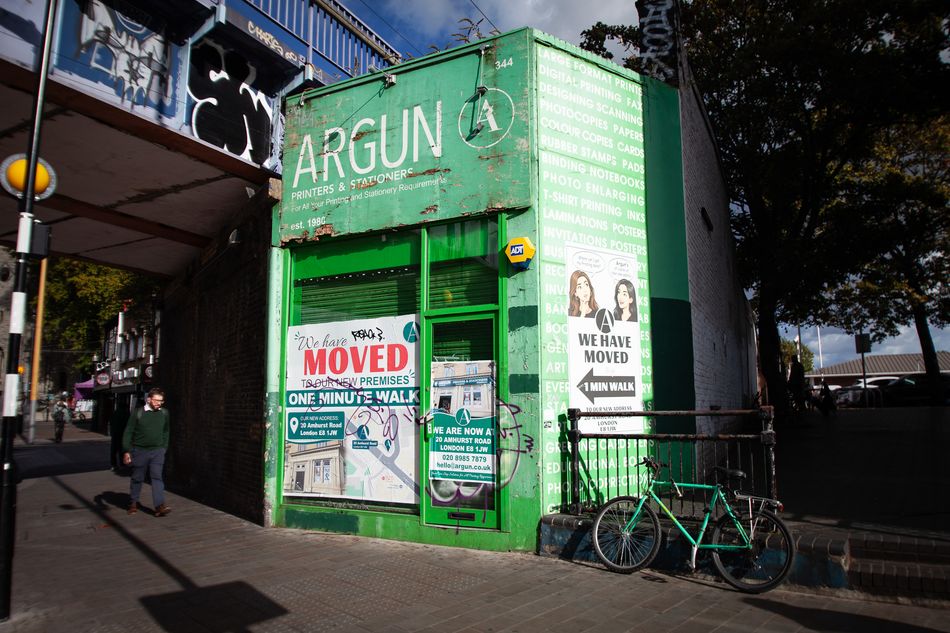
In November last year, Farukh Adia received a visit from his landlord, the Arch Company. He manages Argun, a stationers, which used to sit in a prime position on Mare Street in Hackney, northeast London. The premises with the unmissable green frontage, at the edge of the railway arches on Bohemia Place, had long been a community service as much as a shop. There would always be a queue for printing, customers lining up past shelves stocked with every kind of paper or art supply imaginable. The Arch Company was redeveloping the arches and Adia was expecting an update during the visit.
“Instead they just said, ‘How would you feel about moving to Morning Lane?’ I was shocked… And then they said, ‘If you don’t agree with that, we have to look at breaking your lease.’ So eventually that’s what happened.” (According to the Arch Company, the stationers’ lease included a break clause for redevelopment and it was open about its plans for the site.)
The Arch Company had become Adia’s landlord in 2019, when it successfully bid for Network Rail’s commercial property portfolio for £1.46bn on a 150-year lease. It was a joint venture between Telereal Trillium, the British privately owned property investment and development firm, and Blackstone, the leading American private equity company.
There’s nothing new about tenants in London’s arches having to make way for redevelopment (in 2015, there was a huge outcry in Brixton when Network Rail itself served notice on local traders), but the sale of the arches is a microcosm of a bigger story. Over the past 20 years, private equity has become a significant part of the UK’s economy. According to UK Private Capital, an industry association, private equity and venture capital contribute 7 per cent of GDP. Its social impact has been the subject of much debate as its reach has grown, from housing to care homes. This year, the government passed a law with powers to cap the profit of private providers in children’s social care.
These iconic feats of Victorian engineering happen to be the largest estate for small and medium enterprises in the UK
Campaigners and tenants fear for the future of the arches as an affordable space for businesses. These iconic feats of Victorian engineering happen to be the largest estate for small and medium enterprises in the UK, comprising 70 per cent of more than 5,000 rental spaces (the majority in London).A parliamentary debate on the arches may well happen before the end of the year.
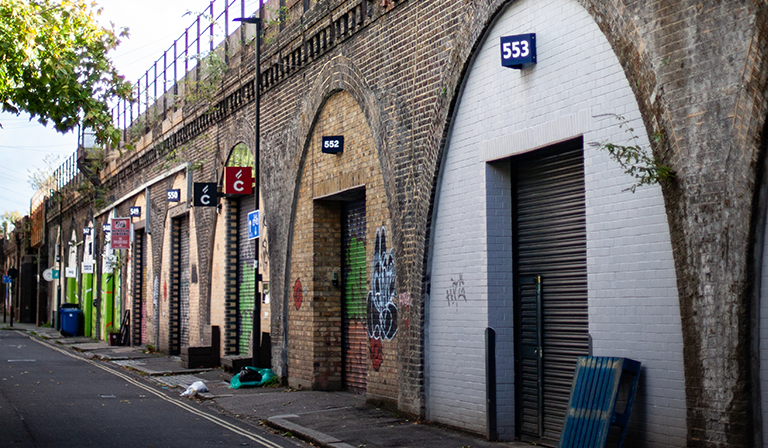
Argun was one of the last long-standing businesses in the arches off Mare Street. The Arch Company (also known as the Arch Co) has invested £7.6m at Bohemia Place, the street where the arches are located, refurbishing and upgrading 16 railway arches as a destination for the night-time economy; only food and drink outlets have survived. Argun challenged the termination, with a petition of more than 3,000 signatures and support from local MP Meg Hillier. In the end, however, Argun decided against fighting its landlord any further. “It was a no-win battle,” says Adia.
The shop rejected the Arch Company’s offer of new premises elsewhere and has now moved to a new location nearby: more spacious, but not as central as the site it occupied for more than 30 years. It’s still too early for Adia to assess the impact on the business. (The Green party took control of Hackney council in May and declined to comment.)
The railway arches are just a fraction of Blackstone’s vast real estate portfolio, which is valued at more than $600bn. It is the world’s biggest commercial landlord. The company has been deepening its relationship with the UK since it opened its London office in 2000: it is the majority owner of England’s largest private for-profit provider of newly built affordable housing, Sage Homes, and is now one of Britain’s major foreign investors.
During Donald Trump’s state visit last year, the government announced a £100bn investment from Blackstone, £10bn of which had already been announced in 2024 to create one of the biggest AI data centres in Europe. The company’s CEO Stephen Schwarzman has endowed a centre for the arts and humanities at Oxford University with a gift of £185m—the largest single donation to the university in modern times.
In 2025, Blackstone acquired Telereal Trillium’s 50 per cent stake in the Arch Company, making it the sole owner of the arches. In July this year, Network Rail sold further property assets to the Arch Company in a multimillion-pound deal. The Arch Company reported an operating profit of £27.4m at the end of last year.
The 2019 sale was heavily criticised at the time—not only for the loss of a profitable public asset, but over the impact on local businesses
The 2019 sale was heavily criticised at the time—not only for the loss of a profitable public asset, but over the impact on local businesses. Meg Hillier, then chair of the Public Accounts Committee, described the sale of the arches as “selling off the family silver”. Her committee strongly criticised the failure by Network Rail and the Department for Transport to consult with tenants and protect their rights. Seven years on, more than half no longer have protected leases. There are now calls for reform to protect the businesses.
A spokesperson for Blackstone said: “We are proud of the significant investment in the Arch Company’s estate, in many cases transforming vacant and underused arches into high-quality space for a diverse range of businesses across the UK. This has helped to welcome hundreds of new small businesses, while a quarter of existing customers have chosen to take additional space with The Arch Company.”
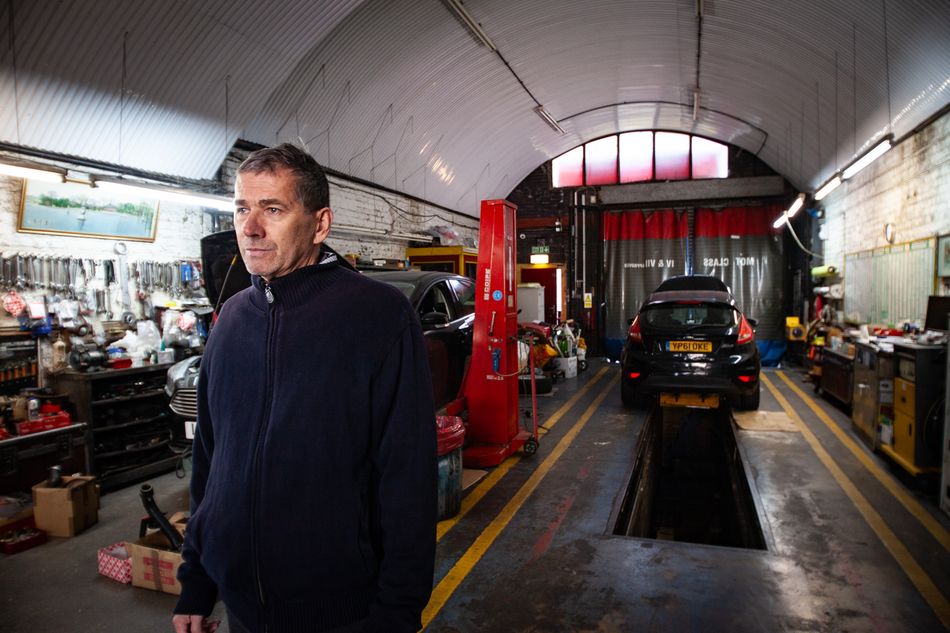
Network Rail first announced the plan to sell “non-core assets” in 2015, in order to fill a significant shortfall in its investment programme. This was the year in which the government sold off more public assets than at any time in UK history. In the run-up to the sale of the arches in 2019, Derec Hickman set up Guardians of the Arches with his wife, Nhi Vinh Chu, to support the businesses affected. Her family has an MOT garage in the arches off Mare Street. Hickman estimates that he has dealt with some 1,500 queries and had many more failures than successes (the Arch Company disputes his figure): “In other words, we’ve lost the good lease, we’ve lost the tenant, we’ve lost the right to stay or the business has moved elsewhere.”
The capital’s first Marks and Spencer opened in an arch on Brixton Station Road in 1903
It hasn’t always been bad news for the businesses that have been forced to move, he admits. He knows of at least half a dozen that have gone on to expand. But he’s also seen the casualties.
London’s very first railway arches were originally intended for housing. When the London Bridge to Greenwich railway opened in 1836, it was built on a viaduct to avoid multiple level-crossings through the city, and the arches became a new feature of the urban landscape. They were cramped, leaky and shook when the trains went by, so the idea of housing was abandoned, though they did become a refuge for the homeless. Businesses started opening in the arches as soon as they were built, however. The capital’s first Marks and Spencer opened in an arch on Brixton Station Road in 1903.
Light industry has always dominated, from car mechanics to workshops—alongside the breweries, artisanal bakeries and restaurants that have multiplied across the London arches in the past 20 years. The mayor of London, Sadiq Khan, has described them as “seedbeds of innovation and future talent… important for London’s position as a global cultural capital”. They vary considerably in appearance: from the now pristine sweep of arches on Bohemia Place, with their colourful murals, to ones with buddleia growing out of the raw brickwork. All share a Victorian industrial grandeur that gave beauty even to the utilitarian.
According to an independent report published by the Arch Company in 2024, the businesses in railway arches across England and Wales contribute £3.3bn to the economy annually, supporting 43,000 jobs. The rents have traditionally been lower than other commercial spaces in London, but tenants began to complain of rent hikes as the sale of the arches approached, believing that Network Rail was seeking to increase the valuation—something it has denied. (Network Rail did not respond to a request for comment.) Helen Hayes, the MP for Dulwich and West Norwood in south London, has more than 300 arches in her constituency. She describes tenants as apprehensive of their landlord and stressed by having experienced some difficulty in engaging with it.
“We’ve seen problems that basically stem, I think, from a conflict between the Arch Co’s profitmaking aim and their tenants who are small businesses,” she says. “The arches have historically been a place where small businesses that provide vital services, that are a really important part of our economy, can rent low-cost workspace.”
In a debate in parliament in 2023, Hayes stated that the Arch Company was seeking to double the commercial rent for car mechanics in the arches in her constituency: “If a proposal for a rent increase effectively smashes the business model of a whole sector, that cannot be allowed to pass without challenge.” According to the Arch Company, it was not possible to provide accurate data on rent reviews due to the individual basis on which they are assessed. There is a tenants’ charter, in which the Arch Company has committed to being “an accessible and responsible landlord” and to working with longstanding tenants where “affordability might be an issue”, but it is not legally binding.
Many tenants also lost their right to security of tenure. When the arches were sold, Network Rail required all future leases to be contracted out of the Landlord and Tenant Act, which gives commercial tenants security of tenure—that is, the right to renew a lease at a market rent once it ends. When this legislation was first passed in 1954, the protection for tenants was mandatory. Contracting out of the Act was first introduced in 1970. It required a court order until a reform in 2003 brought in a simpler administrative procedure. At the time of the sale, Network Rail said that the statutory protections of the legislation hindered access to the properties for urgent repairs to the railway. The Public Accounts Committee dismissed this justification, criticising the Department for Transport for allowing an act of parliament to be bypassed. When the Arch Company bought the arches, 18 per cent of the leases were contracted out. By 2024 the figure had risen to 55 per cent.
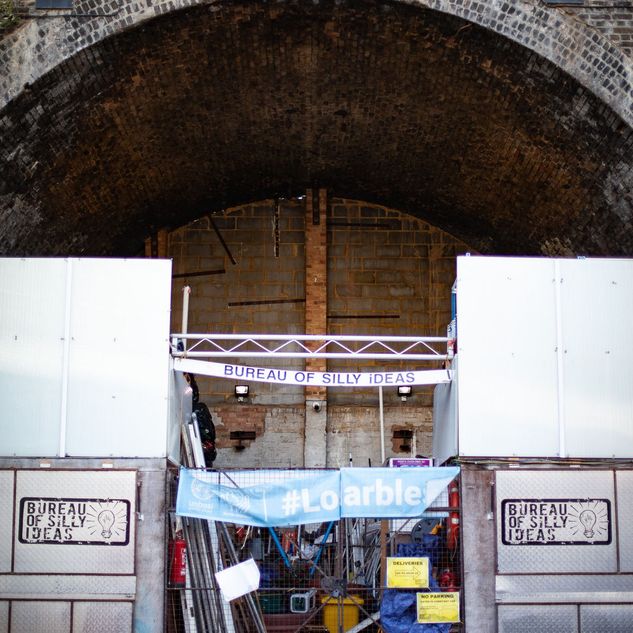
Roger Hartley has been running the Bureau of Silly Ideas from five arches in Brixton, part of Helen Hayes’s constituency, for more than 20 years. He has long grey hair, a goatee and an energetic, impish presence. The arts organisation has a playful approach to bringing art into public spaces, from street shows to cabaret, and is embedded in the community, offering training opportunities and hosting events. The arches are part of Brixton’s Creative Enterprise Zone, one of the London mayor’s initiatives to increase affordable creative workspaces. Hartley’s five arches include a rehearsal room and storage for the many humorous installations he has created over the years, among them a robot portaloo (“Barry Maniloo”, complete with gold chain and disco music).
Hartley is one of the few tenants to have challenged the Arch Company and had some success. He took legal action to renegotiate the lease on three of the arches and see off a rent hike of more than 150 per cent (the matter was settled out of court at the beginning of this year). But in April, only a week after sending the new lease, the Arch Company issued notices, according to the terms of the leases, terminating the tenancies on all the arches he occupies. Hartley notes with some irony that invitations were going out to the launch that month of the new centre for the humanities at Oxford.
Heenlisted support from the Arts Council (one of his funders), the Greater London Authority’s Culture at Risk team and Lambeth Council, which attended meetings with his landlord in the run-up to the termination. Minutes from meetings in January and March show that the Arch Company voiced support for Hartley’s organisation and was willing to find a solution, but made clear that it wanted to charge a market rent (unaffordable for a small arts organisation) and stated that its mandate “is to invest to make a profit for shareholders”.It also shared its intention to redevelop the whole site.
In the summer, Lambeth Council turned down the Arch Company’s planning applications for the arches where Hartley is a tenant. Its grounds included the failure “to safeguard arts, cultural and leisure facilities”, a clear sign of support for the value of Hartley’s work in the community. His battle is about more than protecting tenants like himself—it’s about changing the culture. He’s calling on the Arch Company, and other landlords, to commit to “good growth” and invest in “long-term cultural infrastructure and community value alongside commercial return”. It’s an echo of Andy Burnham’s commitment to “good growth in every postcode”, a core goal in his government’s transfer of power to local communities. “Bad growth literally sterilises the environment in standardisation,” Hartley tells me. “And the chance of putting anything back is very, very hard.”
A spokesperson for the Arch Company said: “These examples are not representative of the broader experience of our customers across an estate of over 5,000 properties. When we took ownership in 2019, years of underinvestment had left many properties, including railway arches, former station buildings and parcels of land, vacant or in need of refurbishment. In some cases, properties had not been subject to a rent review for as long as 20 years, reflecting the extent to which parts of the estate had been left without active management over a period of decades. Since then, we have invested close to £100m in improving spaces and bringing properties back into use, while strengthening customer support through dedicated teams, clearer processes and new lease products offering greater flexibility and certainty. We will continue to invest across our estate, upgrading properties and ensuring they are fit to meet the needs of businesses today and in the future.”
In 2024, the Law Commission, the independent body that reviews English and Welsh law, launched a consultation on security of tenure. Provisionally, it has concluded that a return to mandatory security of tenure for commercial leases is not the right approach and that the contracting out model will remain in play. Hickman has analysed the submissions to the first stage of the consultation (with the help of ChatGPT) and found that the big business players, such as supermarkets and chains, mostly have security of tenure. The evidence on small businesses is not comprehensive, but it suggests that they are more likely to be contracted out of their leases, meaning tenants have no right to renew their lease at a market rent at the end of the term.In a submission to the Law Commission consultation, the British Retail Consortium stated that landlords often appear to have the upper hand on security of tenure for smaller and independent businesses.
Helen Hayes MP is hoping to secure a debate in parliament about the Arch Company by Christmas
“The high streets are empty,” says Hickman. “The government wants to do something about it. Everybody wants to do something about it.” The problem, Hickman believes, lies in the difficulty for small businesses in securing long-term tenancies. (The Ministry of Housing, Communities and Local Government did not respond to a request for comment.)
“Part of economic growth is having a thriving small business sector across the country,” Hayes tells me. “It is important that the government addresses these issues.” Even though the government sold off a valuable public asset seven years ago, she thinks it’s possible to intervene.
The MP is hoping to secure a debate in parliament about the Arch Company by Christmas. “The Arch Co is a private business, but they have a long lease on property that is owned by the state because Network Rail retains the freehold of the arches,” she says. “I think there could well be scope for additional regulation that takes a protective view of our small business economy with regard to security of tenure and policies around rent reviews.”
When I meet Roger Hartley again in September, he has cut his hair. He had smartened up for a meeting with the Arch Company, thinking it would help the discussion if it looked as if they had something in common. To his amusement, his interlocuters clearly had exactly the same idea, turning up casually dressed rather than in their suits. It may have signalled a more constructive way forward. Days before the break in Roger’s leases was due to take effect in October, the Arch Company extended the deadline by a couple of months and offered to work with him towards finding a solution, which may include relocating nearby. It’s testament to Hartley’s tireless resistance, and the support of the community, that he’s got this far.
There’s still some way to go, however, for the businesses in the railway arches, which are so significant for the British economy. Hartley wants to give a chance to his vision of private equity working differently, supporting the culture of a community–and he’s keen to sit down with Stephen Schwarzman to discuss it. It remains to be seen whether the government can address the power imbalances that appear to affect not only tenants in the arches, but any small British business hoping to thrive.