Not too long ago, and at far too young an age, I had to have an intimate medical examination. Answering the question “And what do you do?” is a difficult task when a gloved finger is somewhere you’d rather it wasn’t. “I’m a writer” gives rise to “Of what?”, and “I’m a biographer” leads to “Of who?” Then it came, a probe more dread than the lubricated finger: “And what are you working on at the moment?” For some reason I was honest: “Have you heard of Saki?” The reply was instant: “Of course!” This, I thought, is a doctor I can trust. Then: “Wonderful with sushi. Do you serve it hot or cold? Take a deep breath, this might be a tad uncomfortable.”
My book was not on the Japanese alcohol, but on “Saki”, the pen name of an Edwardian writer called Hector Hugh Munro. In other, less penetrative, circumstances my mentioning his name gave rise either to blank looks or to wicked smiles. Those who knew, knew. They were usually, but not always, of my parents’ generation, during whose youth editions of Saki’s stories, including “The Open Window”, “Sredni Vashtar”, “Tobermory” and “The Storyteller”, were gleefully passed around on university campuses or tucked into Christmas stockings. In total, Saki wrote some 200 sketches and stories, populated by beautiful, louche young men, by talking animals and vicious aunts. His writing is dredged in a darkly comic atmosphere of macabre camp that has kept the stories uninterruptedly in print. Figures from Noël Coward to PG Wodehouse, AA Milne to The League of Gentlemen have professed a considerable debt. He seemed to me to be the fons et origo of comic writing, and comic thinking, in English in the 20th century.
I’m surprised it took me so long to find him, or for him to find me. In 2022, awaiting the publication of my biography of Coward, I began to cast about for a new subject. It’s harder than you might expect. The London Review of Books always provides amusing mini-biographies of its contributors that are updated with the arrival of each essay. I remember one for Rosemary Hill that ran: “Having dismissed Constable, she is still pondering the subject of her next book.” This may simply have been a pragmatic withdrawal after James Hamilton’s Constable: A Portrait, but the use of the word “dismissed” is nicely peremptory, implying a line of eminent subjects auditioning for biographical treatment and being cursorily sent away as unsatisfactory (“Don’t call us, we’ll call you”). If only it were that simple.
I spent a long while pursuing—the overtones of blood sports are always hard to avoid—the estate of a major writer who has no complete biography. The answer came that such a book is, for the moment, not wanted. (Write it anyway, you might say, but for in-copyright authors the support of an estate is vital.) Then—and this was a more tricky correspondence still—I approached a living subject, who replied with variations on the phrase “not now”, which is of course a euphemism for “wait until I’m dead”. Biographers soon become vultures, picking over the carrion while it yet breathes. In desperation, I lobbed various esoteric subjects at my long-suffering editor, who I think wished I would give in and write a book about spies or the Second World War, preferably in combination. Every commercially viable figure had been written about ad infinitum. Every forgotten name in need of a biography to revive their reputation had no reputation to justify a biography.
I remember coming downstairs in the middle of the night to check that no biography of Saki had been written in decades. None had, not since an American journalist called AJ Langguth brought out the first, hitherto only, full-scale life in 1981, nine years before I was born. Was Langguth still with us? I Googled. He wasn’t. It helps.
The writer whom Noël Coward proclaimed the most influential on his own career was Saki
Saki had been hiding in plain sight, unfinished business from my previous book, waiting to be mopped up. Noël Coward rather disdained the figure of whom he is most often considered a descendant, namely Oscar Wilde. (We are getting into a bad habit of considering writing by homosexuals to be fashioned from the same rainbow.) Like many gay men of the time, he thought that Wilde’s insistence on suing the Marquess of Queensberry, which led to his trial and imprisonment, had set back the cause. Nor, aside from The Importance of Being Earnest, did he particularly admire the plays. No, the writer whom he proclaimed the most influential on his own career was Saki, whom, like me, he discovered as a teenager.
On top of believing that Saki’s stature and significance, as opposed to his comic gifts, had been undervalued, I realised he was an irresistible gift to a biographer. Few writers of his generation had a life so crowded with incident and adventure. Our man once kept a tiger as a pet while living in the Burmese jungle. He attended Émile Zola’s reburial and watched Alfred Dreyfus survive an assassination attempt. He witnessed one of the earliest flights of an airship; he befriended one of Oscar Wilde’s lovers. In Serbia, he saw the open windows of the royal palace through which the corpses of the royal family had been thrown; in Salonica, he was detained by armed guards during a terrorist attack. He threw a party for the dancer Nijinsky and was present at the 1905 revolution in St Petersburg. And he was in the House of Commons as the British government decided to commit to a global war that would see him meet his death on a muddy battlefield near the Somme.
Then I was speedily reminded of all the reasons not to write a biography of Saki. He managed to be on the wrong side of almost every political question of his day, not least female suffrage. He was antisemitic, without question, although I set myself the task of arguing that the most famous evidence in the case for the prosecution, his story “The Unrest-Cure”, about a fabricated massacre of Jews in rural England, was a rather more complicated, and certainly very funny, braiding of offence, comedy and satire.
He is the kind of subject that means, however thick the kid of your gloves, you risk being decried as problematic by the left-wing press and as a snowflake by the right. So many reviewers now write culture-war-by-numbers pieces, from whichever side, that the fate of most young writers grappling with subjects who dared to hold the views of their time, rather than ours, is to be stuck between a woke and a hard place. “Soden gets his knickers in a twist about colonialism” is one line from a review—you can guess from which newspaper—that I particularly treasure.
But this is irrelevant noise, and all the more reason to keep on doggedly writing about such figures, as far as can be managed, in that unfashionable grey area of nuance and human complexity, knickers resolutely untwisted. More pressing was the issue that so little was known about his character or private life. There are few surviving letters or documents. His sister is often thought to have covered up evidence of his homosexuality by putting a match to everything that was left. I soon found there was no evidence of any such bonfire, even if evidence for his sexuality may be said to reside clearly in his prose. So do you serve him hot or cold? I recoiled from piping fiction into the factual gaps like whipped cream into a profiterole. And I didn’t quite like to refuse him the limelight by keeping him in the margins of a wider study of lives that are easier to reconstruct.
Saki’s sister is often thought to have covered up evidence of his homosexuality
The first thing to do was to discover whether more information and manuscripts could be hunted down. They could. Before long, I had a pile of war records, singed by an archival fire but readable; some hundreds of articles he published in Edwardian newspapers, never seen since; and best of all, 50 sides of hitherto unknown correspondence, his only surviving writing to friends. So it turned out that there was more to know than to ponder.
But, having spent years writing up lives from thousands upon thousands of carefully catalogued letters, I came to realise that the lack of concrete knowledge about Saki was a curious freedom. The epicentre was a blank, but the ripples that radiated from it reached as far as the 1857 Indian Rebellion and even a contemporary, entirely Sakiesque, series such as Inside No 9. This was as good a place as any to pitch camp. Writing about Saki, pitching camp is inevitable.
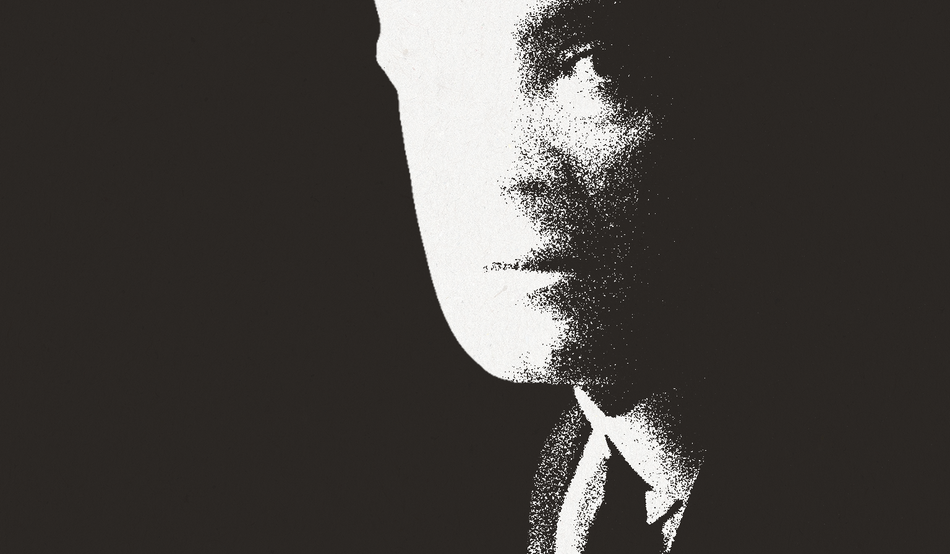
It is possible to revel in perhaps-ness, to invite your reader to join in the pondering, the thinking-aloud: the chase becomes more fun than the arrival at fact. You are forced into the cracks and crevices of history, your subject just out of reach, and in the end the admission of defeat on certain topics struck me as more honest than the biographer’s habitual illusion that a jigsaw of archival material has accurately trapped a personality within hard covers. If we are all unknowable to one another, and perhaps even to ourselves, it will not be for our biographers to solidify what should remain gossamer. Saki stayed in the elusive shadows. I found them an interesting place to be.
Having dismissed any number of figures, I am still pondering the subject of my next book.