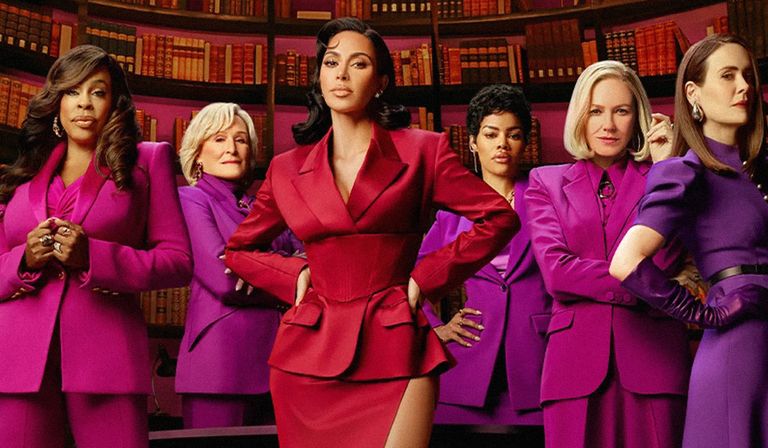
Ryan Murphy is the demon king of television. He is the producer, and now sometime writer and director, who brought us Glee, American Horror Story and, more recently, a series of ethically nauseating true-crime productions for Netflix called Monster, the first three instalments of which have covered Jeffrey Dahmer, Lyle and Erik Menendez and Ed Gein. He does not make good television, but he does make outrageously popular television. His Dahmer series remains the fifth most popular show on Netflix of all time. And now he’s brought us All’s Fair, a series following a firm of all-women, ultra-rich, ultra-high-powered LA divorce lawyers, which started airing in November on Disney+ in the UK. The critical consensus—and it really is near-unanimous—is that this show is bad.
When I heard about the show and its supposedly mammoth badness, I thought, all right. I’m in for some fun, in that case. Bad TV is, at least, not mediocre TV. Some of what I might think of as “bad television” is nonetheless television I will happily watch and enjoy on some level. The Sex and the City revival And Just Like That…, for instance, which was bad but which I watched out of love for the original characters. Or Emily in Paris. And how bad can All’s Fair really be? Kim Kardashian is in it, sure, but so are Naomi Watts, Sarah Paulson and Glenn Close.
It can be very, very bad indeed. All’s Fair follows this group of lawyers, all of them dressed to the eyeballs in designer clothes, as they try to defend various beleaguered wives against their caricaturishly evil husbands in divorce proceedings. It’s a real testament to the power of good writing that some of the cast are world-class actors and you simply cannot tell. “My flight was turbulent and so is my mood,” Oscar-nominated Watts has to say as she steps off a private jet. There are pieces of dialogue in this show that I had to rewind several times, with the subtitles on, to ensure I heard them correctly, so little grammatical sense did they make. “Arthur wanted more, so we did nine companies in total we started together,” one character says to another.
The show’s moral core is feminism as it applies only to the top 0.01 per cent of the world’s richest women. In one episode, the lawyers discuss the new kinds of beauty treatments they’ve been experimenting with, procedures like salmon-sperm facials and vaginal stem-cell treatment. When Close’s character suggests to them that she prefers to spend her time reading classic literature rather than undergoing cosmetic surgeries, Kardashian’s “Allura Grant” turns to her and says, “Will Jane Austen really help you adjust to ageing and gravity and public opinion?”
All’s Fair feels genuinely insulting to watch—as a woman, yes, but also just as a person with eyes
In the fourth episode, Niecy Nash’s character, a woman they’ve—honest to God—called Emerald Green, is raped after a singles mixer. All’s Fair is so far from being able to sustain the weight of a storyline like this that it feels genuinely insulting to watch—as a woman, yes, but also just as a person with eyes and a handful of braincells. And all of this is underpinned by sub-Selling Sunset, reality TV-ish slop musak.
So, yes, it’s abominable. But watching it made me question what I have meant in the past when I’ve talked about enjoying “bad TV”. Maybe when I say “bad TV” in a positive way, I mean frivolous TV or camp TV: shows which are not works of art, not saying much, if anything, about the human condition, but that nonetheless hit the entertainment spot. The team behind All’s Fair seems to have decided to put all its energy into the aspects that people celebrate about silly shows like Emily in Paris and And Just Like That…, namely the clothes and the glamour. But there is also enough believable plot, enough likeability, enough “writing of dialogue a human being would say” in those shows to support the froth that goes on top of it. Not so, here.
The same sort of miscalculation has been made with Malice, a new “Aren’t rich people terrible?” thriller that just came out on Amazon Prime. It’s got the stars (David Duchovny!), the glamorous holiday location, the conspicuous consumption and the promise of murder that made The White Lotus, say, such a smash hit. But it doesn’t have the writing chops, and so the characters feel flimsy, the plot unsatisfying. Yes, people watched The White Lotus and enjoyed the scenery, the wealth porn and seeing the very rich having a nasty time, but without good writing, strong characterisation and a decent mystery, none of that would have been enough to keep people coming back.
I feel, in watching All’s Fair, that I have finally found an answer to a question that has plagued my televisual life. Is there television so dreadful that I cannot, even in an ironic, rubbernecking-at-a-car-crash way, take pleasure in it? Yes, there is. Case closed.