As I glance down, the water is perilously close to spilling over the top of my wellies. But, despite it being late January and the water freezing cold, I push on. This is something I’ve waited a long time to see. We emerge into a clearing in the reed bed. A large willow tree has been pollarded down to stumps, and narrow water channels radiate out from it through the reeds. I imagine a drone shot would show this looking something like a child’s drawing of the sun. And like a child’s drawing, what I’m seeing has been crafted by mammalian hand. Well, paw.
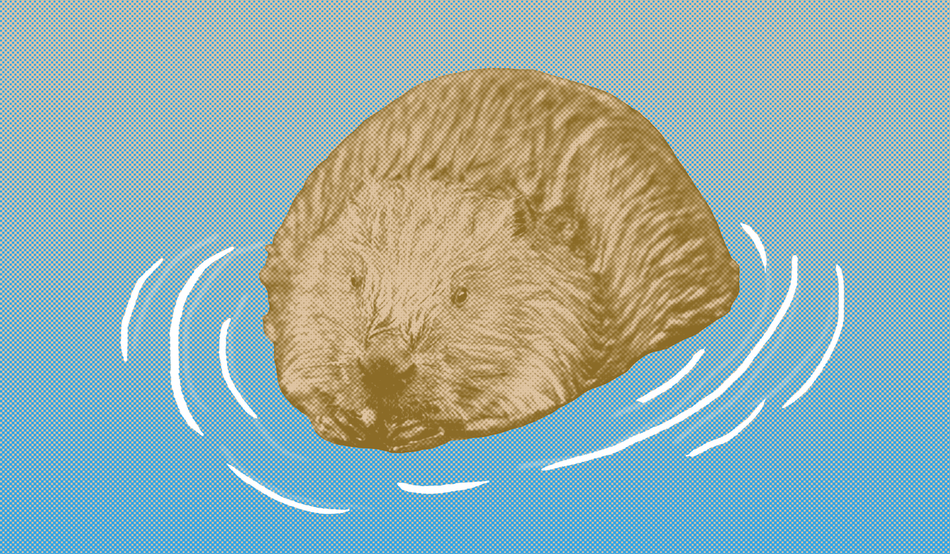
I’m back at the Wildlife Trust’s Nene Wetlands in Northamptonshire, next door to the busy Rushden Lakes shopping centre, one year on from witnessing the historic reintroduction of beavers to the site. The family of five, transferred from a wild site in Scotland, have since become a family of seven. Mum and Dad, Boudicca and Alan (dad was somewhat short-changed on the naming front), were joined by new kits Holly and Willow back in September. They have full rein of a large 17-hectare lake called Delta pit, but are enclosed by metal fencing that surrounds it, a Department for Environment Food and Rural Affairs (Defra) stipulation for all beaver sites at the time.
Yet shortly after their release in February 2025, Defra changed the rules. Now truly wild releases, without metal fences, are allowed—if they meet the (long list of) criteria. So, could Boudicca and Alan—and over 20 beaver reintroduction sites across England—soon be set free onto their neighbouring rivers and beyond?
My host, Ben Casey, of the Wildlife Trust in Bedfordshire, Cambridgeshire and Northamptonshire, is wearing suitably taller wellies than mine—and is keen to show me what the beavers have achieved in their first year. As we open a padlocked solid metal gate to the enclosure, I joke it’s like entering a mini-Jurassic Park. “Everyone says that!” he says. “I should rig up a speaker to play the theme music as the gate opens!” We scramble down a brambly bank to reach a large tree, recently felled. Strangely, even in a country unused to such sights for centuries, it is immediately obvious to anyone who has ever seen a Warner Brothers cartoon what this is: the red-raw wood gnawed into two clear conical shapes.
Out among the reeds, Ben explains, “beavers build canals because they’re most comfortable in the water, they feel free from predators… They pack the sides with material to make sure the banks are strong.”
Some falsely assume that reintroducing beavers is akin to letting zoo animals free. But the beaver was native to the UK until relatively recently. The last record of a wild beaver was in York in 1789, before it was hunted to extinction. When Shakespeare was a lad, there may have been beavers splashing around in the Avon.
The final step toward righting this historical wrong came in March 2025, when England witnessed its first legal release of wild, fence-free beavers in Purbeck, Dorset. Despite Natural England having received 39 applications to do the same elsewhere, almost a year on, as I splashed about the Nene Wetlands, no more wild beaver releases had taken place. Beaver eagers such as me were getting twitchy. The Guardian reported that landowners “found the application process flummoxing” with a word count “longer than some PhDs”. Had Natural England with one hand removed the need for fenced enclosures, but with the other made the process for wild releases practically impossible? Angelika von Heimendahl, the beaver reintroduction manager for the Wildlife Trusts, said in 2025, “We…don’t want to spend all our time and money jumping through hoops.”
Then in the second week of February 2026, suddenly three new wild releases took place. Two by Cornwall Wildlife Trust on the Par and Fowey catchment, and one by the National Trust on the River Aller in Somerset. As with Purbeck, these took place relatively far from populous areas, albeit Somerset was close enough to tempt nature minister Mary Creagh away from Westminster for the photo op, beaming, “The return of beavers is a vital part of this government’s mission to protect and restore nature and we’re working closely with local communities to maximise their benefits.”
In a rapidly changed climate where our weather yo-yos between flood and drought (I’ve written on the meteorology of this in this column before), beavers are more than just some cuddly feel-good story (though they are also that, which helps). They are a valuable means to the end of restoring the UK’s resilience to climate change and water stress.
“2025 was the driest year that we’ve had in a very, very long time”, says Ben. “There are all sorts of records being broken. The year previous to that, 2024, we had more flooding than we’ve ever had. The juxtaposition…is really quite stark. But as the lake levels dropped, [the beavers] built canals purposely to bring water to areas that dried up… they are going to be such a fantastic asset for our ecosystems and climate change and flood management in the future.”
For “going to be” read “when they are truly wild”. To achieve Natural England’s stated ambition for beavers to “transform and revitalise our degraded landscape... restoring rivers and wetlands” across the UK, beavers need to reach our major rivers. More beavers in Cornwall, where they have been for almost a decade, initially struck me as underwhelming. Until this line in the press release: “If other applications go to plan, Wildlife Trusts hope to be able to release around 100 beavers into seven rivers this year.” Those numbers would be a gamechanger.
I eagerly get in touch with von Heimendahl for the latest, and she confirms that the plan is “to look at the whole of our country. Beavers are a native species, and we will ultimately want to see the benefits they bring across a wide range of river catchments”. Having beaver populations on all the UK’s major rivers—including the Severn, Trent and Thames— “is ultimately a policy decision”, she says. “If we look at Europe we can see that beavers coexist happily with humans in many major cities.” There are 25,000 beavers in Bavaria, and “in Budapest you can see them on the Danube.” Beavers have huge benefits for biodiversity, water retention and flood prevention, says von Heimendahl: “Why not use the skills of this knowledgeable water engineer to help us?”
The first major rivers for legal beaver releases may be the Trent and Humber, which count several major cities on their banks, including Nottingham, Derby and Stoke. Rachel Bennett at Derbyshire Wildlife Trust is part of a team currently working through the licence application for Humber beavers. They’ve even hired a full-time “Beaver Feasibility Officer”.
The received wisdom is that farmers are resistant to beaver reintroductions near their land—but if this was true, it is changing. Martin Lines, CEO of the Nature Friendly Farming Network, says that the impacts of climate change mean that farmers “need to prioritise nature-based flooding solutions over costly hard infrastructure and improve water management. Beavers can significantly contribute to these objectives.” This is echoed by Bennett, of the Humber’s Beaver Partnership, who tells me that farmers are very engaged in their work. “A lot of landowners, once they understand the benefits of having beavers on their land, are accepting,” adds Carol Adams, of the Trentham Estate near Stoke, and the Humber beaver team.
Those that see the opportunities of beavers may reap the benefits. Farmers near Ham Fen in Kent have seen both improved water quality and water quantity thanks to beavers, where the National Farming Union is an active member of the East Kent Beaver Advisory Group. Von Heimendahl, who is also a beef farmer, wrote positively for Farmers Weekly about the cost: “Give beavers a bit of water, some greenery and off they go… far cheaper than a £80,000 irrigation pond.”
Letting Boudicca loose beyond her mini Jurassic Park pen, and into wild streams and rivers, would give the country “natural flood management”, says Ben. “A network of beaver dams upstream slows the flow… via leaky dams pushing the peaks down. That would be so beneficial.”
That said, there are no plans to release her just yet, he says. “Obviously, the legislation has changed. But our enclosure is good for now. If we or others want to do a wide release across a river catchment, we can bring landowners, residents, stakeholders to the enclosure and show them proof of concept”. Everyone who comes here is won over by the beavers and what they do, he says. You can even do your shopping at the retail park and get a coffee at Pret.
That’s all very nice, but ultimately, only when we see beavers on our major rivers and tributaries will we have started to atone for our dewilding sins.