The industrialised world is suffering a general governability crisis, with trust in bedrock institutions, support for democracy and electoral turnout in decline. On issue after issue, attitudes are so ossified that every policy infuriates a sizeable fraction of the population.
Take immigration. While the majority of western European populations report that immigration into their country is too high, for many on the left any criticism of immigration is worse than taboo. Such disagreements are not confined to “cultural politics”, which pits one set of moral stances and values against another on topics such as religion, minority rights and immigration. Even ostensibly technical issues have become unbridgeable battlelines. For techno-optimists, calls to regulate AI are not just misguided but a moral failure, worse than Luddism. For some progressives, resistance to AI has become a marker of identity.
Yet, the world needs compromise and good public decision-making more than ever. The list of issues calling for bold responses is long: not just AI, but climate change, rapid demographic shifts, growing income inequality (at least in rich countries) and new economic risks created by digital technologies and geopolitical rebalancing. None will emerge unless we break the governability impasse.
Governance problems start with a crisis of legitimacy of liberal democracies. Two related phenomena have undergirded this crisis. The first is the collapse of shared prosperity. The post-industrial economy, shaped by increasing use of technology and growing global integration, has made it much harder for workers without college degrees and the associated skills to keep up with the upwardly mobile graduates. The consequences are most jarring in the United States, where labour-market inequality has soared since 1980. But in Europe, too, middle-class jobs available to workers without a degree are now much scarcer.
The second is cultural politics. This began with the growing economic clout of those who could take on new roles in a computerised, data-heavy, globalised economy. The university-educated gained growing social status and then started becoming more influential in centre-left parties, such as the UK’s Labour party, social-democratic parties in Europe and the Democratic party in the US, which used to receive their core support from lower-educated, manual workers.
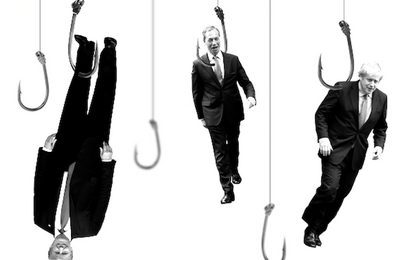
As these standard-bearers of liberal-democratic politics saw their base shift, their focus moved away from bread-and-butter issues, such as good jobs and inequality, even as the need for rebuilding shared prosperity became more urgent. They then took a plunge into cultural politics, emphasising issues of identity and oppressor-oppressed social dynamics. The right saw this opening, and responded with provocateurs who set about deepening every cultural wedge and converting working-class discontent into a weapon against liberal democracy itself.
A return to conservative politics will neither satisfy the progressive elements on the centre-left nor offer comprehensive solutions to rising inequality and the shortage of good jobs. Neither will authoritarianism and right-wing populism. Anti-establishment and authoritarian parties are not just failing to rise to the challenges that brought them to power, but are plunging into arbitrary policymaking and widespread corruption.
Liberal democracy needs a new governing philosophy. It was the emergence of the social-democratic philosophy that spearheaded the success of democratic governments in the 20th century. Social democracy was a response to the inequalities of industrialisation. It provided the basis for sharing the gains from economic growth and the organising framework for much-needed investments in public services.
It cultivated shared values, with its emphasis on sharing economic gains and building safety nets being adopted by centre-right parties and even the postwar Republican party in America. But this model depended on preconditions that don’t fit today’s reality: strong unions, an industrial economy, limited capital mobility, and populations that were less culturally and economically divided.
A new governing philosophy—what I call “working-class liberalism”—should be based on two pillars aimed at dealing with our present challenges. The first is political and rests on placing greater emphasis on local governance, which in turn will aid acceptance of cultural heterogeneity throughout the industrialised and emerging economies. This means tolerance of values and community priorities, including on issues of religion and civic participation. This must apply to both ethnic minorities and majorities, but must still protect basic individual liberties and the “right of exit” of people from their communities. It also means delivering at the local level the public services desired by communities.
The second pillar is prioritising jobs and shared prosperity. Strengthening institutions that protect labour is one step towards this objective. But there isn’t much that unions can achieve if technology moves quickly towards massive automation—high wages would end up encouraging even more automation. Shared prosperity depends on redirecting AI so that it becomes a tool for expanding worker capabilities and improving productivity in workplaces, rather than chasing the amorphous dream of artificial general intelligence.
This is no easy feat, but several policy levers are available, including reforms that remove the asymmetric tax treatment of capital, measures to encourage greater competition in the tech sector and government support for new, pro-worker AI technologies, for example in the form of high-profile competitions for designing such technologies and a pre-commitment to purchase them if they are shown to work well. But more important than specific policies is a renewed liberal-democratic consensus that AI can and must empower workers.
What has been lost over the past half-century isn’t just trust in institutions but the acceptance that differences of interests and opinion can’t be—and shouldn’t be—fully bridged. When liberalism is at its best, legitimacy and trust in institutions can be rooted in both shared moral principles and differences. This must start with an understanding that in a plural society, even well-functioning institutions will sometimes deliver policies and norms that don’t align with our priorities. We need such legitimacy, and such accommodation, today more than ever.
What Happened to Liberal Democracy? Remaking a Politics of Shared Prosperity by Daron Acemoglu is published by Profile Books