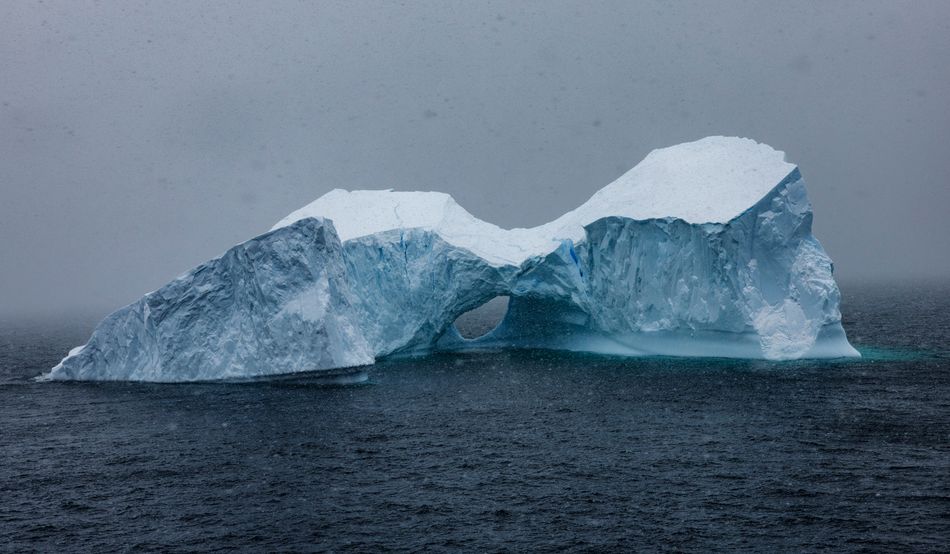
For more than two centuries, ships from my home state of Massachusetts sailed south into the Southern Ocean that encircles Antarctica. They returned carrying whale oil from a wilderness largely valued for what could be extracted from it.
Today, another vessel built in Britain works those same waters for a very different purpose. The RRS Sir David Attenborough carries scientists, like those from Woods Hole in Massachusetts, not to exploit the Southern Ocean, but to understand and protect it.
That transformation was built upon international cooperation. In 1959, the United States, Britain and 10 other countries agreed to put competing interests aside and work together to preserve Antarctica for peaceful purposes and science by forming the Antarctic Treaty System. The Southern Ocean became a place where countries could demonstrate that cooperation was possible even when their wider interests diverged.
In 2009 Britain helped establish the region’s first marine protected area (MPA) around the South Orkney Islands. And in 2016, when I was US secretary of state, I had the privilege of working with the UK foreign ministry to negotiate the Ross Sea Region Marine Protected Area. At about 1.55 million square km it was, at the time, the largest area of ocean ever set aside for conservation and science. It was not easy. China, Russia, the US, New Zealand and others had different interests. But ultimately we found common ground.
The Ross Sea agreement was meant to be a beginning, not an endpoint. Countries wanted the Antarctic continent encircled by protected areas. Yet a decade later, no new protections have been created, while pressure on the ecosystem has continued to grow.
When governments gather next week in Hobart, Australia, for the annual meeting of the Commission for the Conservation of Antarctic Marine Living Resources (CCAMLR), there is an opportunity for a breakthrough. At a moment when the international system is under strain, Antarctica offers a place where cooperation may yet still work.
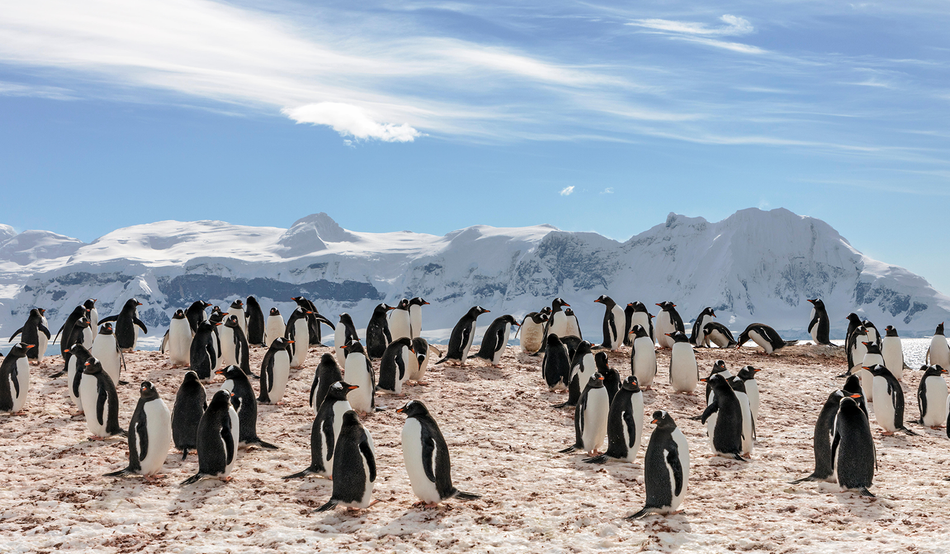
A breakthrough, though, requires countries to agree on three things. The first is krill. They are the foundation of everything that lives in these waters—what brings the penguins, the seals, the whales. For decades, we have been fishing them at industrial scale. Conserving krill is the foundation of protecting this ocean. Governments should agree on a new, science-based approach to managing krill fishery. That means spreading catches out, across regions and seasons, rather than concentrating fishing pressure in sensitive areas and times of the year. The objective is not to eliminate fishing. It is to ensure that fishing and the wider ecosystem can coexist.
The second is marine protection. Even when the fishery is well managed, marine protected areas are needed to safeguard essential krill nursery habitats, protect vulnerable species, conserve sensitive sea floor ecosystems and allow scientists to measure the impacts of climate change in one of the fastest-warming places on Earth. Countries should start by agreeing, this year, the proposal from Chile and Argentina to create a protected area around the important krill predator feeding grounds of the Antarctic Peninsula or Domain 1 MPA.
Finally, countries should look beyond the D1 MPA and establish a firm timetable for completing their promise to encircle the Antarctic continent with protected areas, bringing forward a full representative network of Antarctic MPAs by 2030. Just agreeing to the proposals already on the table, combined with existing protections, would protect over a quarter of the Southern Ocean, giving it one of the highest levels of ocean protection anywhere in the world.
What makes this moment different is that the old divisions about the future of Antarctica are beginning to shift—including, crucially, within industry itself. Progress has not always come easily when fishing and conservation interests have met at the same table. That is changing.
Industry is now at the table in a new and constructive way, thanks in part to the engagement of His Majesty King Charles III, who has helped bring governments, scientists, industry and civil society together around shared objectives.
The urgency goes beyond Antarctica. In 2022, countries committed to protecting 30 per cent of the planet’s land and ocean by 2030. Today, just over 10 per cent of the ocean is protected, meaning coverage needs to triple in four years. Meeting that commitment is not possible without more protection in the Southern Ocean.
Meanwhile, the costs of delaying are becoming harder to ignore. Two years ago, governments allowed spatial controls on krill fishing to expire. That means industrial vessels can now concentrate their catch in the same feeding grounds that penguins, seals and whales depend on. Science should be setting those limits—how much can be caught, where, and when—based on what the ecosystem can sustain. Allowing those controls to lapse was a mistake that needs to be corrected in Hobart.
Hobart presents something rare. The governments meeting there do not have to resolve every geopolitical disagreement. They just need to agree on enough: a protected area, responsible fishery management and a credible route towards the wider MPA network on a defined timetable.
In 2016, we showed that this kind of diplomacy was possible. The institutions that produced the Ross Sea agreement still exist. The science is there. Industry is increasingly engaged. The proposals are on the table. What is needed now is political persistence, and the willingness to find common ground without compromising the underlying objective.
If governments can reach a deal in Hobart, the achievement will be measured not only in square kilometres of ocean protected. This will demonstrate that countries with competing interests can still sit down together, listen to science, negotiate patiently and leave the room having protected something that belongs to no single nation. That would be a victory for the Southern Ocean, but it would also be a meaningful victory for hope and for institutions.
Two centuries after Massachusetts and British ships first sailed south in search of what Antarctica could yield, our purpose has changed. In Hobart we will learn whether our diplomacy can change with it. Let’s give something back to the Southern Ocean which has already given us so much.