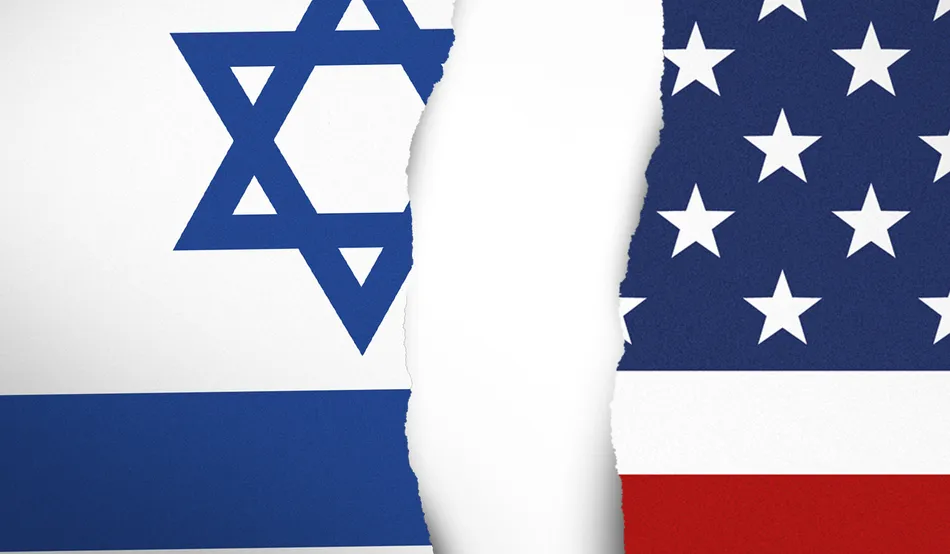
In the 20th century, the United States did more than any other country in history to devise, implement and sustain a standardised political architecture for the world. The unwinding of US hegemony—which began before the election of Donald Trump 10 years ago but has proceeded much further since—therefore occasions an epochal transition in international affairs.
There have been only two global capitalist superpowers. The United Kingdom played that role from the 1830s to the early 20th century; the United States from the 1940s to the early 21st century. Those periods saw the projection of what we might call a liberal world order comprising an official ideology (cosmopolitanism and free trade), a global trading system (based on the pound/dollar and anglosphere property and contract law) and open seas guaranteed by an imperial navy. During their incumbencies, Britain and the US drew in immense rents and profits, and were able to pay dearly for the maintenance of the system: keeping tariffs low even where other states set them high, singlehandedly sustaining the global military infrastructure, and more.
Historically speaking, those periods were extremely unusual—built as they were on improbable and unsustainable monopolies of power; the pre-existing, multipolar, world was more normal. The era preceding Britain’s imperial century saw zero-sum competition between European states for trade and territory in Asia and the Americas. Goods could not pass freely over the seas, and commerce between rival distribution systems was hindered by high tariffs, if it was not prohibited outright. Since the conflict was prosecuted in part by commercial ventures such as the East India Company, and since domestic populations had little bargaining power, oligarchs maintained political control over the leading European states, and democracy was impossible. Those states’ brutality, towards their own people and abroad, was the result also of their subordination to Asia, which placed enormous burdens on their liquidity. While India and China jointly accounted for more than 50 per cent of world GDP, European capitalism remained a parochial system, and European states were unable to set the terms for international commerce.
The UK became the “global” superpower by suppressing its European rivals, replacing corporate power with that of the state, and destroying Asia’s economic dominance. With India and China enfeebled, Britain could begin to subject the planet to western property law, often extinguishing local political rights in the process. For the first time in history, “the west” became richer than the rest of the world, and western states began to concede liberal rights and freedoms to their own populations. To those populations—as John Maynard Keynes noted retrospectively—the resulting sense of moral progress could seem “normal, certain and permanent, except in the direction of further improvement”. By 1914, however, Britain was overstretched, and its control of the capitalist system faced challenges from Germany, Japan and the US. There followed a 30-year maelstrom of war, authoritarianism and imperial campaigns, which was only resolved in 1945.
The Second World War left the US with nearly 50 per cent of world industrial output, immense moral prestige and a recently demonstrated atom bomb. Writing in the pages of Fortune, the media mogul Henry Luce demonstrated how well American elites grasped the resulting scenario. “America [is] in much the same position as Britain after the Napoleonic Wars,” he began. “It is therefore up to America to decide what kind of post-war world it wants.”
Speaking English, and sharing many of Britain’s legal and philosophical concepts, the United States was well-placed to take over Britain’s neglected role. As Luce explained, however, “American ‘imperialism’ … will be quite different from the British type. American imperialism does not need extra-territoriality.” America would build its empire, not by physical occupation, but by virtual mechanisms of law and finance—backed up by supreme military force. The administrative unit of the American empire, then, was the sovereign nation state.
America—along with the USSR—went about building a world of such states. The European empires were broken up, and a mosaic of standardised political units was laid over the planet. Nation-states numbered about 60 in 1945; by 1980 that number had almost tripled. As long as the Cold War lasted, however, the American empire could only be held together with violence: the superpowers’ struggle for influence over foreign states killed up to 25m people in Asia, Latin America and Africa. The final realisation of Luce’s blueprint was delayed until the 1980s and 1990s, when it became possible to establish a “Washington consensus”, and to actualise that 1940s chimera, the World Trade Organisation. After the fall of the Soviet Union, the United States was finally able to gather the nation state system into a more authentic “world order”.
We now speak as if that order was in place for centuries; in reality it was short-lived
This order was never gentle. Around 2000, the gulf between the rich west and sub-Saharan Africa reached its widest point—even though rapid growth in China and other parts of Asia was beginning to reduce overall inequality, so reversing nearly two centuries of growing economic disparity between the west and the rest. Liberated global capital discovered new ways of profiting from the enormous variations in cost and regulation between states, which were reinforced by new restrictions on human mobility. The US, in other words, presided over inequities as severe as Britain had before.
Resentment was visible on the world stage: states as varied as China, Russia, Iran, Malaysia, Cuba and Libya bridled at the subordinate position allotted to them in the unipolar system and denounced the hypocrisy and condescension of American invocations of democracy, equality, freedom and law. During the 1990s, Washington, as the superintendent of the nation state system, was exposed repeatedly to the assaults of hostile non-state actors that would lead after 2001 to its decisive overreach. And yet there was some kind of “order”. America still had the capacity and willingness to underwrite the world system, and the costs of openly defying its rules were high. A dense multilateral architecture allowed states to attempt collective responses to problems of trade, war, displacement and climate change—no matter how ineffectual.
We now speak as if that order was in place for centuries; in reality it was short-lived. By 2010, the United States had already lost its manufacturing lead to China. In 2014, Russia annexed Crimea, and Isis temporarily breached the Iraq-Syria border; the US’s power to preserve the system it had masterminded was clearly on the wane, and there were more cross-border incursions in the years thereafter (Turkey’s occupations in Syria after 2016, and Russia’s 2022 full-scale invasion of Ukraine).
Today, as geopolitical divisions dictate the circulation of oil and gas, and China assumes a commanding position in clean-energy technologies, the US is losing the authority it derived as guarantor of the global energy system. Meanwhile, rival trade and payment networks are giving states new ways to circumvent American sanctions, and mounting US debt raises questions about the dollar’s longterm dominance; Washington is less and less able, therefore, to set the terms of world commerce. All these processes are now culminating in a “post-American” world—rather as the 1930s were already, despite Britain’s ongoing might and prestige, “post-British”.
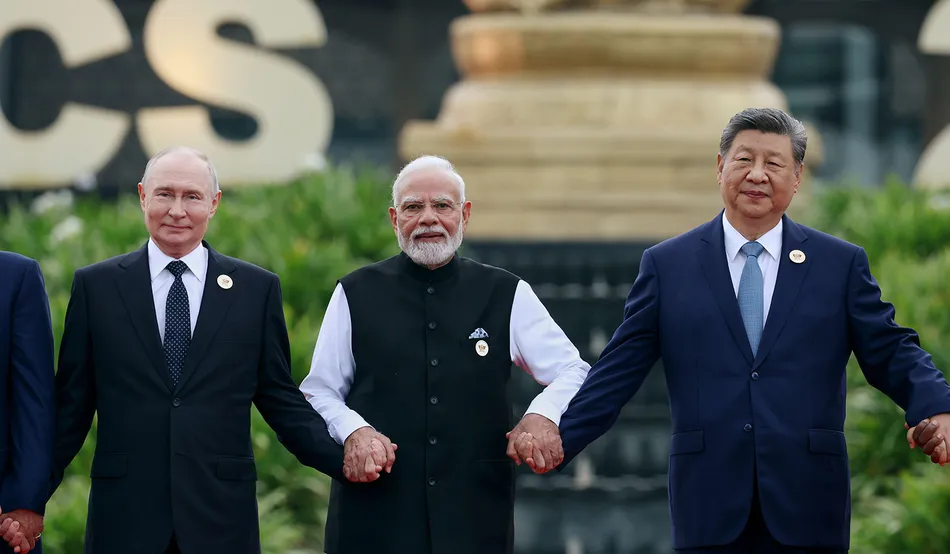
British hegemony had a cataclysmic end, of course, but it was succeeded by something functionally similar: after a violent 30-year interregnum, a second liberal order replaced the first. Our situation today is very different. There is no “America” waiting in the wings and there will not be a third liberal order. Of all the United States’ rivals, only one—China—possesses decisive economic power and proven capacities for international political management. But China will not take over the Anglo-American tradition. China is not a liberal state, of course, but it is also “illiberal” in this sense: it lacks the western superpowers’ messianic zeal. China sees a grand role for itself, but it does not hope to impose a “world order” of the 19th- and 20th-century kinds—which assumed a universal ideology, political morality and institutional grammar. It envisions a set of parallel orders, each with a separate civilisational vision: a scenario much closer to the world of the 18th century than that of the 1930s.
China constantly invokes its own, Qing, heyday: it has no nostalgia, obviously, for the 19th and 20th centuries. The global production system it has so rapidly constructed can be seen as a futuristic version of 18th-century tributary networks, establishing China, once again, as a giant, and ineluctable, magnetic force. Just as in the 18th century, most western states—indeed most major states in the world except Russia, Brazil and Australia—run trade deficits with China, a fact that produces, once again, widespread Sino paranoia. It also produces significant admiration for the Chinese system, especially among those convinced of western decadence; this too is most antique. Voltaire contrasted the corruption and religious strife of his own France with Chinese rationality and prosperity: “The human mind certainly cannot imagine a better government,” he wrote in 1756.
China has reset the world system, which will never again be subjected to a single civilisational vision. Western leaders—and their ideas—are becoming parochial again, just as they were when Russia, Persia, Ottoman Turkey, India and China controlled great segments of the world. Beijing is helping to coax us back, in fact, into “normal” history—the kind that always existed before two Atlantic powers succeeded, for weird and unrepeatable reasons, in imposing their successive patterns on the globe.
Donald Trump has, like China, done much to recast his country in an 18th-century mould
In the past 10 years, Donald Trump has, like China, done much to recast his country in an 18th-century mould. He has jettisoned much of the legacy his nation established in the past century, declaring his hostility to the network of institutions set up after 1945 to anchor the universal liberal project. These include the United Nations itself, as well as the World Health Organisation, the US Agency for International Development, Nato and at times even the World Bank. But in the process, he has also signalled a departure from the 19th-century ideal of the “society of nations”, which did so much to mitigate the traditional violence of nation states, and tried to re-engineer them as the platform for a humanist future. Trump marks a departure from two centuries of Anglo-American liberal evangelism: the world system has no universal values or purpose; the US is simply one great power among many; and the highest principle is competition.
Such notions have caused him to embrace tactics that are themselves exquisitely 18th century. His seizing of Venezuelan oil tankers on the high seas early this year was precisely the kind of stunt for which Portuguese, Spanish, Dutch and British adventurers once sought glory. His interest in Greenland, and its rare earth minerals, recalls the scramble for sugar islands in the Caribbean. Whatever produces competitive advantage is good, even when that requires him to abandon commitments to the very system of sovereign states on which US supremacy was first established.
Also very retro is Trump’s embrace of the exorbitant power of Silicon Valley. Britain derived much of its 18th-century competitive advantage from the East India Company, which supplied power and profit on such a scale that, when it faced financial collapse in 1772 and prime minister Lord North was forced to choose between risking the company and risking the state, he chose the latter (and lost the American colonies as a result). In the Trump era, America’s competitive advantage has become similarly outsourced to tech firms, which control processing power, research budgets, and indeed coercive technologies, far outside the scope of the state itself. Trump too has gambled on the companies at the expense of the state: his version of American leadership requires a powerful oligarchic class, and all manner of democratic cutbacks.
What does this 18th-century parallel enable us to surmise about the unfolding post-American world?
First, there will be heightened competition, involving the great powers in more frequent bouts of war and conquest. None of the competing imperial systems will control the commercial system outright; each will struggle not to be choked by others. This will subject weaker states, particularly those with strategic resources, to more intense predatory pressures.
It is likely that the post-1945 “horizontal” order—in which all states are theoretically equivalent, possessing absolute authority within their territories—will give way to an explicitly “vertical” one. There will be more states like Libya, Sudan, Yemen or Myanmar today, where national governments share power, downwards, with local warlords, paramilitary groups and, upwards, with more powerful states. The curtailment of America’s very substantial efforts to prop up foreign governments, and to protect them from such internal threats as terrorism and criminal networks, will hasten this development.
Second, the most dramatic changes will occur in the west. Western liberal democracies were built while two utterly exceptional—and temporary—conditions prevailed. India and China were simultaneously weak, even irrelevant: that had never occurred in the previous 2,000 years. And the west maintained a functional monopoly over advanced industrial production, which allowed them to derive disproportionate advantages from the global system and, crucially, to distribute them widely among their populations. Now that the industrial centre has shifted, it is not so easy for western states to monopolise profits.
More importantly, large segments of their populations make no contribution to the elite ventures on which those states increasingly depend—another direct recapitulation of 18th-century conditions. Democracy will come under immense pressure, and western citizenship will fall in value. Western states will appear less legitimate to their citizens; in many countries, citizens will have to find new ways of protecting themselves from their own governments.
The 18th century was anarchic and turbulent. Leading states like Britain and France brutally repressed their own populations, fought constant wars with other states and enslaved foreigners in the millions. Yes, other parts of the world were more tranquil, civilised and affluent. But we should enter our “new 18th century” with great trepidation.
The best way for the United States to use its residual authority would be to construct the systems we know we will need in the post-American world. Forums for inter-state negotiation which do not assume the superiority of western belief systems. Economic strategies built on mutually beneficial collaboration, not violent competition. Principles of international law that are worthy of the name. And above all, perhaps, new kinds of democratic platforms designed to ensure that weak states, as well as ordinary people, have some way of protecting societies and ecologies from the whims of great powers.