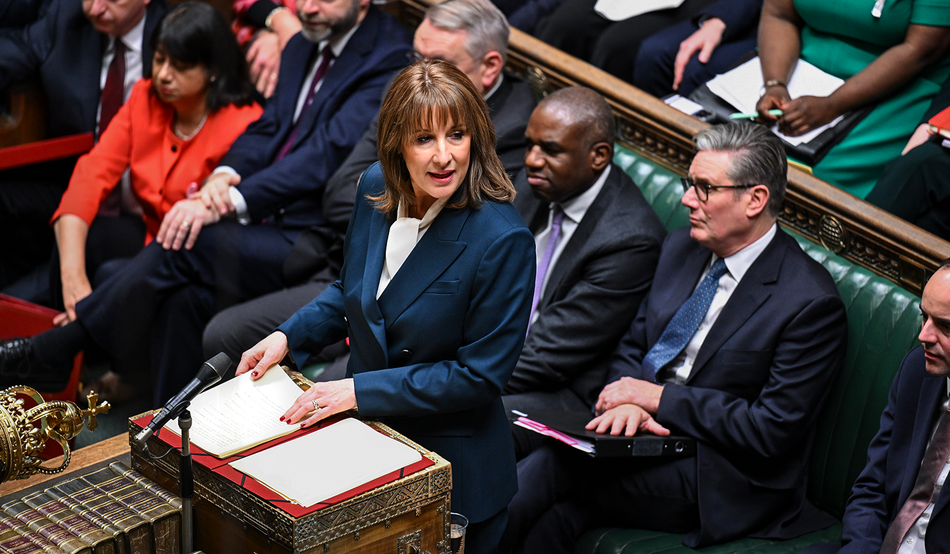
Ignore the flim-flam about U-turns, leaks and resignations from the Treasury and the Office for Budget Responsibility (OBR). The big picture is that the budget delivered last week by Rachel Reeves changed little and the government has stalled, but not yet failed, in its quest for a serious growth strategy.
The chancellor’s second budget was, in effect, a postscript to her first. With low growth, projected this year at only 1.5 per cent, Reeves once again decided to go for modest tax rises rather than welfare cuts, in order to avoid an unsustainable further increase in borrowing.
We aren’t facing recession or a serious financial crisis, interest rates are coming down and the major tax increase announced last week—a continuation of the current freeze on income tax thresholds—doesn’t take effect until 2028. So there is time for it to be reversed before the next election if the government can define and drive a credible growth strategy.
However, expectations of bold growth policies coming from the current chancellor, and indeed the prime minister, are rapidly waning. Their record speaks for itself. A year ago there were plans for major welfare reform—to disability assessments in particular—with a hard line that the two-child limit on benefits would not be lifted until this happened. This year welfare reform was abandoned, and last week the two-child limit was lifted. Oh, and another review was announced—by former health secretary Alan Milburn, into the “rise in youth inactivity”—in addition to a review already set up under the social security and disability minister, Stephen Timms, into Personal Independence Payments (PIP).
A year ago, in the same quest for growth, there was going to be massive new housebuilding, and a major “reset” in relations with the European Union. This year, housebuilding has contracted and there is still no credible planning or investment strategy for reaching the government’s target of 1.5m new homes in England by 2029.
As for the EU reset, an intention to forge an enhanced trade deal—concentrating almost entirely on one sector, food—was finally announced in May, but it has still not been negotiated let alone implemented. Bold policy, like rejoining the customs union, is not remotely on the agenda. Meanwhile, the negative economic impact of Brexit has been revised sharply upwards by the National Bureau for Economic Research.
The only sign of serious pro-growth energy is in the NHS, where Wes Streeting is starting to get hospital waiting lists down. But this week there were concerns that the NHS could be undermined by a dubious pharmaceuticals deal with Donald Trump which, if enacted, would see a huge hike in UK drug prices. And despite a massive pay increase, doctors are threatening yet more strikes.
Challenge by challenge, Starmer and Reeves prevaricate. Speaking at a City dinner this week, Starmer faced both ways on Brexit. “The Brexit vote was a fair democratic expression, and I will always respect that,” he asserted. But, he went on, “wild promises were made to the British people and not fulfilled. We’re still dealing with the consequences today, in our economy, and in trust.”
Surely the only effective way of “dealing with the consequences” of Brexit is to reverse its most damaging economic feature, which was leaving the customs union and the single market? A budget for growth indeed.