The night my friend and business partner, so to speak, was arrested, I knew they would be coming for me. It was risky but, with catastrophe looming, I decided to seek the comfort of friends. As I drove, I checked my rearview mirror more than a 17-year-old on their second driving test.
Halfway there, I reached the motorway and my paranoia peaked. It was not long before I noticed blue flashing lights going by in the opposite direction. A police car lurked in every layby, lights off to maintain the element of surprise. One of the police cars pulled out into traffic, blues and twos lighting up my mirrors and racing towards me, only to turn off their lights as they got close.
I decided to take the next exit to force their hand, because I needed to know for sure if they were after me. I didn’t make it out before blue lights erupted all around, police cars screeching in front of traffic on the roundabout ahead. As I was handcuffed, everywhere I looked there were police cars and officers. The charge was read out to me: “Conspiracy to supply and import class A’’.
I’m often told I have lived many lives. It’s arguably true, compared with most 33-year-olds. Throughout my teens and my twenties, I spent time in some of the most masculine environments imaginable—the Royal Marines, then crime, then four years behind bars. But the realisation that masculinity was a running theme of my life only came when the backdrop changed. When, after leaving prison, I became a student in the leafy university city of Oxford.
Growing up in Luton, the Bedfordshire town some 30 miles north of London, you were expected to live by conventional—and what some might call “toxic”—masculine values. I was surrounded by people who subscribed to traditional working-class and Afro-Caribbean ideals of manhood, centred on dominance and aggression.
Backing down from an argument or a fight was a fast track to social ostracism, even in primary school. By the time I was in secondary, I would witness violence and was sometimes involved myself. Children as young as 14 carried knives to the school I attended. It was not a place for celebrating uniqueness. Being hard, getting the most girls and being the unruliest often won you respect.
As I got older, I saw attitudes harden. Altercations in and around school became more violent. I remember a gory scene on a school field, when some pupils were jumped by a group of boys. Attempts to humiliate your enemies could be a slap or spitting in a girl’s face. I too got caught up in arguments I probably shouldn’t have. Where you lived was enough to get you into trouble. Every bone of my social conditioning wanted to leave no wrong unanswered, but I would surely have lost out to older boys more willing to risk their liberty for their reputation. It was not uncommon to be verbally threatened with stabbing.
My mother is of Caribbean heritage and my father is from Denmark and of mixed background (his father was Egyptian). Both grew up poor, and my mother also had the racism of 1960s and 1970s England to contend with. Mum was always incredibly loving, but tough, and my dad had and still does have a stereotypical Scandinavian reserve, strong and silent like John Wayne. He was very loving, too, but my brother and I feared him growing up. And my parents believed in a man making his own way. That’s what they had to do.
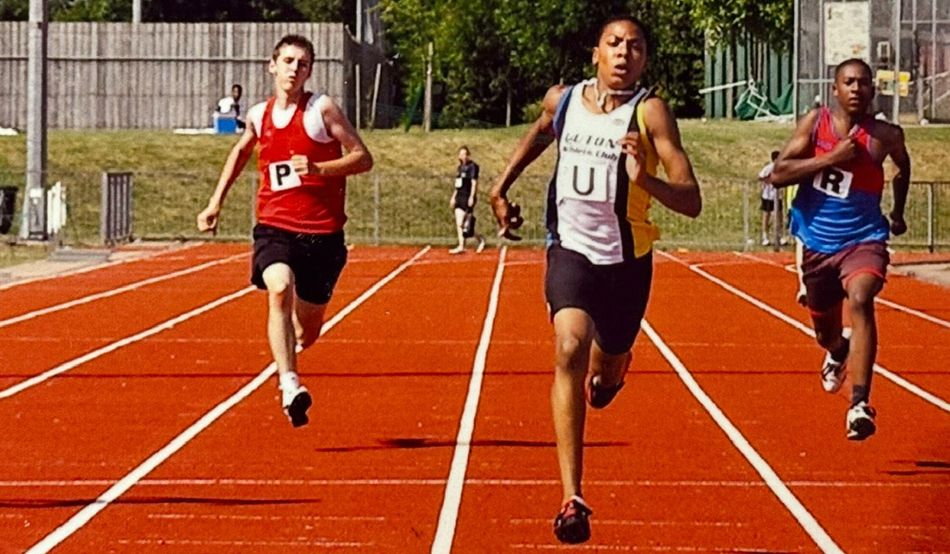
I consider myself working-class because of my parents’ pasts, even though they achieved impressive careers in the mental health services, which are seen as middle-class. Their drive gave me ambition. So I looked for an escape. I wanted to take risks for something worthwhile. After secondary school, I was picked to join the athletics academy of a college in St Albans, but my ambitions to be a sprinter started to wane. I was still living in Luton and needed a change, but I wouldn’t leave the pressures of ideal manhood behind. I ended up in what is sometimes called the biggest boys’ club in the world: the Royal Marines.
Before joining up, the thing I worried about more than anything was physical fitness, and rightly so. Marines were judged on it, criticised for it, celebrated for it. Every level of fitness had a real-world consequence, and we were constantly reminded of that. Fail a rope climb in the gym and you might not have the strength to cling on for dear life while fast-roping (climbing down a rope from a helicopter) in bad weather. Falling short in a yomp—long marches over varied terrain with all your kit—either by not making the time or not looking like you are spirited enough to get into a fight at the end, would spur a rant about how the Royal Marines yomped 90km during the Falklands War.
I was used to performing a certain role, but I almost had to reinvent myself in the Marines. Their brand of masculinity was different. It comprised the “commando spirit” (courage, determination, unselfishness, cheerfulness in the face of adversity) and “commando values” (excellence, integrity, self-discipline, humility). It was unlike the anti-establishment “I do what I want” kind of manhood I grew up with.
These codes were subject to enforcement. There were official punishments, but the most effective came from your peers. I turned 18 soon after completing my training and then spent my four weeks of summer leave feeling on top of the world, drinking and doing absolutely zero exercise. When I returned, I was unprepared and out of my groove. My confidence slipped and I made mistakes, whether it was being forgetful and leaving my notepad unattended or making tactical errors on an exercise.
My troop commander did not punish me, nor did the troop sergeant; punishment was decided by Marines of the same rank and even similar age. Most were veterans of the Afghanistan war. Some had been on multiple tours. Some had been just about old enough to do a tour of Iraq. They knew firsthand what consequences could await an unfit soldier.
In those days it was tough for a sprog (a recruit just out of training), never mind one earmarked for subpar performance. Every night we would have “family time’’ —essentially a kangaroo court. I found myself front and centre often; it was entertainment for the others that was taken very seriously. I would roll the dice—actual dice—to decide my punishment, which usually involved physical challenges so tough I could have asked the general public to sponsor me for charity. One week I was averaging between 20km and 40km a day on a treadmill, trying to cover the distance from our Scottish base—Faslane, or HM Naval Base Clyde—just outside Helensburgh, to the border.
But even colleagues who disliked me patted me on the back if I did something good. The whole experience calloused mind, body and soul. I built resilience. Things have changed since then, and the Royal Marines is no longer as harsh as it was. Scandals from the mid-2010s around initiations and punishments put a stop to such extremes, and that’s probably for the best. Still, it was our way and everybody was treated the same. In the end, being forced to sleep under the pool table or being “beasted” (made to do harsh exercise as punishment) was nowhere near as difficult as war. Besides, I would also get the chance to dish out such justice.
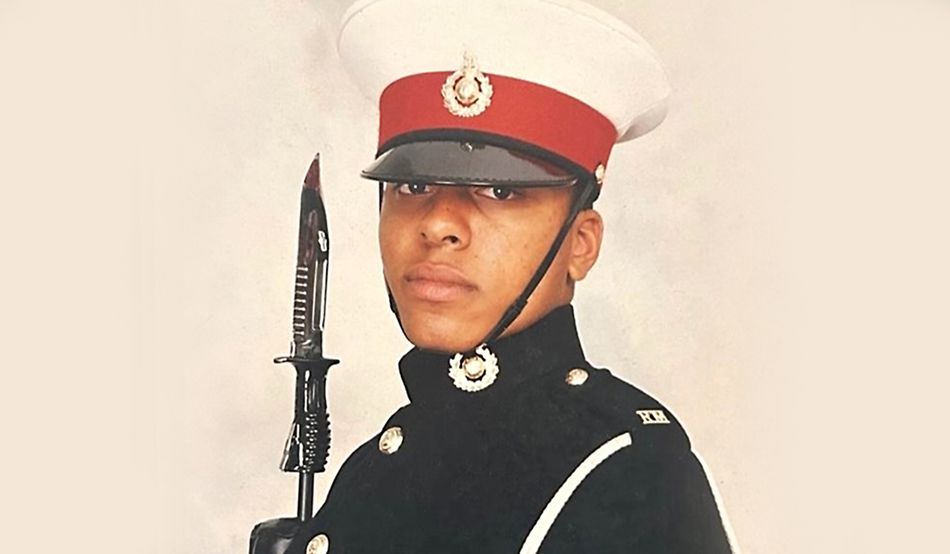
I spent five years in the Marines and left with a bad taste in my mouth. This was less about the enforcement of the masculine code and more because I didn’t entirely get out of it what I thought I wanted. I had after all, along with many other young men, joined at a strange time for the military. In 2011, once David Cameron had announced a reduction in personnel in Afghanistan, the Royal Marines had only one notable active tour. The manpower had pretty much been chosen by the time I completed my training, so I did not get to do what I had been trained for. I still wrestle with that, especially as some of my closest friends from the Marines have been to war. I was, theoretically at least, ready to lay down my life.
After the British military’s focus shifted from Afghanistan, the Royal Marines’ place in the world was unclear. Exercises became repetitive. I found myself at Commando Logistics Regiment after my tough year at Faslane. Everybody hated it. Its nickname was “the bootneck graveyard, where Marines go to die’’. (A bootneck is slang for a Royal Marine.) People were leaving the military in droves and I was not immune so, aged 22, I left with no preparation for civilian life—probably my biggest mistake. The Royal Marines instils in you a pursuit of excellence that does not wash away when you leave. I was a force of unchannelled energy with no direction. Once the reality of normal life sank in, my need for risk returned.
I was soon in no-man’s-land, unemployed and sleeping on my mum’s sofa. I drifted from job to job, trying to find purpose. I became more restless. In the Marines I met lads from the northwest whom I had served with and visited over the years, so I found myself in Liverpool. The city had cheaper rent and was an escape from Luton, which I had come to hate.
As I embarked on post-military life, I attended the typical courses where former bootnecks can find themselves—studying to become a bodyguard or personal trainer. But I lacked the stability to make good use of this. Or maybe I just did not want it enough.
I am not going to get into the finer details of what happened next, out of respect for those involved, but as I tried to find work and my feet, pride would often set in. This left me susceptible to opportunities that could change my circumstances fast. And I was starting to miss the idea of taking a risk; my two formative ideals of masculinity had layered over each other. Growing up, I saw crime up close but was never directly involved. Now, because of my time in the military, I believed I could do anything I put my mind to. I needed money. I needed a thrill. I was ripe!
And so, within months of moving to Liverpool, I was deep inside a criminal fraternity. I didn’t do it alone. I went into it with a brother, another Royal Marine, and by making use of contacts I had from growing up in Luton. This didn’t feel alien to me. Me and my fellow bootneck already had a code of conduct, a reason to trust each other. I did have reservations though. I tried to be careful and set my own boundaries, but the masculine world is rarely solitary. The pressure from your peers and the need to belong eat away at those boundaries. And yet, in the end, when it all goes wrong a man has only himself to blame. That is as it should be.
The talents you need for importing drugs—people skills, good organisation, putting in long hours, keeping your nerve–are exactly what I had learned in the Marines
The lure of criminality ultimately proved too strong. What did I have to lose other than my freedom? What better opportunities were this accessible and this fruitful? I had been ready to risk life and limb for my country; surely a few years of my liberty was a small price to pay for major economic gain? It helped that Luton was known across organised crime networks as a place where you could make money, and it had a reputation for being a tough place to grow up. Criminals come from similar backgrounds and do not like posers; commonality goes a long way.
Importing drugs is business and is just as rewarding and thrilling as the legitimate kind, if not more so given its illegality. The talents you need are transferable too: people skills, good organisation, the willingness to put in long hours and the ability to keep it together when your nerves are trying to get the better of you. This is exactly what I had learned in the Marines. There I was, handling and counting money, transporting drugs, meeting contacts, bringing in and organising new ones.
It was not who or where I wanted to be, however, and I grew more desperate as I became more involved. I had a day job, too, which left me empty and restless. Missing the military, I rejoined the army reserves. The culture was tame compared to the Marines; there was none of the fanatical belief in the commando way, that policing of masculinity. I chose to be a dog handler and committed more of my time than the average reserve. There were biweekly attachments to one of the regular squadrons, trade development courses, trips to Canada and the United States and even a promotion in rank.
My success often made me feel guilty about my double life. This would usually occur on the long drive back to Liverpool from a training weekend. Once I was home, the reality of my criminal responsibilities smothered the flames of doubt. I was in a vicious cycle, sticking with the nefarious activity to prove to myself I could make it work. Like gambling, there was a buzz when something I had been working on paid off.
The seriousness of what I was doing and what would happen if I was caught were not lost on me, but quitting? The 17-year-old boy within me would have rather died than give my instructors in basic training the satisfaction. I pined for the purpose the military had given me. Soon it would be taken out of my hands in any case: an international operation to hack the EncroChat network, used by criminals to communicate, would result in thousands of arrests worldwide. I was one of them, but I twiddled my thumbs in denial for six months after finding out about the hack.
Intrigue, thrill, purpose, money—these are the words I would use if you asked me why I did it. I can see the questions on people’s faces as they try to understand. I am not sure I will ever get used to the reactions. What I think about now is my place in this world, as a man, as a working-class man, as a man whose heritage is difficult to define, as a veteran and as an ex-convict.
So, in my late twenties, prison led me back to the kind of masculinity I had always been trying to escape. Here it was magnified, and it lacked the legitimacy of a common cause like in the military. In prison, manhood was survival. It was masculinity at its bare bones—reputation around power, strength and popularity. Why you were there in the first place; could you fight; did you have control over others; were you good at football; did you have an impressive benchpress record; could you charm the prison officers to get what you wanted?
I am not sure how much I slept during the first night, although that problem was brief. It was the pandemic, so 23 hours “bang up’’ was in place, meaning we spent most of our time locked in our cells. You learn to sleep all day instead of becoming a victim of daytime TV.
The beginning was intense, nerveracking and claustrophobic, but of course you don’t show it. I did most of my time in the northwest and in North Wales, first at HMP Altcourse. I had been lucky, apparently. The local alternative, HMP Liverpool, also known as Walton prison, is a Victorian jail with a bad reputation.
It did not take long to settle in. I worked as an orderly, keeping the gym clean and training twice a day. The food was bad. I was used to that, coming from the military, but prison food was worse. So, like soldiers, prisoners get inventive, cooking curries in kettles and throwing nothing away, just in case.
The thing I noticed almost immediately was the politics. Just like growing up in Luton, being a man was all about not giving an inch, saving yourself from any embarrassment and answering every infringement with aggression or violence. Unlike in Luton, I couldn’t leave.
Slipping down the pecking order could make you a target of theft, bullying, coercion and violence. Being too nice could make you a target, as could being a generally bad guy without the reputation or presence to back it up. The jostling for position was so bad that it sometimes became catty. Violence ensued over the smallest infringements.
I stood out as one of the few black prisoners: the racial demographic up north is very different to prisons nearer where I grew up. But I got through generally unscathed. The nature of my crime definitely affected my treatment; even among the officers, there was a hierarchy of criminality. Organised drug felonies like mine garnered respect. People would make assumptions about how much influence you had on the streets and how wealthy you were.
For the first time, out of loneliness and a desire to see life differently, I have made female friends
I spent the last 18 months of my sentence at HMP Spring Hill, a -category D establishment in Buckinghamshire. These are low-security, allowing far better opportunities for inmates. The idea is that this is your last prison before release, that you leave with a job and a few courses under your belt. It also allows a gradual assimilation into the real world. First, days out in the nearest town with your family; later, regular overnight stays at home. I chose to study journalism part-time at the nearest university to the prison, Oxford Brookes.
Then, everything changed. In late 2024, in the space of two months, my release date—originally 4th December 2025—was brought forward by a year. When rumours began to circulate among the inmates, nobody could believe it. Amid the prison overcrowding crisis, the Labour government said it had no choice but to release prisoners early, blaming the Tories for the mess. Regardless of the politics I was going… home? I had not lived in my hometown for longer than six months since the age of 17. Now, aged 32, there was no way I was going back to Luton.
I wanted to study, to become a journalist. I now had the best part of six weeks to find accommodation, apply for a student loan and find a job. It was one of the most stressful times of my life.
In the Royal Marines, after a long enough time, indoctrination sets in and you begin to assimilate. Prison was the same, but university is different. It seems that no matter how long I spend here, I will never truly fit in. I am constantly shown, passively and directly, that I am unlike everyone else.
Lately, I have found myself thinking about this. Every world I have passed through up until this point has been one of extreme masculinity. I have brought this with me to Oxford, and it directly reflects, at least on the surface, certain stereotypes. People make assumptions about me. Because I am working-class, because I am judged on my race and physical appearance, my version of manhood likely alienates my peers in academia, who are mostly middle-class and white.
What was, for many years, a tool for survival has ended up isolating me here: being tough, confident and straight-talking would make you popular in the Marines or in prison, less so in the corridors of university and in the local student pubs. But this isolation has led to something new: for the first time in my life, out of loneliness and a desire to see life differently, I’ve made female friends.
The environments I used to move through, with their culture of casual misogyny and objectification, never really allowed that. I’m not sure I even knew how to be friends with a woman. These new friendships have helped me learn to empathise more with what women go through. I am starting to understand the general suspicion women have of men.
I often think about the causes of this: are the things women experience byproducts of evolutionary biology or a symptom of modern culture, or of the toxic misogyny fuelled by the likes of my fellow Lutonian Andrew Tate? If there is one thing I would suggest it is that people should endeavour to be friends with the opposite sex. In a world where masculinity is the currency, that is far from obvious.
My women friends help me to better see the world, and perhaps I do the same for them. They are often surprised when I show I can be sensitive. I try to help them understand the masculine tendencies which are so familiar to me but alien to them: those so-called toxic traits that helped me protect myself for all those years, in those extreme worlds of my past.