Despite the fact we all need energy, industry representatives say the debate around the UK’s energy future and the role of the North Sea has become dangerously divisive. OEUK staged a discussion at the Labour party conference in Liverpool, the day before prime minister Andy Burnham vowed to be “pragmatic in relation to the North Sea as we build a bridge to a clean energy future and face the climate crisis”.
Around the table were representatives from organisations involved in renewables, carbon capture and storage, and oil and gas, as well as parliament and the trade union movement.
This ensured diverse contributions, but virtually everyone agreed that the country is not well served by debating its energy needs in “culture war” terms. Participants ranged across many issues, including the need for a balanced energy mix and the security implications of the UK’s drift from being an energy producer to a net consumer that now meets more than 40 per cent of its needs through imports. And they all agreed that these were issues that required calm, respectful debate.
The discussion, which took place under the Chatham House rule, was structured around three broad themes—the proper way to balance environmental and energy considerations, at the level of both public policy and politics; the role of the energy sector, and of the North Sea in particular, in the government’s hopes to reindustrialise Britain and bolster the wider economy; and whether the government can create the financial conditions in which sector players have the confidence to invest, including those needed for an effective energy transition.
A serious transition
On the environment, it was stressed throughout that offshore wind and, prospectively, carbon capture and storage, are important elements that could give the North Sea a straightforwardly positive role. The position in respect of oil and gas was acknowledged to have become more politically complicated, however.
Politicians, it was suggested, were required to “play 4D chess” to hold their voter coalitions together. Some have been tempted to approach this in a spirit of “vibes-based” messaging, distracting the discussion from the steady focus on energy security and worldwide carbon emissions that would characterise a more pragmatic debate.
On top of conventional politicking, some participants feared that point-scoring between rival energy sectors—whether nuclear, renewables, or gas and oil—was another obstacle.
Getting a grip on global emissions is imperative, but requires a subtle response. Outsourcing emissions while importing fossil fuels, sometimes produced with lower environmental standards than the UK, may clean confused consciences but—several voices insisted—it won’t help the planet. Besides, one participant observed, the long-term role of the North Sea even in the UK’s domestically generated emissions should not be exaggerated, as it is a mature and declining basin.
A serious energy transition will unavoidably lean hard on electrification, but concerns were raised over the aged and creaking state of Britain’s infrastructure, much of it built in the 1950s. Some of the discussion anticipated a theme of the prime minister’s conference speech: the next day he announced the creation of Great British Grid, a public-sector body which—likely in partnership with private finance and construction companies—could bid for some of the investment projects that the system is crying out for.
However it is organised and financed, such investment must be paid for, and raising bills to cover that cost is only becoming more fraught. If public subsidies are needed, then revenues, including the tax paid on North Sea production, will be at even more of a premium. So too, of course, will economic growth.
Strong industries, good jobs
The government is expressing growing interest in modern industrial policies as a way of achieving that growth through “reindustrialisation”, something broadly welcomed by many participants. It was noted, however, that energy is often among the most important factors in the health of businesses across many sectors, not least modern manufacturing and even high-tech services such as data centres. It was argued, too, that both new and more traditional energy sectors are major industries in themselves that merit support.
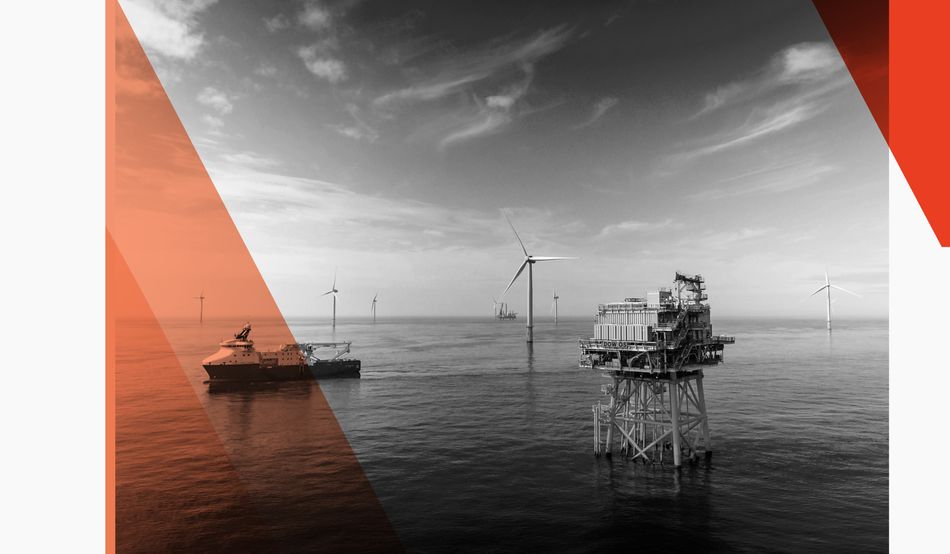
Several voices were enthusiastic about the potential for new clean energy jobs in the established North Sea production hubs: engineering jobs, for example, in “platforming” wind turbines in deep-water North Sea sites, and in carbon and capture and storage facilities sited in depleted North Sea fields. The hopes were, however, coupled to an anxiety that many skilled people would leave “before there was anything to transition into.”
The debate around energy jobs will not be serious, it was suggested, until the discussion moves from “what can we shut?” to “what can we open?” Nor will it be as fruitful as it should be until the contribution of many highly skilled energy workers receives its due. Only then can we start the transition to a real “jobs-first” endeavour, which spreads prosperity across reindustrialising communities, and builds public support.
Creating the confidence to invest
More than any specific tweaks to tax or regulation, the table yearned for more consistency of messaging from government. In particular, some said, a clear signal that the UK was taking an “all of the above” approach towards various forms of energy over the medium term would give investors confidence to get things moving towards a cleaner, more secure energy future.
The general desire for stability was also apparent in concerns about the Energy Profits Levy and the Contracts for Difference that support renewables. Across public policy, exact definitions of tax bases, what counts for investment allowances and the discount rates applied all need to be figured out cogently, transparently and justifiably, and then applied in a predictable way.
Too often, this doesn’t happen. Moreover, for as long as the energy debate remains polarised, nobody knows what politics will do to the framework. Under a different government, for example, existing support for renewables could simply vanish.
The roundtable suggested that if we want secure energy and a secure transition, then a better conversation is needed to lead us towards it, one which offers insight in place of strife.