Matters of life and death

Prospect Magazine

Matters of life and death

by David Edmonds
/ / 34 Comments

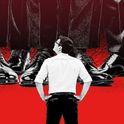
Interest in “trolleyology”—a way of studying moral quandaries—has taken off in recent years. Some philosophers say it sheds useful light on human behaviour, others see it as a pointless pursuit of the unknowable

The “trolley problem” thought experiment is designed to test our moral intuitions


A shocking memo leaked to Prospect, drafted by civil servants from the treasury and the department of health, exposes the stark reality of future cutbacks. Harsh decisions are inevitable, says the memo; in one NHS trust people on life-support systems are to be “finished off” on 1st November—either by smothering, or by having the plugs pulled out. Their organs are then to be used to save the lives of others on transplant-waiting lists, who have themselves become a considerable burden to the taxpayer. The total saving to the trust is estimated at £2.3m a year.

Hogwash, of course. But the government will make some tough choices in its spending review on 20th October, and these will cost lives. Whether “efficiencies” are made in the department of transport, the military or the NHS, there will be victims, even if they are unidentifiable. Governments always have to prioritise—choosing, for example, between a cheap medicine which benefits few people a little, and an expensive one which benefits many people a lot. But in hard financial times, such predicaments become more acute.

Moral philosophers have long debated under what circumstances it is acceptable to kill and why, for example, we object to killing a patient for their organs, but not to a distribution of resources that funds some drugs rather than others. To understand the debate you need to understand the trolley problem. It was conceived decades ago by two grande dames of philosophy: Philippa Foot of Oxford University (click here to read more about Foot) and Judith Jarvis Thomson of MIT. The core problem involves two thought experiments—call the first “Spur” and the second “Fat Man.”

In Spur, (see diagram one, below), an out-of-control trolley—or train—is hurtling towards five people on the track, who face certain death. You are nearby and, by turning a switch, could send the trolley onto a spur and save their lives. But one man is chained to the spur and would be killed if the trolley is diverted. Should you flick the switch?

In Fat Man (see diagram two), the same trolley is about to kill five people. This time, you are on a footbridge overlooking the track, next to a fat man. (The Fat Man is now sometimes described as a large gentleman. But fat or large, the fact of his corpulence is essential.) If you were to push him off the bridge onto the track his bulk would stop the trolley and save the lives of those five people—but kill him. Do you push him?

Study after study has shown that people will sacrifice the spur man but not the fat man. Yet in both cases, one person is killed to save five others. What, then, is the relevant ethical distinction between them? This question has spawned a thriving academic mini-industry, called trolleyology.

Trolleyology encapsulates the deepest tensions in our moral outlook. To tease out our moral intuitions, philosophers have come up with ever more ingenious scenarios. The trolley is usually racing towards five unfortunates and the reader is presented with various means to rescue them at the cost of another life, involving props such as obese gentlemen, footbridges, trapdoors and lazy Susans. Some of the examples are so complex that, in the words of one exasperated philosopher, this branch of ethics “makes the Talmud look like Cliffs Notes [a US brand of study guides].” But at its root the trolley problem is a philosophical detective story, attracting some of the smartest minds in moral philosophy.

One of them is Jeff McMahan of Rutgers University. McMahan is a good liberal, open to debate on any topic—except tea. Green tea is sent to him every two months from the Indian estate where it is grown. His cup of tea has to be brewed in a certain way: steeped for precisely six minutes in distilled water.

McMahan brings a similar attention to detail to moral ­philosophy. He believes that the trolley problem lends weight to a doctrine first established in the 13th century by Thomas Aquinas, the ­philosopher and theologian. Aquinas drew up the principles required for a war to be just and he was the first thinker to outline the ­doctrine of double effect, a cornerstone not just of Catholic ethics, but of common-sense morality too. Crudely put, the doctrine allows you to perform an act that has some bad ­consequences, if on balance the act is good, and if the bad effects are unintended.

Applying the doctrine to the trolley problem, it’s been argued that in the first scenario, there is no intention to kill the man on the spur. If you diverted the train but spur man miraculously escaped, you would be delighted. But in the second scenario, you intend the death of the fat man. If he were to bounce off the track and flee out of the trolley’s path, this would thwart your aim, because the five people would still be killed. You need the chubby projectile to be hit by the trolley.

175_feature_edmonds1

175_feature_edmonds2

Who would you save? In the classic version of the “trolley problem” the two scenarios above, Spur and Fat Man, test our moral intuitions

Every so often, McMahan visits an academy in New York state to lecture on the trolley problem and other aspects of applied ethics. The pupils here are not average college students—West Point is where US officer cadets are trained. These young men and women are the future leaders of the world’s most powerful military force. All West Point cadets take a compulsory course on philosophy and “just war” theory which includes the trolley problem. I spoke to several impressive cadets, all of whom were immersed in the trolley problem and none of whom would countenance killing the fat man. They explained that the two scenarios represent the distinction between targeting a military installation knowing that civilians will be killed, and deliberately killing civilians. It’s the difference, they say, between how the US and how al Qaeda wage war.

These cadets are being taught to make moral decisions for themselves, not to follow rules blindly. There are risks in creating a generation of philosopher-­soldiers. One instructor I spoke to, Major Danny Cazier, acknowledged this but told me that “the pay-off is too high to pass on.” He says it is vital that when soldiers are in a terrifying battlefield situation, they don’t lose sight of “the fundamental principles that a person believes in, and which guide his actions. And those principles need to have been conditioned by considerations like the trolley problem.” The cadets agree. They’ll soon head off to perform their duty—the trolley problem is heading to Kandahar.

The doctrine of double effect is enshrined in the Geneva conventions. It is also crucial to other areas of morality, such as medical ethics. In western countries a sharp distinction is drawn, for example, between actively killing a sick patient, and giving them a drug to relieve pain, aware that this will hasten their death. Michael Rawlins, head of the National Institute of Health and Clinical Excellence (Nice), cites an old adage and a distinction linked to the doctrine of double effect, that between an act and an omission: “Thou shall not kill but need not strive officiously to keep alive.”

The coalition claims that NHS funding will be ring-fenced, but resources are bound to be squeezed in the next few years. Nice, which draws up the guidelines for which treatments the NHS offers, will face intense scrutiny. So will its algorithm which determines whether a treatment is worth its price, factoring in cost, lives saved and quality of life. “When Nice said yes to [the drug] Herceptin, for early breast cancer, one NHS trust closed its diabetic clinic to pay for it,” said Rawlins. “These are rotten decisions to have to make.”

But despite the influence that the doctrine of double effect wields on policy, it may not explain all our intuitive responses to the trolley problem. Take the Loop scenario (see diagram three). As in Spur, a ­trolley is about to kill five people but can be diverted down another track, to which a large man is tied. This time the other track is a loop—beyond the man, the track bends to rejoin the main line, on which the five people are stuck. However, collision with the single man would stop the trolley. Should you flip the switch? Judith Thomson, who devised this variant, argued that if it’s acceptable to divert the train in Spur, it must also be in Loop, which is identical except for a few extra metres of track. In studies, most people agree: the majority (though not as large a majority as in Spur) believe it would be right to divert the trolley. Yet if Loop man were to break free and remove himself from the trolley’s path, the five people would still die. Just as in Fat Man, you require the death of one person to save five.

175_feature_edmonds3

175_feature_edmonds4

Variations on the trolley problem such as Loop (above top) and Lazy Susan (directly above) expose how our responses cannot be easily explained by logic

One obvious solution to the trolley problem is that in Spur, you are diverting a pre-existing threat to produce less harm, whereas pushing the fat man is a new threat. But this explanation is inadequate, says Frances Kamm of Harvard (intriguingly, many of trolleyology’s exponents are women). Kamm, a tiny bundle of jovial energy, came up with the Lazy Susan scenario to explain why.

In this variant (see diagram four), the trolley is heading towards a lazy Susan-type revolving device with people chained on top. Five people are in the path of the trolley—but if it was turned by 180 degrees, only one man would be. Should you turn the lazy Susan? Our moral intuitions say yes, even though this does not involve diverting an existing threat.

Utilitarians, who believe in the greater good, are suspicious of these baroque thought experiments. We need to overcome our irrational queasiness and topple the fat man, they say. But Kamm takes seriously the separateness of persons, the idea that an individual’s wellbeing shouldn’t just be dissolved into some giant vat of wellbeing soup. She believes there are some things we can’t do to people (torture, for instance) whether or not it would contribute to the total sum of happiness. And she defends herself against critics who accuse her of conjuring up risible scenarios which have no bearing on ­reality. “Real-life cases have a lot of factors going on, and it’s hard to test whether it’s this factor that’s crucial or that ­factor. You have to artificially construct cases to focus on the factors that are important. It’s like the scientist in the lab who has to figure out whether, say, the dust particle makes a ­difference to friction, and tries to hold everything else constant.”

The trolley problem is no mere academic exercise for Kamm. She is visibly pained by the thought of individuals being instrumentalised, of their interests being weighed up impartially in some clinical utilitarian algorithm. Yet she also loves the peculiar world she inhabits, populated by hypothetical and surreal moral dilemmas. “I feel that I’ve been admitted to a whole world of distinctions that haven’t been seen by others or at least not by me. And I’m taken by it as I would be by a beautiful picture.”

Ask the man on the Clapham omnibus about the trolley problem and he will likely give you the same reaction as an Ivy League professor. Ninety per cent of people believe it is right to turn the train in Spur. Ninety per cent of people believe it is wrong to push the fat man. Which is odd—it’s not as if any of us has actually faced this predicament in reality.

With philosophers still unable to reach consensus on the trolley problem, their more empirically minded colleagues from other disciplines have muscled in. There have now been dozens of studies on our intuitions and they seem not to vary widely between men and women, the rich and the poor, the old and the young, between those in the west and those in the east, between the religious and the secular, between those with PhDs and those without qualifications.

Harvard psychologist Marc Hauser has for some years been running an internet-based poll, called the Moral Sense Test. Anyone can take the test, which is available in multiple languages. It poses a series of moral quandaries. Noam Chomsky famously asserted that all languages had in common a deep structure, and that the language instinct was innate. Hauser makes a similar claim for morality. He says we have an innate sense of “very, very abstract rules. They have no specific content like, ‘don’t kill your mother,’ but there are nonetheless abstract rules about when killing or harming is permissible.” Hauser thinks that the doctrine of double effect, first expounded nearly a millennia ago, is hard-wired into us.

A native English speaker is more likely to say “The large, white train” than “the white, large train,” but will probably be unable to give you an instant explanation why. In the same way, Hauser argues, we follow a grammar of morality that we often can’t articulate, but which can be nuanced and multilayered. Thus suppose we made a few adjustments to the trolley scenarios. Imagine that the five people on the track were suffering from a dreadful disease and going to die soon anyway. Or imagine that we discovered the man on the spur had been tied onto the track by five bullies who had later become trapped on the main line. In these cases, our intuitions about whether we should flick the switch are unlikely to be so secure. Hauser says that his vast databank of global moral instincts is allowing him to develop a rich picture of our complex moral grammar “that feeds into our very fast, often automatic decisions about what is right and wrong.”

Hauser is a controversial figure who has just been found guilty of scientific misconduct by his university. He is now on unspecified leave. Two floors above his office is Josh Greene, a young, curly-haired professor trained in both psychology and philosophy. Like the other academics I meet whose job involves grappling with traumatic (if hypothetical) dilemmas, he’s irrepressibly cheerful. While I am there, a female student of his is agonising over the following question. It is during the second world war and you and your baby are hiding with others from the Nazis. Your child begins to cry. If you don’t smother and kill her, she will give away your hiding place and the Nazis will murder everyone. What should you do?

“I couldn’t do it,” says the student. “I couldn’t kill my baby.” But the noise will result in everyone being killed. “It doesn’t matter. I won’t kill my baby. I’d rather it was on their conscience.” What difference does it make—the baby will still be dead in a few minutes? “Yes, yes, but not from his mother’s hand.” Nonetheless, she is torn. Her head is in her hands.

Greene has put subjects into MRI scanners as they reflect on moral dilemmas. He believes that what’s going on is a sort of neural wrestling match between the calculating part of the brain which maximises costs and benefits (better to kill one person and save five others) and the emotional part (“I can’t kill my own child”) or, as he prefers to put it, between an efficiency and a flexibility part of the brain.

People with damage to the ventromedial prefrontal cortex, the part of the brain in which emotion feeds into decision-making, are far more blasé about the fat man. In one study the patients with this damage were about five times as likely as normal people to say it is acceptable to push the fat man.

For those without brain damage, Greene draws an analogy with a camera. A camera has automatic settings—one for landscapes, say—which are useful because they save time. But often you want to do something funky, perhaps with the main subject at one side and the rest of the picture blurred. Then you need manual mode. “Emotional responses are like the automatic responses on your camera. The flexible kind of action-planning, that’s manual mode.” Evolution has endowed us with a flexible system for problems we can’t anticipate.

His claims are contentious, but he says that with Fat Man there are two factors behind the repugnance to kill. “They have no or little impact separately, but when you combine them they produce an effect that’s much bigger than the sum of the separate effects. It’s like a drug interaction, where if you take drug A you’re fine, and if you take drug B you’re fine, but take them both together and BAM!”

One of these two ingredients is the doctrine of double effect, and our caring more about intended than unforeseen effects. The other is personal force. This is the difference between directly impacting somebody with one’s muscles— pushing them, for example—compared to flicking a switch. Greene’s research suggests that subjects are more willing to kill the fat man if they can do so by turning a knob and dropping him through a trapdoor. This nicely illuminates the contrasting approach of the philosopher and psychologist—the psychological reluctance to kill may vary depending on whether it is pushing or flicking, but the philosopher wants to reject any moral distinction between these two.

Greene argues that there are straightforward evolutionary explanations for our responses to the trolley problem. “We evolved in environments in which we did things with our own bodies in a rather direct way. Now we live in this world of technologically mediated action. The Fat Man triggers a kind of emotional alarm that says, ‘Hey, don’t do that.’” If Greene is right about our instincts about violence, there are major implications for the future of warfare—which will be characterised increasingly by flicking not pushing.

One might have predicted long ago that the runaway-train scenarios would run out of steam, but it turns out there are numerous branches of investigation for those wanting to jump on the gravy-trolley. One study asked subjects whether they would push a fat monkey off the footbridge to save five other monkeys (answer, “yes”: we are less deontological when dealing with other species). Another gave a name to the fat man, probing whether our reactions could be influenced by race. Subjects were offered the choice between pushing “Tyrone Payton” (a stereotypically African-American name) off the footbridge to save 100 members of the New York Philharmonic and jettisoning “Chip Ellsworth III” (a name conjuring up old money) to save 100 members of the Harlem Jazz Orchestra. The researchers discovered conservatives were indifferent between these options, but at the hands of liberals, poor old Chip fared less well than Tyrone.

For many moral philosophers the metastasis of trolleyology is infuriating. Trolleyphiles believe in the value of such thought experiments and take satisfaction in the inventiveness of their examples and the use to which they can be put. But trolley-phobes feel far more strongly—they despise what they represent and would like to shunt the trolleys into a remote ­retirement depot. One excellent philosopher whom I approached on the topic said “Sorry, I just don’t do trolleys.”

The most vehement of trolley-phobes believe this whole approach to ethics is profoundly wrong-headed and, in a most fundamental way, mischaracterises the nature of morality. The world is too complex, judgements are too multifaceted, and the qualities of virtue and wisdom too subtle, for us to peel off intuitions from the trolley scenarios and usefully transplant them onto the real world. The riposte is that it’s hard to know how to do applied moral philosophy any other way. If it is indeed right to kill the spur man but wrong to kill the fat man, we need to untangle the principles at stake.  Judith Jarvis Thomson once referred to the trolley problem as a “lovely, nasty difficulty.” Solving this lovely, nasty problem has repercussions for how we regard actions that weigh up lives.  It is, literally, a matter of life and death.


Winston Churchill and death in south London

175_feature_edmonds_box

Trolleyology could help us understand ethical dilemmas of the kind Churchill faced during the second world war

On 13th June 1944, the Nazis unleashed a new weapon: a flying bomb. It made a sound that Londoners came to dread: it buzzed like a deranged bee and then went eerily silent. The silence signalled that it had run out of fuel and was plummeting to earth. On contact with the ground it caused a devastating blast, instantly reducing buildings to rubble. Londoners tempered their fear by giving the bombs the childlike name “doodlebugs.” The Nazis called them V1s.

The Nazis targeted the V1s at the centre of the capital, which was densely populated and held the institutions of power. But, unbeknownst to the German high command, the bombs were falling a few miles short of the centre.

An obvious plan presented itself to British military chiefs. If the Nazis could be persuaded their bombs were on target then they wouldn’t alter their trajectory. Better still, if they could be convinced that the bombs were falling north of the capital then they would readjust their aim so that they fell further south—and perhaps end up plopping harmlessly in the countryside. But this ploy meant that the bombs were more likely to land in south London.

The deception went ahead and the Nazis were fed false information. But in cabinet there was a fraught debate between Herbert Morrison, minister for home security, and Prime Minister Winston Churchill. It would be too crude to call this as class conflict, but Morrison, the son of a policeman, perhaps felt more keenly than did Churchill the risk that the people in the working-class areas of south London would be running. Churchill, as usual, prevailed.

Among historians, the success of the operation is contested. The Nazis never improved their aim—and nonetheless, the doodlebugs claimed 6,000 lives. How many more might have been lost had Churchill not pulled rank can only be guessed.

Churchill would have been wrong to use some citizens as a human shield even if his objective were to save the lives of others. He would have been equally wrong to inveigle people into the path of a Nazi threat to save lives. But, on balance, he was surely right to support the deception plot that redirected the doodlebugs towards south London. Why the difference? The curious incident of the fat man on the footbridge holds the key.

  1. October 9, 2010

    richard

    Problem: There are people hiding in buildings who claim to be neutral in the conflict but whose death will enhance my career which once enhanced will give me opportunities to wipe out poverty and hatred. Do I bomb them if not bombing them means I lose the next election? And my losing that election will result in the abandonment of all the “good” I would go on to accomplish otherwise.

    What a waste. A game of money-making. You can make anything “moral” through this exercise. 1944? A little late for morality in those decisions, don’t you think?

  2. October 9, 2010

    Mike Heffley

    Fascinating. I wonder if variations on the Trolley scenario include spins on SELF-sacrifice/preservation: ie., the sacrificial victims of the choices to save the greater number have relatives who will kill you in revenge for your choice, whether it’s to flick a switch or push a body.

    Public policy questions about war, capital punishment, health, economics, etc., will linger in the antechambers of win-lose scenarios until our consciousness as a species becomes constitutionally incapable of settling for anything but win-win, insofar as they are under human control.

  3. October 9, 2010

    PeterS

    The trolley scenario is played out almost daily, without compunction, by American forces and their allies, who justify the use of torture by the claim that it saves lives. By the same token, the death of innocent people is deemed worth it if a couple of insurgents can be killed in a drone attack.

  4. October 9, 2010

    KD

    Will the culture/legal system try me for murder if I kill one to save five… or persecute me if I do nothing?

  5. October 9, 2010

    LarryK

    This is ethics at its worst. Literally. The much vaunted Trolleyology is based on a worst-case scenario in which an individual has seconds (if that) to reach a decision and act upon it. If this is the ‘model’ for applied moral philosophy, God help us all. Situations such as this should be viewed as exceptions to a rule rather than the basis for rule-making.

    But it does keep the Trolleyologists employed and happy I suppose.

  6. October 10, 2010

    Derek Allan

    The “trolley problem” highlights the appalling triviality of so much modern Anglo-American philosophy (aka “analytic” philosophy). And the fact that it has “spawned a thriving academic mini-industry” speaks volumes.

    Philosophers of this ilk are naturally drawn to a problem like this because it allows them to avoid fundamental ethical questions – questions that the last hundred years of European and world history have raised so acutely: Is there anything in man worth saving? Is humanity merely a contemptible pestilence on the face of the earth, or can the notion of human dignity still mean something? In the (silly) terms of the trolley problem, why save any of them?

    For anyone unfortunate enough to actually encounter a “trolley” situation, there is no solution except extreme anguish. Analytic philosophy prides itself on being in touch with” real life” but in real life where such situations have arisen – e.g. when Nazi officers forced a mother to choose which of her sons to have killed – could one imagine the mother explaining herself to the “losing” son in the cold logic of analytic philosophy? The very thought is grotesque.

    The time and effort (and money…) spent on problems like this in modern Anglo-American philosophy is enough to make one despair of the whole field. What use is a philosophy that has lost its soul?

  7. October 10, 2010

    charles s

    In the midst of a war, people will die. It is the nature of war. Who will die is the essence of war. Soldiers die so that civilians do not. Officers gives order that cause soldiers to die. Most soldiers find it easier to follow orders that might cause their own death than to give orders that will cause the death of others. That is really amazing, but it happens all the time. Read the autobiography of Audie Murphy “To Hell and Back” and it gives you insight into the soldier’s view of duty.

  8. October 10, 2010

    Ramesh Raghuvanshi

    Discussion on morality is part time business of armchair thinkers.In actual practice morality decide how to survive to flight or to fight.Morality always change its colour with circumstances. So judge this deed is moral or immoral is futile.

  9. October 10, 2010

    P.A. Freynet

    You want to flick instead of push because the fat man will push back and you may be the one who ends up on the trolley track.

    The answer to that particular scenario is obvious, you have to jump onto the track yourself, even if your smaller bulk may not be enough.

    In any other scenario, where self sacrifice is not possible, no action is acceptable.

  10. October 10, 2010

    Rachel

    LarryK is right. These scenarios have nothing to do with real ethical problems.

    Thank god they weren’t teaching the trolley problem when I studied philosophy at university, because I think I would have switched to another course.

  11. October 10, 2010

    s.shankar

    Psychological review of moral philosophy seems rather illogical.Moral actions are by instinct and analysis of the situation if any is usually as after thought.In the case of the hiding mother and baby moral would be sacrifice for the benefit of others.If this instinct was in the mother she would have stopped it crying and hoping all the while that the baby would survive.If she were self centered she would have stopped the baby crying to save herself first and in the process the others.Philosophically she was detached to the consequences of her action and psychologically she was desperately selfish.

  12. October 10, 2010

    E@L

    Actually you’d want to keep those patients alive while you harvest their organs; most of those chunks of offal MUST be fresh (as in come out of live person) if they are to be of any use. The patient can die after that, no problem.

    As the rest is interesting too. Cheers, toot toot!

  13. October 10, 2010

    Gilles

    I wonder if our philosophers would submit the subject to a choice between a fat woman (instead of a man) and five people? Between a fat White man and five Black people? Or a fat Black woman and five Black men? Or a fat homeless and five university teachers? Or a fat Jew and five Palestinians? Or a fat American and five Iranians?

    In a word, these tests are pervert.

  14. October 11, 2010

    JonathanM

    The fact that any of the above described trolley situations is unlikely to occur in real life is totally beside the point. LarryK and others who are critical of these test scenarios because they are irrelevant to real life, are apparently uninterested in questions about moral intuitions. Applied ethics is where we can go for advice about what to do in real situations. These philosophers have found a penetrating way of addressing other questions.
    Also, the trolley scenarios don’t test moral intuitions formed within a few seconds, as suggested by LarryK. These are scenarios that we can take home, think over, and answer when we have pondered them to our satisfaction. What is being tested is OUR moral intuitions, not those of a hypothetical trolley operator.

  15. October 11, 2010

    Jonathan Connelly

    “trolleyology” is detached from any context based in realty. The term is “conceptual shrinkage”.

    Who is on the tracks? What is their character? Are they employees that are aware of the danders, vs. people people walking by?

    “trolleyology” by design leads the new philosophy student to embrace utilitarianism. This is what is taught by our leading intellectuals? The average Greek in 470 BC would have scoffed at the lesson as below his level of thinking.

  16. October 11, 2010

    Jeremy Cronin

    So West Point cadets would prefer 5 dying than killing the fat man?
    I am proud to have served in one army where every cadet would unhesitatingly jump on the tracks himself to save all 5 and avoid killing the fat man.

  17. October 11, 2010

    Oleg

    Interesting that in such a long article (+ comments) no one touched on any LEGAL issues. My thinking is very selfish I admit, but selfishness is usually good not only for me but for the community as well. So my thinking is what would be the best, or lesser of two evils, to do from my personal standpoint?

    In other words, if you divert the trolley on the spur you might be hailed as a hero for saving 5 people (one guy died in the process? well he wasn’t lucky, I still had the best intention). On the other hand, if you actively push a fat man onto the tracks you would be tried for manslaughter. Simple as that. You would have a VERY hard time explaining to the jury that you did that to save 5 other guys.

    I am not saying the legal system is the best judge of moral issues (usually it’s not), but it is a VERY important factor to consider in any “fake reality” dilemmas like these.

  18. October 12, 2010

    Aileen

    A long time ago (in the late 1940′s) I was given a similar problem in a philosophy class. In this problem, a train was baring down on a crowd of people on one track, and my own child was on the other. I pondered over it, and took what I thought was considered the nobler choice, so tha I would seem virtuous. Years later, my own child was caught on a railroad track, and I discovered the reality of the situation. I froze in fear. Fortunately, the train stopped.

  19. October 12, 2010

    Kevin McKenna

    You can talk all you want about pulling switches and diverting trains and pushing fat people, but until you start addressing the real problem (i.e., who is: chaining people to railroad tracks, sabatoging railroad cars and, worst of all, building evil Lazy-Susan-type revolving devices) all of your talk is just that.

    [Side Note: I'm no detective, but these actions reek of the deranged mind of Snidley Whiplash.]

    Plus, and granted this might be a hard point to consider, there’s a reasonable amount of circumstanial evidence to indicate that you (and/or I, depending on who is answering this moral inquiry) might just be the person responsible for all of these heinous acts. I mean, how else do you explain why you (and/or I) are spending so much time hanging around railroad/subway tracks?

    And further: How is that the designers of this particular railroad/subway line put in place a system whereby average citizens can easily alter the track direction of moving trains? That seems like something that the city lawyers would have flagged early on in the design process.

    And along these same lines: No guard rails on the footbridge running over the tracks? That’s urban planning 101.

  20. October 12, 2010

    Allan Sztab

    I believe that having a set of moral principles as a guide is the first step towards suggesting answers to these dilemmas. In my case I only have three moral principles – not to harm or to steal from others and to abide by my word. Of course these will differ, sometimes markedly, from those other people might hold. However, I live in a country with a Judeo/Christian moral/legal system where these principles are adhered to. Therefore I always assume that my fellow citizens will have no problem reciprocating. Provided another person doesn’t breach these principles with me my actions towards them will be based on them – if not my actions toward them no longer have a moral element.
    In order to save the five people by sacrificing the fat man requires my intervention and breaking my moral undertaking to the fat man. As such this act will be immoral. Because I don’t intervene on behalf of the five isn’t immoral so I would let nature take its course.
    The reference to the dilemma Britain faced with the V bombs is another issue which would probably require some utilitarian calculus. However, by making the public aware of the policy decision it would have given them an opportunity to save their own lives either by moving or taking their chances in air raid shelters.
    What I find morally repugnant about British conduct during the second world war was the fact that they never dropped a single bomb on the machinery of the death camps which was being run by the very same Nazis who they were at war with. Whilst crimes against humanity were being committed they never lifted a hand to intervene despite having full knowledge of what was going on inside them.

  21. October 14, 2010

    Karen

    I am shocked that no one ever mentions the difficulty of conceptualizing certainty that a rotund man will be able to stop a speeding trolly. To me that is an obvious problem. If one flips a switch, one can be certain of the result, but hypothetical reassurance that the fat man will stop the trolly, will definitely stop the trolly, will most certainly stop the trolly, is not enough to convince one wiling to entertain the question that he or she would be so sure when faced with the dilemma. These things are not equal in any way. Ai yi yi.

  22. October 14, 2010

    Jeff J

    With the advent of the “pushbutton war”, i.e. smart bombs and drones, this question is being answered daily. A soldier with a rifle faced with a decision to fire upon a perceived enemy, may make a moral consideration as the faces of the enemy and the realities of the situation are evaluated. This soldier, by squeezing the trigger on the rifle, is pushing the fat man to his death. The drone pilot, from his command center thousands of miles away, is throwing the switch to divert the trolley.

  23. October 14, 2010

    Matt

    Harlem Jazz Orchestra vs. NY Phil? What is this, 1927? Maybe Radiohead vs. Lil Wayne would have been more conducive to a gut-level response.

  24. October 15, 2010

    EA

    Isn’t it ironic that the ethically challenged Marc Hauser should presume to be an authority on morality? Those who can’t do preach?

  25. October 15, 2010

    Liam

    What a futile exercise. Whether our behaviour is considered ‘right’ or ‘wrong’, ethically, morally sound etc., is impossible to define absolutely, as it depends on infinitely variable perspective. We assess consequences of our behaviour (and others’ behaviour) and make retrospective assessments. These assessments will change depending on what consequences are observed and considered.

    In a particular moment, especially under pressure, we can only imagine very limited consequences, and our decision will always be compromised, and unreliable. Once made, the behaviour can be assessed and re-assessed endlessly depending on what consequences we consider, and how we look at them.

    Essentially the ‘intuition’ of 90% of participants is to attempt to divest as much culpability as possible for the inevitably unpleasant outcome. Presenting limited choices – save few or many – is essentially asking a leading question. If open to participants was the option to remain ignorant, to blame the outcome squarely on whatever caused people to become tied to tracks in the first place, or to accept that neither option offers any advantage over the other – they are essentially indistinguishable – I would suggest presented that way, that would become the prevalent choice.

  26. October 20, 2010

    William Grey

    On Twin Earth, a brain in a vat is at the wheel of a runaway trolley. There are only two options that the brain can take: the right side of the fork in the track or the left side of the fork. There is no way in sight of derailing or stopping the trolley and the brain is aware of this, for the brain knows trolleys. The brain is causally hooked up to the trolley such that the brain can determine the course which the trolley will take.

    On the right side of the track there is a single railroad worker, Jones, who will definitely be killed if the brain steers the trolley to the right. If the railman on the right lives, he will go on to kill five men for the sake of killing them, but in doing so will inadvertently save the lives of thirty orphans (one of the five men he will kill is planning to destroy a bridge that the orphan’s bus will be crossing later that night). One of the orphans that will be killed would have grown up to become a tyrant who would make good utilitarian men do bad things. Another of the orphans would grow up to become G.E.M. Anscombe, while a third would invent the pop-top can.

    If the brain in the vat chooses the left side of the track, the trolley will definitely hit and kill a railman on the left side of the track, “Leftie” and will hit and destroy ten beating hearts on the track that could (and would) have been transplanted into ten patients in the local hospital that will die without donor hearts. These are the only hearts available, and the brain is aware of this, for the brain knows hearts. If the railman on the left side of the track lives, he too will kill five men, in fact the same five that the railman on the right would kill. However, “Leftie” will kill the five as an unintended consequence of saving ten men: he will inadvertently kill the five men rushing the ten hearts to the local hospital for transplantation. A further result of “Leftie’s” act would be that the busload of orphans will be spared. Among the five men killed by “Leftie” are both the man responsible for putting the brain at the controls of the trolley, and the author of this example. If the ten hearts and “Leftie” are killed by the trolley, the ten prospective heart-transplant patients will die and their kidneys will be used to save the lives of twenty kidney-transplant patients, one of whom will grow up to cure cancer, and one of whom will grow up to be Hitler. There are other kidneys and dialysis machines available, however the brain does not know kidneys, and this is not a factor.

    Assume that the brain’s choice, whatever it turns out to be, will serve as an example to other brains-in-vats and so the effects of his decision will be amplified. Also assume that if the brain chooses the right side of the fork, an unjust war free of war crimes will ensue, while if the brain chooses the left fork, a just war fraught with war crimes will result. Furthermore, there is an intermittently active Cartesian demon deceiving the brain in such a manner that the brain is never sure if it is being deceived.

    QUESTION: What should the brain do?

    [ALTERNATIVE EXAMPLE: Same as above, except the brain has had a commisurotomy, and the left half of the brain is a consequentialist and the right side is an absolutist.]

    Copyright: American Philosophical Association 1988

  27. October 23, 2010

    Chamomile

    Really great article, with great diagrams.

    In this sentence, I think it should be “foreseen”–

    “One of these two ingredients is the doctrine of double effect, and our caring more about intended than unforeseen effects.”

    Also (sorry, this is trivial) “millenia” is plural!

  28. October 25, 2010

    MSO

    I’m amazed at the number of people who would assume, anguished or not, the authority required to cause the death(s) of unknowns.

    • August 8, 2012

      David Atkins

      Not making a choice is also by definition a choice. By failing to assume responsibility, you nevertheless take it. Letting the train roll down the tracks when you could have acted to divert it is also a choice. There is no such thing as “leaving it in God’s hands.”

  29. January 30, 2012

    Bing

    This article was very intriguing. The claim to end life support and donate organs proves a valid link to the ‘Trolley Problem’. By losing one life, are you ultimately doing good and saving a multiple of others with the organs? I’d say yes, but many others wouldn’t agree.

    I also find it very interesting that cadets at Westpoint are taught philosophy such as this, yet I’m not surprised by the thoughts and opinions regarding the ‘Trolley Problem’ made by them. It makes sense in war tactic to sacrifice one life instead of multiple innocent lives.

    “Ninety per cent of people believe it is right to turn the train in Spur. Ninety per cent of people believe it is wrong to push the fat man. ”
    This amazes and bewilders me. But is also justifiable. Pushing the fat man in front of the train may be a more personal thing to do, instead of merely turning the train track with a lever or while standing away from the tracks. Therefore it could be easier to pull a lever than to physically push a man to his death.

  30. February 6, 2012

    william Armfield

    What ever happened to the natural selection of life. I would do nothing, as a result the five people on the track would get killed; call it the luck of the draw, but who am I to decide to change the natural selection of life and death? To push the fat man, or flip the switch would be murder even if it saved lives.

    • August 8, 2012

      David Atkins

      if you have the power to alter the course, your failure to act is itself an action. No absolution of responsibility for you.

  31. June 20, 2012

    John

    Before deciding which way to send the trolley I would first ask if any of the people on the track were trolleyologist. That way by sending the trolley there way the good would definitely outweigh the bad.

    If all were trolleyologists I’d have to figure out a way to hit both groups, perhaps some kind of loop back further down the line.

    The fat man on the bridge, would at least be easier, as he could be pushed off after the trolley has hit the 5 people.

Leave a comment


Author

David Edmonds

David Edmonds is a chess patzer, BBC producer and, with John Eidinow, the author of “Bobby Fischer Goes To War” (Faber)


Share this


Most Read


Get a Free Trial Issue
Get a FREE Trial Issue


Prospect Buzz

  • Toby Young praises Edward Docx's profile of Nigel Farage
  • In the Washington Post, EJ Dionne cites Mark Mazower's cover story
  • David Frum praises Shiv Malik's 2007 article on how Mohammad Sidique Khan became the 7/7 mastermind


Prospect Reads

  • Do China’s youth care about politics? asks Alec Ash
  • Joanna Biggs on Facebook and feminism
  • Boris Berezosky was a brilliant man, says Keith Gessen—but he nearly destroyed Russia