Though it may seem obvious, the EU is learning that having many leaders is not the same thing as having strong leadership. The Lisbon treaty brought two new players onto the stage: Herman van Rompuy, the Belgian ex-premier appointed president of the council of ministers, which represents the EU member states, and our very own Catherine Ashton, the bloc’s new foreign policy supremo. These two figures were always intended to perform alongside the commission president, José Manuel Barroso. But they were expected to replace—rather than compete with—the top brass of the EU’s six-month rotating presidency, which has now passed to Spain.
Unfortunately the Lisbon treaty is a bit of a mess because, under it, the rotating presidency of the EU is not actually abolished. In policy areas such as environment it continues and gives the relevant minister from the presidency country a starring role chairing ministerial meetings. But its design flaw is that the PM and the foreign minister of the presidency country are left feeling like a spare part. Spain, never the EU’s shrinking violet, is dealing with this by pretending the treaty is not really there. José Luis Rodríguez Zapatero, the Spanish prime minister, and Miguel Ángel Moratinos, the Spanish foreign minister, have launched the country’s EU presidency no fewer than three times. In this “transitional phase” it has become ever more difficult to answer the EU’s eternal question: who’s in charge?
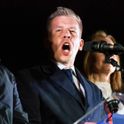
This was evident in one of the launches, an awkward press conference in Madrid, where Van Rompuy, Zapatero and Barroso performed a bad impression of the “three amigos,” each vying for attention. The media was most interested in the new full-time president, Van Rompuy, who began poorly, reading from a bland prepared script. But he did well when taking questions, outlining how global politics threatened to leave the EU behind unless it embraces economic reform.
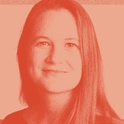
Sensing that he needs to establish his profile, Van Rompuy has convened an economic summit of heads of government on 11th February. Back in Brussels at the European parliament, where she faced her second grilling, Ashton avoided gaffes but failed to convince her critics. She seized on the Haiti earthquake to use her new powers to co-ordinate the efforts of three different European commission directorates and officials in the European council. And, in case anyone had failed to notice, Ashton convened a press conference to tell them.
And what of Barroso? He has mounted a concerted effort to ensure that billions of euros spent on nations bordering the EU will remain within the commission’s enlargement directorate general. That would leave a huge chunk of the EU foreign policy budget inside the commission and, indirectly, under him. Having won his second mandate, for the first time in years Barroso doesn’t have to worry so much about what the big member states think. In theory he can finally be his own man and try—with Van Rompuy, Zapatero, Ashton et al—to take the lead with his own agenda. We are about to find out if he has one.
Bulgarian debacle
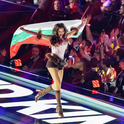
Another year, another debacle for Bulgaria. Elected prime minister in 2009, Boyko Borisov, once a bodyguard and karate coach, decided to replace his country’s commissioner, Meglena Kuneva, despite her solid reputation. Instead Borisov opted for a political ally, Rumiana Jeleva, a former MEP and the country’s foreign minister. Jeleva became a household name in Bulgaria when she made a celebrity guest appearance on the country’s equivalent of Strictly Come Dancing.
Unfortunately, the judges in her European parliament confirmation hearing were not so flattering, giving poor marks and prompting her to abandon her bid for the post. While putting up another candidate for the commission, Borisov refused to accept Jeleva’s resignation as foreign minister. That raised the prospect of Bulgaria being represented at ministerial meetings in Brussels by someone judged too incompetent to be a commissioner. When this was pointed out Borisov reluctantly replaced Jeleva a second time, on this occasion with the well-regarded defence minister, Nikolay Mladenov.
Van Rompuy’s nemesis
The final—pointed—question to Van Rompuy at the Madrid press conference launching the Spanish EU presidency came from Paul Goossens, a veteran of Belgian journalism and, until recently, stalwart of the country’s news agency, Belga. A well-known ’68er, he is the graying, rabble-rouser of the Brussels press corps, an outspoken figure who stands out in the consensual world of Belgium politics. A left-winger and student leader at the University of Louvain, Goossens could hardly be more different from his Flemish contemporary, Van Rompuy, a cautious, devout, cerebral, Christian Democrat with a liking for Japanese verse.
Yet it turns out that their paths have crossed before. In the 1970s, Goossens got his big break when he secured a job as an economics reporter at the influential Flemish newspaper, De Standaard. Competition for the post was tough, with around 50 candidates whittled down to a final shortlist of two. Sensing that one of them was a born troublemaker, the editors of De Standaard opted for Goossens. What happened to the unsuccessful applicant? He became Europe’s first full-time president.
Brussels diary
There’s much jostling for the limelight as the EU’s new leaders bid to make their presence felt
January 27, 2010