Jamie Stevenson
To discuss this article visit First Drafts, Prospect’s blog
Support for the union has been a cornerstone of Conservative policy for two centuries. At the Scottish Conservative Conference in May 2008, David Cameron spoke of “the ugly stain of separatism…seeping through our union flag” and reaffirmed his opposition to Scottish independence. “I do not want to be the prime minister of England. I want to be prime minister of the United Kingdom – all of it, including Scotland.”
Yet not a word about the union appears on the party’s website, which promises only to “address the West Lothian question and give English MPs a decisive say on laws that affect only England.” And it was Cameron himself who pointed out in August 2006 “that the policies of Conservatives in Scotland and Wales will not always be the same as our policies in England.” Having been cunningly outflanked by Blair in 1997 on traditional Tory issues such as law and order, the party is all too wary of being outmanoeuvred on its own ground yet again: this time by Brown’s flagrant playing of the patriotism card. Adopting the recommendations of Ken Clarke’s democracy taskforce for exclusive voting rights for English MPs over England-only legislation is as far as Cameron can safely go without triggering Labour accusations of union-busting. Yet in the words of one Tory grandee, there is a strand of thinking—very much still a minority within the party—that would welcome Scottish independence, as it might mean the reduction of Labour MP’s and the enhanced prospects of Conservative governments. Even the right-wing Adam Smith Institute published a report in April 2007 arguing that independence would be good for Scotland’s economy, predicting that it could precipitate growth of up to 7 per cent in just 5 years. And it’s worth remembering that before Salmond’s makeover, the SNP had much more in common ideologically with the Conservatives than Labour; in the 1970s, their right-wing policies earned the nickname the “tartan Tories.”
For a maverick few in the Tory party, the passive and reluctant enablement of Scottish independence could prove the Cameron era’s accidental trump card. It is an open Holyrood secret that Salmond has postponed the referendum till 2010 for one reason. As Robert Hazell points out (Prospect, July 2008), a Conservative government in Westminster offers the best hope of converting Salmond’s personal popularity into a majority for independence. Even after Salmond’s robust opening year as first minister, support for independence struggles to break through 30 per cent. Tom Gallagher (Prospect, September 2008) has highlighted Scotland’s low election turnouts, the SNP’s pitiful membership numbers and its reliance on personality rather than policy as evidence of the significant obstacles to independence. Nor has Salmond shown his usual magic touch in handling the fallout from the banking crisis. Far from inflaming nationalist passions, the £37bn bailout of Scotland’s two flagship banks, the Royal Bank and the Bank of Scotland, has emphasised the usefulness of Britain’s bigger financial muscle. Salmond is struggling to counter unionist claims that an independent Scotland could not have saved its banks from the global credit meltdown; his recent accusation of “smear, fear and misinformation” against the unionist cause smacked of desperation.
Read more »
Tom Gallagher
After snatching Glasgow East in a late July by-election, the third safest Scottish Labour seat, the SNP raced into a 19 per cent opinion poll lead over Labour in August. Gleeful nationalists predicted that the three colourless candidates for the vacant Scottish Labour party leadership would lose their seats at the next Holyrood election. London commentators predicted that Scotland would exit the union and concluded that devolution was a giant miscalculation by Labour.
But what is really remarkable is that the humdrum Labour party maintained such a tight hold on Scottish loyalties for as long as 50 years, a period during which it suffered several catastrophic defeats elsewhere in Britain. It was probably inevitable that the SNP would eventually seize a time when Labour was in trouble, and project itself as a dynamic force to remake Scotland.
So it is striking to note what a New Labour template the SNP is following. A wilful leader, more wrapped up in the presentation of policy than its substance, has centralised policy and suborned the civil service, relying on a compliant media and influence over strategic voting blocs to strengthen his ascendancy. Courtiers play up to an Alex Salmond cult of personality much in the way they once did to Tony Blair.
Read more »
Alexander Linklater
Alasdair Gray: a Secretary’s Biography
by Rodge Glass (Bloomsbury, £25)
The initial disappointment anyone who reveres the towering—or teetering—figure of Alasdair Gray must feel on picking up this story of his life is that “the little grey deity,” as Will Self has dubbed Scotland’s greatest living author, is not here receiving the treatment of a commensurately ordained biographer. Rodge Glass is, rather, a smart novice: a young English novelist whose credentials consist of an apprenticeship served in Glasgow as Gray’s secretary, a job that appears to have involved a ragtag of duties, from teaching his mentor how to use email, to saving him from drunken falls in the street, to taking down dictation of letters, wisecracks, ideas, indiscretions and stories.
“Be my Boswell,” Gray commands Glass early in their relationship (chuckling gleefully, one assumes); and, although he formally disowns the comparison, the protégé seems to have taken the master at his word. Glass is no Richard Ellmann, providing a magisterial exegesis of James Joyce’s genius; nor a Patrick French, excoriating the personal darkness of VS Naipaul. Instead, as becomes clear within the first few pages of Alasdair Gray: A Secretary’s Biography, these are the excitable journals of an ingratiating acolyte. To this degree, at least, the Boswellian allusion may be apt. But one must ask: is there here the level of rapport sufficient to unravel the long struggle behind the most remarkable act of literary-cultural resurrection—Gray’s reimagining of Glasgow—performed by any British novelist in the last 60 years?
Read more »
Robert Hazell
Alex Salmond’s plan is to hold a referendum on Scottish independence soon after 2010, when the Conservatives have won the general election but with (probably) only five seats in Scotland. The Scottish backlash could propel the vote to independence. The media assume that if the Scots were to vote yes, Scotland would automatically become independent. But this would be only the beginning of the process. There are five stepping stones on the road to independence, any of which could become a roadblock. Salmond needs to negotiate each one successfully before Scotland can go it alone.
The first is that a referendum cannot be held without the approval of the Scottish parliament. At present there are 50 members of the parliament in favour of independence (47 SNP, plus two Scottish Greens, plus the independent Margo Macdonald). Against, there are 79 members of the three unionist parties: Labour, Conservative and Liberal Democrats. If these parties vote against a bill, no referendum can be held. But following Wendy Alexander’s call in May to “bring it on,” it will be more difficult for Labour to oppose the referendum bill. Her outburst suggests that Labour is now willing to knock open the first gate for the SNP.
The second hurdle is the referendum itself. Opinion polls over the last ten years have consistently shown Scottish support for independence remaining at around 25 to 30 per cent. Even if those figures improve with a Tory government in London, what people say in polls and what they do when faced with a ballot paper are two different things. The 2004 referendum on regional government in northeast England provided dramatic evidence of this.
Read more »
Alasdair Gray
A storm of rage brought him to his feet, stamping up and down the lobby. Billy Connolly was better known than Rory MacBleaney for bad bad bad bad bad reasons. Connolly and his what—partner? second wife?—had been pally with Prince Charles and Diana before the royal divorce, what claim to fame was that? Connolly was not a bad comedian—not as good as Jimmy Logan, though still quite good—but he was not an actor! In his biggest film, Mrs Brown, he had played Queen Victoria’s Highland gillie with a Glasgow accent! It was the only accent he could do! The English and Americans didn’t mind because they think every Scottish accent is the same, but every Scot in the world knew Connolly’s voice was wrong in that part. Connolly must have known his voice was wrong! So he had only taken the part for the money and the fame. How could he stoop so low?
“I could have played John Brown!” said Mr Mac-Bleaney aloud. “Yes, my normal accent too is Glaswegian, but I’m enough of an actor to sound like a teuchter from Drumnadrochit when I want to, yess inteet to gootness Donalt, whateffer. Shimerahaa mahay!”
A fit of coughing made him sit on the step again, no longer happy, because directly or indirectly Billy Connolly was responsible for everything that had gone wrong with Scotland—small shops replaced by supermarkets, local schools and hospitals amalgamated into big central ones, and nobody asked to recall the old ways and speak for elderly marginalised folk. Newspapers no longer phoned the third Mr Glasgow for soundbites on politics and showbusiness; no wonder he had started drinking again. Gloria had foreseen that. When they knew she was dying she had not gone out of her mind (as he had) but had calmly discussed their finances with an accountant and lawyer, and made him sign forms so that his home and finances were secure no matter how stupidly he acted. O yes she had loved him. He wept for a while then began to cheer up.
Read more »
Jack Straw
In the 1955 general election, the Conservative party not only won a majority of seats in Scotland but also a majority of the votes—the only time that has been achieved by any political party since the war. Today, it is impossible to imagine such an outcome. The Tories are barely represented in Scotland and Wales, and despite sporadic advances in English local elections, are conspicuous by their absence in the great northern cities. This situation is now affecting the party’s psychology. The Conservatives are in danger of becoming a party of narrow English nationalism.
Nowhere is this more evident than in the party’s attitude to devolution and its policy of English votes for English laws. This is the Conservative answer to the so-called “West Lothian question,” named after the constituency represented by Tam Dalyell. He famously asked whether, after devolution, it was justifiable for Scottish, Welsh or Northern Irish MPs to vote on all issues before the British parliament, when MPs representing English constituencies would not be able to vote on devolved matters.
“English votes for English laws” is the resurrection of a policy that first surfaced with the Irish home rule proposals of the 19th century. It may sound like a beguilingly simple solution—the premise being that only MPs representing English constituencies should be allowed to vote on specifically English business. But the proposal is unworkable: it would fatally undermine the Westminster parliament and irrevocably fracture the union.
Read more »
Tom Gallagher
When the Scottish National party scraped into office in May with just one more seat than Labour, it was assumed that its period running Scotland’s devolved government would be short and inglorious. But under Alex Salmond, in the space of 100 days it has established its mastery over all its rivals, who now fear voting it out of office in case fresh elections confirm the huge lead the SNP has built up in the polls.
The culmination of the SNP’s 100 days was the publication of a white paper proposing a “national conversation” on Scotland’s future to be followed by a referendum on independence in 2010. The opposition parties were caught unprepared. Bold spirits like Michael Forsyth, Margaret Thatcher’s chief adjutant in Scotland in the 1980s, have urged the case for a referendum now. Forsyth thinks, probably correctly, that most Scots would reject the severing of the British link and that Salmond would have to stop grandstanding. But with the tide of opinion on its side, the SNP could get a respectable vote for separation now which would enable it to consult the voters again at the end of their term in office.
Labour, the Liberal Democrats and the Conservatives not only officially oppose a referendum, they have refused to engage in the national conversation, which they rightly suspect will be on SNP terms. Nor are they, yet, offering proposals for a new devolution settlement that would revise relations between Edinburgh and London. Giving Holyrood more fiscal autonomy is increasingly seen as the only way of stopping the SNP.
Read more »
Mark Cousins
The city in which I live, Edinburgh, hasn’t exactly been neglected by writers and filmmakers. Stroll its streets and you can see how it inspired the gothic dualism of Doctor Jekyll and Mr Hyde. Go to a pub in its port, Leith, and you find yourself drinking beside characters from Trainspotting. It’s the “fur coat, nae knickers” town; it’s “auld reekie” because its 19th-century smoke made the place stink; it’s the Athens of the north; the place of innumerable literary flytings; the city where Jean Brodie told her girrrls that they were in their prrrrime; it’s the place where Ian Rankin’s Rebus threads through his labyrinth of booze.
Despite such over-determination, the capital of Scotland has never really been eroticised. Until now, that is. David Mackenzie’s new film Hallam Foe, from a book by Peter Jinks, turns Edinburgh into a Hitchcockian world of lustful observation. Just as in Vertigo, James Stewart meets a woman who resembles his apparently dead lover, and tries to turn the former into the latter, to increase, or return to, his erotic charge; so in Hallam Foe, Jamie Bell meets a woman who resembles his dead mother, spies on her having sex and, unable to help himself, partakes in scenarios in which the woman and his memories of his mother merge.
This sounds deadeningly Oedipal, but Mackenzie’s are the most erotic British films of our time. Whereas in France, directors who are interested in sexuality are a dime a dozen, in Britain they are almost unique. Mackenzie’s previous films (Asylum, Young Adam) have all been structured around sex scenes. In The Last Great Wilderness, there’s a great line where the lead character confesses that he washed his “nob” because he was meeting a girl. Hallam Foe is Mackenzie’s best movie yet, because it marries eros with the wholly cinematic situation found in Jinks’s book. Hallam moves to Edinburgh, has nowhere to live and so, like a birdman, ends up kipping in rooftop spaces and spending much of the film obsessively watching his female boss, like Jimmy Stewart in another Hitchcock film, Rear Window.
Read more »
Tom Gallagher
Alex Salmond is fast turning into one of the most nimble politicians in British politics since Lloyd George. Since becoming Scotland’s first minister, Salmond has proven not only to be a skilful media politician but a formidable operator in the corridors of power. Since taking charge of the executive in May, with a one-seat majority, his Scottish National party (SNP) has launched a blizzard of initiatives.
Unusually for a nationalist leader, Salmond has cultivated a range of minorities, notably Scotland’s growing Muslim population, which is concentrated in a number of seats the SNP hopes to wrest from the Labour party. On 31st July, Salmond held a reception for Scottish Muslim leaders at his official Edinburgh residence where he declared that, in terms of engaging with Muslims, “We are ahead of virtually every other European country.”
He made more headlines on 7th August when he presided over a civic reception in Glasgow in honour of the men and women whose courage helped save Glasgow from disaster on 30th June, the day when two would-be bombers struck the terminal building of Glasgow airport. One of the heroes that day, 31-year-old baggage handler John Smeaton, later commented that he was only doing his civic duty when he intervened to help the police overpower one of the bombers. Yet there is growing evidence that Salmond is intent on strengthening his support among those members of Scotland’s 60,000-strong Muslim community who are all too ready to champion an ethno-religious identity rather than a civic one.
Read more »
Michael Fry
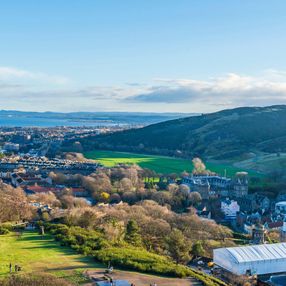
Urban history has become fashionable, flourishing in the hands of Jan Morris and Alistair Horne, of Peter Ackroyd and AN Wilson. And readers buy the results. Yet the story of Edinburgh remains oddly neglected.
Edinburgh is worth a book (indeed, I am in the early stages of writing one) for being among the first of modern cities. It was rebuilt in the 18th century as a machine for rational living, like, more recently, Brasilia and Chandigarh. But it did better than these imitations by then becoming the setting for something of global significance: the Scottish Enlightenment of David Hume and Adam Smith.
This was the finest example of its capacity for renewal, but not the only one. As I organise my material, what strikes me is how many other renewals there have been. And when I glance up from my desk, on the fourth floor of a typical tenement, to look across the rooftops where the saltires flutter over Edinburgh Castle, perhaps I see another transformation in the making.
Read more »