Log In | Subscribe

Tiananmen 20 years on: lessons from Russia

Archie Brown

To discuss this article visit First Drafts, Prospect ’s blog

Twenty years ago today in China the prolonged pro-democracy demonstration in Tiananmen Square was brought to a brutal end, when troops and tanks moved in and hundreds of people were killed on the streets of Beijing. While the western world remembers this event, it’s worth bearing in mind that June marks another, very different anniversary. Just 20 years ago democratic reforms in the Soviet Union also astonished the world. Contested elections brought into being the First Congress of People’s Deputies, held between 25 May and 9 June. From the outset, this was a legislature in which the executive was criticised and real debate took place. Its proceedings were televised live and watched by more than half the adult population.

In 1989 it looked as if Russia and China were travelling in opposite directions. What was then still the Soviet Union was moving towards democratic and accountable government. In China, radical economic reform had already made great progress, but the response to the Tiananmen Square demonstrators of Deng Xiaoping (the father of the Chinese economic reform) was to impose martial law.

Read more »

The battle for Tehran

Christopher de Bellaigue

To discuss this article visit First Drafts, Prospect’s blog


On 20th June the popular agitation to overturn the results of Iran’s presidential election of eight days before, which millions of Iranians believe to have been rigged in favour of the incumbent, Mahmoud Ahmadinejad, entered a new phase. The accommodation between non-violent protestors and the authorities, who had tacitly permitted a week of huge, and generally good-natured, demonstrations, has now ended. The protest of 20th June was violently broken up by the security forces, leading to fighting in the streets and at least ten deaths.

Forewarned of the demonstration and its route, the authorities deployed many thousands of Basijis, members of a ramshackle but highly ideological militia, armed riot police, and soldiers from the Revolutionary Guard, preventing most of the marchers from reaching Enghelab Square, the demonstration’s starting point. Those who did make it to Enghelab Square were forced by truncheon-charge and teargas into nearby sidestreets. Azadi Street, the proposed route for the march, witnessed a massive mobilisation of Basijis, riot police and busloads of Revolutionary Guard members, many of them holding up their truncheons and yelling encomiums to Iran’s supreme leader, Ayatollah Ali Khamenei.

The authorities achieved their aim of preventing a recurrence of the marches that had blocked off Tehran for much of the previous week. Some supporters of Mir Hossein Mousavi, the reformist politician who claims to have won the election, and demands its annulment, seem to have been dissuaded from participating by the warning delivered on Friday in a sermon by Ayatollah Khamenei, in which he sided unambiguously with Ahmadinejad against his domestic opponents and told Mousavi’s supporters to end the protests or face “blood, violence and chaos.”

By 7pm on 20th June, municipal buses were once more running down Azadi Street, and most of the city’s other arteries were clear. The side alleys running off Azadi Street, however, told a different story. In modest neighbourhoods, youths staged pitched battles with the security forces, hurling rocks and wielding knives and screwdrivers, while the Basijis and their Revolutionary Guard comrades fired teargas canisters and, according to eyewitnesses, live rounds. (Western reporters have been banned from attending any of the protests).

Tehran has not seen such conflict since the early years of the revolution. Plumes of smoke rose from burning tyres and rubbish bins. At least one underground station was turned into a battleground. In places that had effectively become no-go areas for the security forces, Mousavi supporters assumed the role of traffic cops,?people gathered on the roofs of their houses to observe events, and residents, young and old, male and female, thronged the pavements to watch and shout encouragement. According to a second eyewitness, protesters stripped to the waist applied wet towels to parts of their torsos that had been inflamed by teargas.

Today’s Tehrani youth, often derided as softies by an earlier, revolutionary generation are, in the words of one admiring middle-aged Iranian, “putting their lives on the line.” Reports of Basiji deaths were confirmed by no less a source than Ayatollah Khamenei himself. In Mir Hossein Mousavi, the agitation has a figurehead who has shown unexpected mettle. Also on 20th June, Mousavi released a statement in which he challenged the main contentions made by the supreme leader in his sermon on Friday, notably that the opposition was being stoked by Iran’s foreign enemies. Responsibility for all violence, Mousavi said, lay with “those who cannot tolerate non-violent actions.” While calling on his supporters to continue their protests without violence, he said: “Rest assured that I will always be at your side.”

The authorities may now be hoping that, by using the state media and friendly newspapers–most domestic outlets, for which Mousavi’s views have been stifled by censorship and arrests–they can depict the agitation as a shot bolt, and reintroduce a sense of normalcy into people’s lives. But the ability of the opposition to control, if only for a few hours, neighbourhoods in central Tehran, and to chase away groups of Basijis, hints at the development of a patchier, less predictable agitation. The ability of the protesters to organise themselves without mobile phone contact, text messaging and the internet, all of which have been severely disrupted by the authorities, has been proven.

Thirty years after a revolution that promised freedom for all, only to end in dull authoritarianism and factionalism, many Iranians remain profoundly suspicious of promises of change, and sceptical about their own ability to stay the course. Such doubts were not in evidence on the night of 20th June, however, when choruses of “Allahu Akbar,” (”God is Great”), a revolutionary cry that has now been appropriated by the Mousavi camp, rang out, louder than ever, from the rooftops of many of Tehran’s residential neighbourhoods.

The authorities now face a dilemma. They can continue to allow Mousavi his freedom, and the limited freedom he enjoys to be in contact with his supporters, or they can arrest him, which might give new focus to the crisis, and make irreparable the rift that now seems to have opened up between Khamenei and Ahmadinejad on one side, and Mousavi and his main backer, Akbar Hashemi Rafsanjani, on the other. In effect, there are two interlocking rifts, one within the elite, and one between the demonstrators and defenders of Iran’s current system of government. In his statement Mousavi was at pains to emphasise that his is not a counter-revolutionary movement, and that the Basij and Revolutionary Guard are not “our enemies.” On the contrary, he said, “we are confronting those liars” with a view to “reform by returning to the pure essence of the Islamic Revolution.” Not everyone demonstrating in his name would agree.


To discuss this article visit First Drafts, Prospect’s blog

The kids are alright

Steven Fielding

To discuss this article visit First Drafts, Prospect’s blog

David Hare describes his latest play Gethsemane, which opened on 11th November at the National Theatre, as “pure fiction.” Nonetheless, it features Alec Beasley, a Labour prime minister responsible for the absence of social progress at home and the prosecution of a disastrous war abroad; Otto Fallon, a party fundraiser with a background in pop music; and Meredith Guest, a cabinet minister whose husband has been accused of shady financial transactions. Yet, if the purity of Hare’s fiction is open to doubt, Gethsemane aspires to be more than glib Blair bashing; at the play’s conclusion, he outlines some ways that Westminster in particular, and politics in general, might become less detached from the people.

“Politics in a work of literature,” wrote the 19th-century French thinker Stendhal, “is like a pistol shot in the middle of a concert, something loud and vulgar, and yet a thing too which it is not possible to refuse one’s attention.” Yes, all literature is “political” insofar as it discusses power. But fiction about how actual politicians use power is surprisingly rare; artists tend to focus on the elevated private sphere of relationships, identity and the oh-so-troubled self. As a result, contemporary Westminster fiction is usually second rank work produced by third rank politicians: a battle to the bottom between Jeffrey Archer and Edwina Currie, with the saving grace of Michael Dobbs thrown in. New Labour’s place in this pantheon, meanwhile, bounces between low comedy and high conspiracy. ITV’s Confessions of a Diary Secretary (2007) provided the unedifying spectacle of a felating, Sid James-like John Prescott, while Robert Harris’s novel The Ghost had the Blairesque lead character supporting the Iraq war largely because his wife was a CIA agent. Serious art, this is not.

Read more »

The Beijing olympics: China’s critics

Christian Tyler

Also in Prospect’s Olympics coverage: read David Goldblatt’s guide to the political and cultural landscape of the Games; and his special online accounts of the Olympics from Athens 1896 to Athens 2004, as well as of the best Olympic books, films and websites.

You can discuss all these pieces at First Drafts , Prospect’s blog.


Christian Tyler interviews Wei Jingsheng

The man sitting opposite me in a Turkish restaurant in London is well qualified to talk about China’s Communist leaders. He has been a keen student of them for more than 30 years, 18 of which have been spent in Chinese jails.

Read more »

Gandhi and the Jews

Salil Tripathi

Sixty years ago, on 30th January, Mohandas Gandhi was assassinated in New Delhi. In May, Israel will celebrate the 60th anniversary of its controversial creation. These two narratives got unintentionally intertwined last month, raising questions about the universality of Gandhi’s message as well as his views about Jews, the nature of the state and the limits of freedom of expression.

The vehicle for this reflection was Gandhi’s grandson, Arun, a mild-mannered 73-year-old writer and peace activist, who until recently ran the MK Gandhi Institute of Peace and Non-Violence at the University of Rochester, New York state. Early in January he wrote on On Faith, a Washington Post/Newsweek blog: “[The Holocaust] is a very good example of how a community can overplay a historic experience to the point that it begins to repulse friends… It seems to me the Jews today not only want the Germans to feel guilty, but the whole world must regret what happened… When an individual or a nation refuses to forgive and move on, the regret turns into anger.” Gandhi blamed “Israel and the Jews” for being the biggest players in creating “a culture of violence.”

Predictably—given the disproportionate space the Palestine issue commands—all hell broke loose. Gandhi apologised, and later resigned from his post at the institute. Israel’s critics were quick to blame the so-called “Israel lobby,” which is supposed to control public opinion in America. Gandhi instantly became a martyr for Palestine activists—even though Palestinians have, on the whole, steadfastly refused to adopt Gandhian non-violence against their Israeli occupiers. Moreover, Gandhi’s carelessly written blog post would probably have made his grandfather blush.

Read more »

Saakashvili’s gambit

Daria Vaisman

A few Fridays ago, some of us were at a Tbilisi restaurant on the fourth anniversary of Georgia’s “rose revolution.” When the fireworks started, we crowded into the restaurant’s small back room to watch. Georgian president Mikheil Saakashvili, the man who had ushered in the revolution, would be stepping down that Monday, after brutally dispersing a peaceful demonstration and closing down the main independent news station in town. One of the women looked at her friend with a smirk. “So this is where our money went,” she said.

We smirked along, then wondered: how did it go so wrong? When Saakashvili was elected president in 2004, he had established himself as the darling of the west and transformed a corrupt and dilapidated country. He’d quintupled the budget; paved the roads; reformed the police service; and attracted unprecedented levels of foreign investment. Yet social policy had lagged behind, and the independence of the press and judiciary had been threatened. Georgians from all socioeconomic sectors had accumulated a personal litany of complaints.

The protests began this November. November 7th began much like the five days that preceded it, when tens of thousands of demonstrators massed in front of parliament in Tbilisi. Though the ostensible catalyst for the protest was the arrest of a former defence minister-turned-opposition leader, the deeper explanation was that people felt Saakashvili held them in contempt. Even so, they seemed unsure exactly why they were there and surprised when I asked. Their responses were filtered though a general and inchoate sense of gloom: the jails were filled with teenagers; prices had doubled but pensions had not; the government had sold off their best assets in sloppy privatisation campaigns.

Read more »

Understanding the junta

Nic Dunlop

Last March, I travelled to Burma’s new capital, Nay Pyi Daw. I was among a handful of journalists to be invited to the junta’s annual military parade. It was the first time that the outside world had been granted a glimpse of the city the generals have built. Dumped in the middle of malarial scrubland, some 300 miles north of Rangoon, it is a strange, gleaming confection of official hotels, ministries and government housing set in the baking plains of central Burma (now called Myanmar). The junta has spent billions building this largely empty metropolis—whose name means “Seat of Kings.”

Here, the generals sit in perfect isolation while the rest of the country suffers. Spending on healthcare is, according to the UN, the lowest in the world. Poverty is widespread and a third of children under five are malnourished. Military spending, though, has rocketed. Despite chronic power shortages, leaving much of the country in almost permanent blackout, the junta’s new capital gleams with 24-hour electricity.

When I first arrived in the old capital, Rangoon, on a photographic assignment in 1995, I expected steel helmets and fixed bayonets at every street corner and endless checkpoints—all the sights one associates with military dictatorships. Instead I found a bustling metropolis of colourful markets, packed restaurants and gleaming pagodas. Street hawkers were selling old copies of Life magazine and monks browsed the book stalls next to tea shops. The Burmese army was conspicuous by its absence. I had to “steal” images of soldiers I did see, and often they would hold their hands in front of my lens to stop me. Now, here in Nay Pyi Daw, I was surrounded by thousands of them. And I was permitted to photograph at will.

Read more »

Burma: why sanctions won’t work

William Barnes

Discuss this article at First Drafts , Prospect ’s blog

The brave and photogenic protests in Burma have left much of the international community fretting over its inability to rein in a bruising military regime. Yet the conclusion being drawn by many western politicians and media pundits is that Burma needs more of the very policies that have failed to make a noticeable dint in its stony-faced junta’s front for almost two decades.

Sanctions and attempts to cold shoulder the generals do not work because Burma’s neighbours see no reason to join in. Aside from its lush resources and strategic location, the quiet truth is that many governments in the region feel little sympathy for street protestors—even ones dressed in rust-red robes.

Read more »

Back to Bhutto?

Anatol Lieven

One of the nice things about Pakistan at the moment is that it makes me feel young again. I first went there in 1988 as a stringer for the Times to cover the aftermath of General Zia’s assassination and the military-managed “transition to democracy.” The inheritors of government were Benazir Bhutto and her Pakistan People’s party (PPP), but the military was careful to balance her electoral victory by keeping an ally of theirs, Mian Nawaz Sharif, as chief minister of the most populous province, Punjab.

Nineteen years have passed, the Soviet Union has fallen, the US has invaded and occupied Afghanistan and Iraq, China has emerged as an economic superpower and my own life has been transformed—and yet in Pakistan we are once again talking about a managed transition from military rule to that of Benazir Bhutto.

That the world can have changed so much, and Pakistan so little, says a great deal about the relationship between socioeconomic stagnation and political stability there—an underlying stability which belies the surface volatility of Pakistani affairs. Pakistani society, with its thick network of clan and family allegiances, has proved incapable of generating modern political mass parties. What it has is one dynastic party, the PPP, and others which are mere congeries of local bosses and landowners. There are only two “real” Pakistani parties in the western sense—with grassroots organisation and some sort of programme—and both of them would tear the country apart if they ever gained supreme power. These are the MQM, an ethnic Muhajir party, and the Jamaat-Islami, a radical Islamist force.

Read more »

Accidental revolutionary

prospect

Thomas Paine’s Rights of Man by Christopher Hitchens
(Atlantic Books, £9.99)

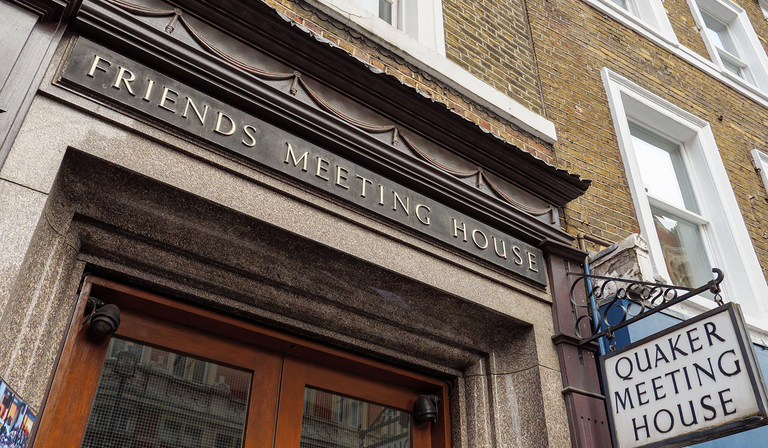
The life of Thomas Paine was mostly pretty wretched. He was born in Norfolk in 1737, to a father who combined the strait-laced trade of a corset maker with the rigorous creed of a Quaker. His education was curtailed because his father objected to his learning Latin, the language of Popery. After a desultory apprenticeship to his father’s trade he gave up carving corsets and became, as he put it, “the carver of my own fortune.” The enterprise was not a big success. After failing as a seaman for a couple of years, Paine returned to corset making, and failed again. Realising that he had an aptitude for figures, he managed to get regular work collecting excise-duties, only to lose it for falsifying his reports; and after winning his job back, he lost it a second time, as punishment for agitating for better pay. In the meantime he experimented with the life of a tobacconist and a servant, as well as seeking (it is said) ordination in the Church of England. In 1774, having gone through innumerable jobs, two difficult marriages, many gallons of alcohol, and far more money than he possessed, he turned his back on England to make a new beginning in America.

At that point Paine was more interested in escaping his creditors than building a brave new world. But as soon as he arrived in Pennsylvania, with a serendipitous recommendation from Benjamin Franklin in his pocket, he found work with a printer and belatedly discovered his vocation. Soon he was editing the monthly Pennsylvania Magazine and using it as a platform for denouncing slavery. His journalism proved so popular that he turned his hand to an independent publication. Common Sense, addressed to the inhabitants of America, by “an Englishman,” was published in Philadelphia in January 1776, and Paine was scarcely exaggerating when he claimed that it met with a success “beyond anything since the invention of printing.” Paine’s summons to rebellion against British rule was perfectly timed, and about half a million copies would be printed in the next few years. He may have been a middle-aged lush and a journalistic novice but he had suddenly become the literary mentor of the American revolution.

Read more »